
(I) Rapid Breakthroughs in Key Technologies

- Gene Editing Technologies
The rise and steady improvement of gene-editing technologies like CRISPR-Cas9 have made it possible for scientists to change and adjust genes with much higher accuracy and efficiency. This gives strong tools for building biological systems with clear functions in synthetic biology. These tools also shorten research time and reduce trial-and-error work in laboratories, so development becomes faster and more stable. - DNA Synthesis Technologies
DNA synthesis is a basic part of synthetic biology, because it supports the building of new biological systems. In recent years, the speed, accuracy, and cost of DNA synthesis have improved a lot. Large amounts of DNA fragments can now be made quickly and at low cost. This allows researchers to test more designs at the same time and improve research efficiency. - Bioinformatics
With bioinformatics tools and methods, scientists can study and understand gene sequences, metabolic systems, and other biological data in detail. This gives important theory support for the design and building of synthetic biological systems. It also helps predict system behavior before experiments begin.
(II) Extremely Broad Application Prospects
In the Medical and Healthcare Field
Synthetic biology can be used to design and produce new drugs, for example, making drug ingredients through microbial fermentation and developing new antibody drugs. This makes it possible to produce drugs that are hard or impossible to make with traditional methods. These approaches can also lower production costs and improve supply stability.
It also allows the building of biosensors that can find disease markers for early diagnosis, and cells changed through synthetic biology can be used in cell immunotherapy to treat diseases like cancer.
In the Chemical and Materials Industries
Synthetic biology can be used to produce many kinds of chemicals, including biodegradable plastics, biofuels, and industrial enzymes. These bio-based chemicals are renewable and friendly to the environment, and they can replace traditional petrochemical products, reduce the use of fossil resources, and lower environmental pollution.
It also allows the design and production of biological materials with clear properties, such as strong biofibers and functional bionanomaterials, and these materials have wide use potential in construction, textiles, electronics, and other industries.
In Agriculture
Synthetic biology can be used in gene editing and crop improvement to increase yield, improve resistance to pests and diseases, and strengthen tolerance to environmental stress, so it offers new ways to deal with global food security problems.
It can also help develop microbial biopesticides and biofertilizers, which reduce the use of chemical pesticides and fertilizers, lower environmental pollution, and improve the sustainability of agricultural production.
It can also be used to produce food additives, flavorings, and functional foods.
(III) Policy Support
Many countries and regions see synthetic biology as an important emerging industry and support its development. In China, for example, the 14th Five-Year Plan clearly lists synthetic biology as a key frontier area of science and technology, and it is supported by a series of policies that promote technology progress and industry growth.Local governments have also released support policies, such as building industrial parks, giving financial support, and offering policy benefits. These actions have attracted many companies and research groups to join synthetic biology research and applications, and they help speed up the move from research to industrial use.
(IV) Strong Economic and Environmental Benefits
High Economic Value
Synthetic biology has very high economic potential and is expected to create new growth power. It is expected that by 2025, the economic value of synthetic biology and biomanufacturing will reach USD 100 billion, and by 2030 to 2040, the yearly economic impact could reach USD 1.8 to 3.6 trillion. This growth also brings new jobs and investment chances.
Environmental Friendliness
As the world focuses on energy saving, emission reduction, and carbon neutrality, the environmental advantages of synthetic biology become very important. By using renewable resources as raw materials and making products through processes like biological fermentation, synthetic biology reduces the use of fossil fuels, lowers greenhouse gas emissions and pollutants, and supports sustainable development.

Sobre Bailun
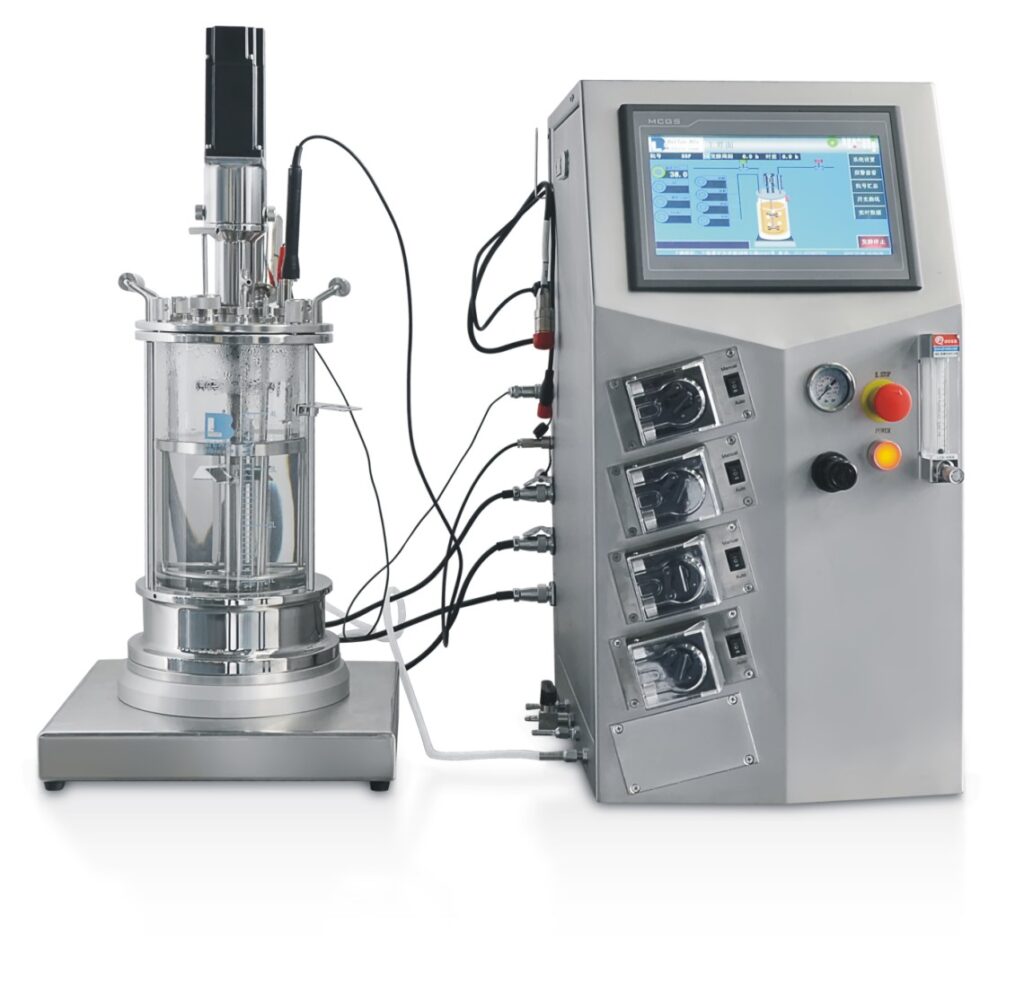
Bailun has rich experience in the manufacturing of many kinds of reactors and pressure vessels. With a professional team focused on bioreaction systems, fermentation processes, mechanical manufacturing, and automation control, Bailun’s research and process abilities stay at a leading level in China and are first-class worldwide. We are dedicated to providing our customers with products that bring comfort, trust, and peace of mind. Contáctenos