
Introduction Auxin, namely indoleacetic acid, is one of the earliest discovered and most extensively studied plant hormones. It refers to a class of endogenous hormones containing an unsaturated aromatic ring and an acetic acid side chain, playing a pivotal role in the process of plant growth and development.
Auxin is involved in various vital plant processes, including cell elongation and division, the growth of primary and lateral roots as well as hypocotyls, the formation of gravitropism and phototropism in plants, and the development of root hairs and floral organs. It is of great significance for the early growth, development and morphogenesis of plants. Auxin not only functions in plant growth, development and environmental adaptation, but also serves as a crucial signaling molecule for coordinating communication between different tissues and even different cells.
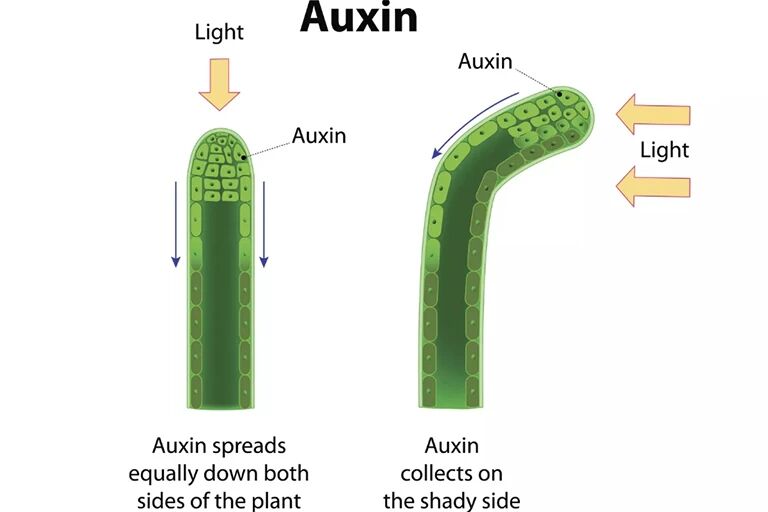
So far, five auxin biosynthesis pathways have been proposed, including four tryptophan-dependent pathways and one tryptophan-independent pathway. Auxin exists in zucchini, certain cruciferous plants and tomatoes. The most prominent form of auxin degradation is photo-oxidation, which readily occurs under light conditions and leads to its decomposition. In 1947, Tang Yuwei and J. Bonner discovered that removing the tip of the coleoptile of Canary grass would cause the plant to lose its phototropic response ability. Their explanation was that when seedlings are exposed to lateral light, the influence generated by the tip is transmitted downward, resulting in different growth rates between the illuminated and shaded sides.
This difference further causes the seedling to bend toward the light source, which is why cutting off the tip eliminates the phototropic response. In 1928, F.W. Went proved through experiments that there is a growth-promoting substance in the tip of the coleoptile, which he named auxin. This substance can diffuse into agar blocks. When such an agar block is placed on one side of the cut surface of a decapitated coleoptile, it can induce the coleoptile to bend toward the opposite side. Moreover, the degree of bending is roughly proportional to the amount of the growth-promoting substance it contains.
This experiment not only confirmed the existence of growth-promoting substances, but also created the well-known “avena curvature test” for determining auxin levels. In 1933, F. Kogl isolated indoleacetic acid from human urine and yeast. Subsequent tests showed that this substance could induce coleoptile bending in the avena curvature test, thus proving that indoleacetic acid is auxin, which widely exists in various plant tissues.
Functions
The most obvious function of auxin is to promote growth, but its promoting effect on the growth of stems, buds and roots varies with concentration. The optimal concentrations for these three organs follow the order of stem > bud > root, approximately 10⁻⁵ mol/L, 10⁻⁸ mol/L and 10⁻¹⁰ mol/L respectively. The transport direction of indoleacetic acid in plants shows obvious polarity, mainly moving from top to bottom. The apical dominance phenomenon in plant growth, which inhibits the growth of axillary buds, is closely related to the polar transport and distribution of indoleacetic acid. Indoleacetic acid also has the functions of promoting callus formation and inducing rooting.

Applications
Promoting Growth
Auxin (IAA) has a significant promoting effect on the longitudinal growth of vegetative organs. For organs such as buds, stems and roots, their elongation increases progressively with the rise of auxin concentration until reaching a maximum value, which corresponds to the optimal auxin concentration. Beyond this optimal concentration, the elongation of organs will be inhibited.
Different organs have different optimal auxin concentrations: the stem tip has the highest optimal concentration, followed by buds, and roots have the lowest. It can be seen that roots are the most sensitive to IAA, as an extremely low concentration can promote root growth, with the optimal concentration being 10⁻¹⁰ mol/L. Stems are less sensitive to IAA than roots, with an optimal concentration of 10⁻⁴ mol/L.
The sensitivity of buds lies between that of stems and roots, with an optimal concentration of approximately 10⁻⁸ mol/L. Therefore, the concentration that can promote the growth of the main stem often inhibits the growth of lateral buds and roots.
Promoting Differentiation
The combination of auxin and cytokinin can induce cell division, and it alone can also trigger this process. For example, the resumption of cell division activity in the cambium of trees in early spring is caused by the downward transport of auxin produced by terminal buds. The most distinct effect of auxin on organogenesis is reflected in promoting the formation and growth of root primordia. Adventitious roots form at the base of cutting seedlings.
For woody plants, these roots are mainly differentiated from new secondary phloem tissue, but they can also develop from other tissues such as cambium, vascular rays and pith. Among auxins, indolebutyric acid (IBA) has the best rooting-promoting effect. In practical applications, it has been found that IBA and naphthaleneacetic acid (NAA) are more stable and effective than indoleacetic acid (IAA).
Maintaining Apical Dominance
The growing stem tip of a plant has an inhibitory effect on the growth of lateral buds, a phenomenon known as apical dominance. In cotton plants, controlling terminal growth with mepiquat chloride or pinching off the terminal buds will lead to the massive sprouting of lateral buds.
Inhibiting Abscission Zone Formation
Flower drop, fruit drop and leaf fall are common phenomena in dicotyledonous plants, including cotton. The abscission of cotton buds and bolls is related not only to the supply of nutrients, but also to hormone levels.
When the indoleacetic acid content is higher at the abaxial end than at the adaxial end of the bud and boll stalk base, it inhibits the activity of cellulase and pectinase in the abscission layer, thereby preventing the separation of abscission layer cells and avoiding bud and boll drop. Conversely, when the auxin content is higher at the adaxial end than at the abaxial end, the activity of pectinase and cellulase increases, promoting the separation of the abscission layer and causing buds and bolls to fall off.
Promoting Fruit Setting
After plants flower and are fertilized, the auxin content in the ovary increases significantly, which promotes the expansion of the ovary and its surrounding tissues, accelerating fruit development. For instance, if the ovary can obtain IAA in a timely manner without fertilization, it can induce the formation of seedless fruits in some plants. Spraying or smearing indoleacetic acid (IAA) on the stigma before pollination can lead to the development of parthenocarpic fruits without pollination, such as in pepper, watermelon, tomato, eggplant, holly, zucchini and fig.
Herbicide Application
There are two types of herbicides:
- Selective herbicides: Low concentrations promote plant growth while high concentrations inhibit it. Dicotyledonous plants are more sensitive to auxin concentration than monocotyledonous plants. Therefore, selective herbicides can be used to eliminate dicotyledonous weeds in monocotyledonous crop fields.
- Non-selective herbicides: These herbicides can kill all plants, such as glyphosate.
Impact of Weightlessness
The gravitropism of roots (growing downward) and the negative gravitropism of stems (growing upward) are induced by gravity, which results from the uneven distribution of indoleacetic acid (IAA) under gravitational influence. In the weightless environment of space, without the effect of gravity, stems lose their negative gravitropism and roots lose their positive gravitropism. However, the apical dominance in stem growth still exists, and the polar transport of auxin is not affected by gravity.
Reactor Features
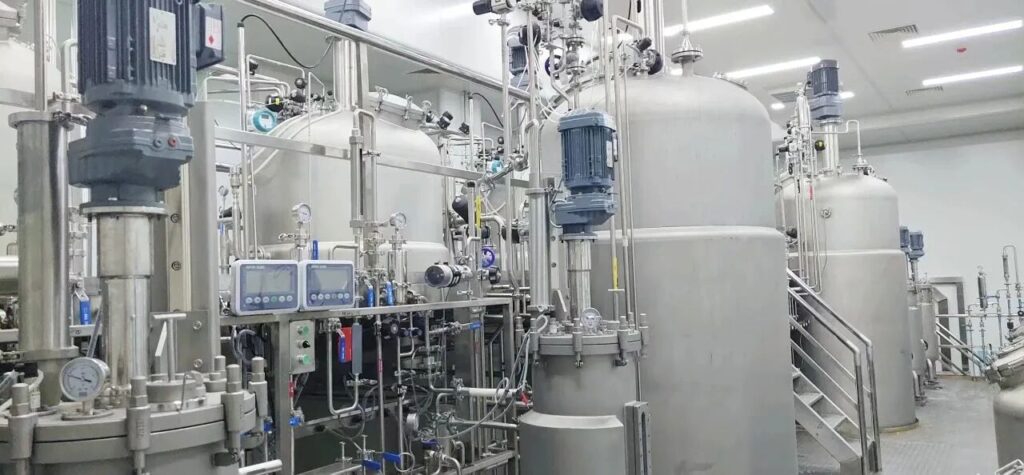
The tank surface adopts a new treatment process, which not only enhances the aesthetic appearance of the tank, but also ensures the operability of cleaning. Meanwhile, it solves the problem of tank surface reflection and improves the user experience of the product. The high aspect ratio of 3:1 and the bottom mechanical stirring are conducive to dissolved oxygen (DO) control.

About Bailun
Bailun has rich experience in the manufacturing of various bioreactors and pressure vessels. We have a professional team composed of experts in the fields of bioreaction, fermentation technology, mechanical manufacturing and automatic control. Our scientific research and technological capabilities have always been at the leading domestic level and first-class international level, providing you with satisfying, reliable and reassuring product experience. Contact us