
The fact is that in the current environment of the active development of biotechnology, one of the most promising and admittedly effective technologies, which has appeared in the dynamic stratum of the living environment, is a special type of bioreactor, the airlift bioreactor. Its growing prominence isn’t accidental; it represents a significant leap forward in cultivating and propagating sensitive biological systems.
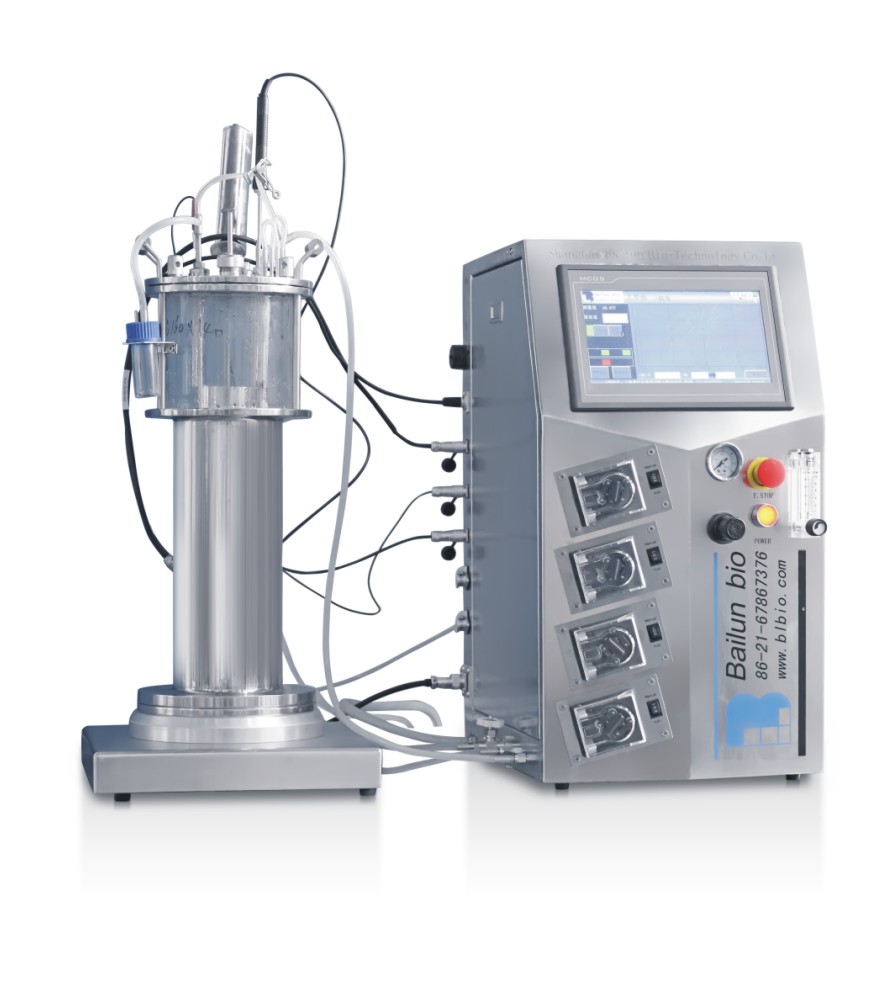
What is that specifically that makes this bioreactor to such a popularity and esteem? Its allure stems from its inherent design advantages. Why is this bioreactor the one we keep coming to? What is there about the high demands of innovative research and the practical nature of a large scale-manufacturing that makes this such a popular option?
It’s repeatedly selected for critical applications such as the delicate cultivation of sensitive mammalian, insect, or plant cell cultures, the propagation of diverse algal species, and the high-yield production of complex recombinant proteins. These living organisms often need an environment that is as stress-free and as growth optimized as possible, a goal which cannot be achieved without compromises in most conventional designs of bioreactors.
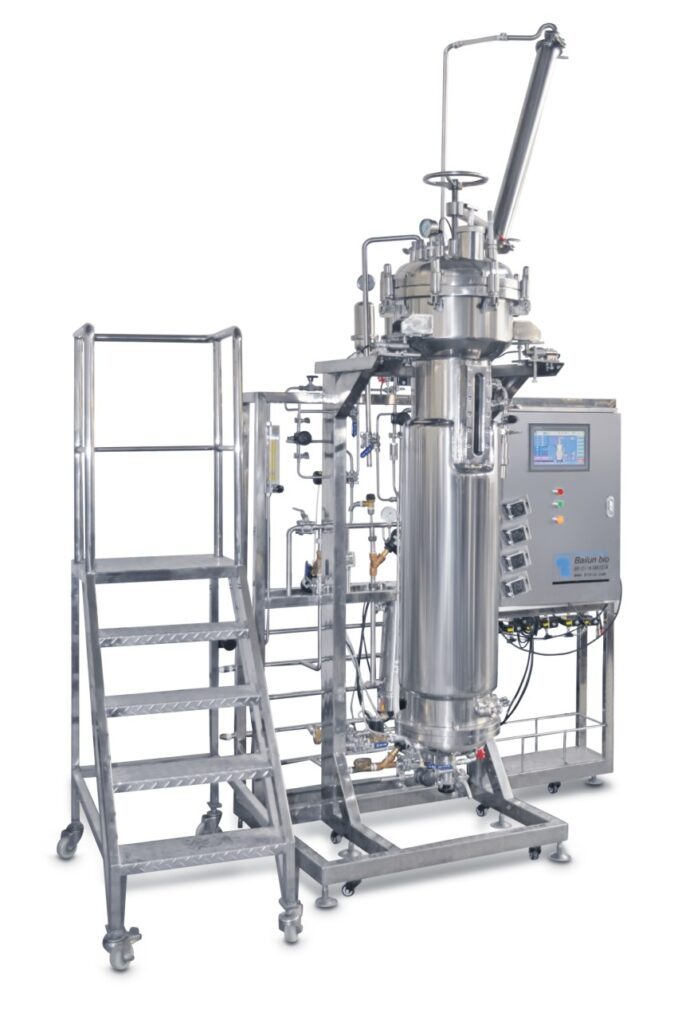
So, what is the fundamental truth behind this bioreactor’s exceptional performance? The airlift bioreactor uses a con of gravity operation whose understanding is often misleading because it is based on a very simple principle of causing ventilation and eliminating animal parts in the culture medium.
So travel with us, on a thorough journey of discovery, that will help unravel the clever mechanism behind its working, the definite benefits it brings to delicate bio products, and the serious reasons why it is going to surprise the standards of bioprocessing in the realms of a more sustainable future.
What is an Airlift Bioreactor?
An airlift bioreactor is a type of bioreactor that uses gas (usually air) to circulate liquid and cells, rather than relying on mechanical agitation. It is energy-saving and lowers shear stress on sensitive cells, which makes it perfect when cultivating animal cells, plant cells, and microalgae.
The structure typically includes two main zones:
- Riser:here gas is sparged in and the density of the liquid reduces so that it rises.
- Down comer:the point at which the gas gets separated and thus making the liquid heavy, which sinks.
This density gradient establishes a natural circulation closed loop, which allows mixing the culture without the need of impellers.
A unique thing about this bioreactor is not only its design but also that the design of the reactor has modified the overall thinking regarding large-scale cell culture and fermentation.
Types
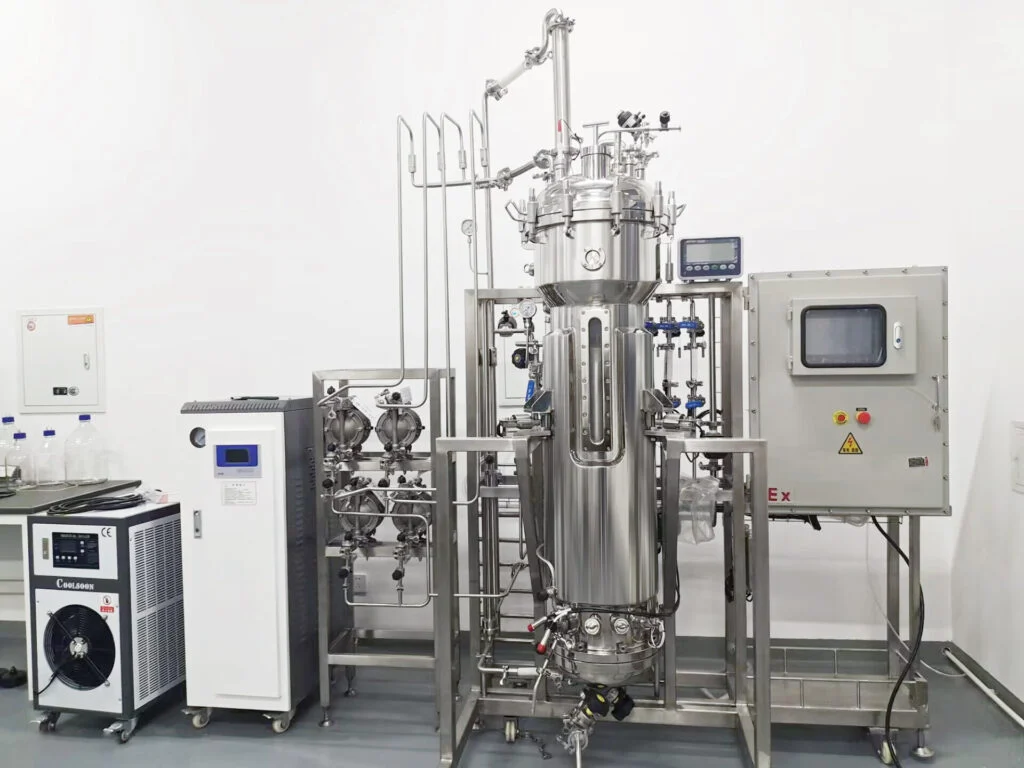
Did you know that you can find several varieties of the designs of this bioreactor , which vary in their application? Let’s explore the most common ones:
- Internal Loop Airlift Bioreactor:It has a draft tube within the vessel; it segregates the down comer and the riser. Popular for small-scale applications due to better circulation control.
- External Loop Airlift Bioreactor:External loop consists of a pipe; It is easy to scale up removal, clean due to separation of loop and bioreactor, appropriate industrial setting.
- Split Cylinder Airlift Bioreactor:Has a Split cylinder which is cut vertically so that crossing of gases is improved.
Why are there multiple designs? Since each application, being algae synthesis to the mammalian cell culture, has flow dynamics, oxygen transfer rate, and shear needs very little differentially.
Principio de funcionamiento
Curious about how this bioreactor actually works? It all comes down to physics.
- There is sparging of air or alternate gas into the riser to create bubbles.
- The bubbles reduce the liquid’s density, making it rise.
- When the bubbles escape at the top, the liquid is denser in the down comer and falls down.
- This circulating motion gently mixes the whole vessel yet it does not utilize any moving parts.
This elegant mixing system:
- Provides excellent mass and heat transfer.
- Reduces foaming compared to stirred-tank reactors.
- Protects shear-sensitive cells like plant cells or animal cells.
The bioreactor is an airlift and requires no mechanical agitator; this maintains the energy input to low levels and ensures that operating cost is within control- something that corporations are fond of.
Aplicaciones en Biotecnología
You probably be wondering: where is airlift bioreactor actually used? Its versatility makes it a top choice across biotechnology.
- Microalgae:Algae are grown in order to produce pigments, omega-3 fatty acids and biofuels.
- Mammalian Cell Culture:For monoclonal antibodies and recombinant proteins.
- Plant Cell Culture:To extract valuable metabolites.
- Wastewater Treatment:Using bacteria or algae to clean water.
- Bioethanol and Bioplastics:Fermentative production from renewable resources.
The carefully homogenizing environment is a bonus to cells that cannot be homogenized in a mechanically stirred tank.
Ventajas
What are the reasons that made many biotech companies use an airlift bioreactor among other designs? Let’s break it down:
- Low Shear Stress:Gentle circulation protects sensitive cells.
- Energy Efficiency:No mechanical agitators mean lower energy costs.
- Fluid Dynamics:They are predictable even when increasing volumes, which is easy to scale up.
- Interchange of gases:bubble columns and loops have a better gas interchange.
- Simple Construction:Fewer moving parts reduce maintenance needs.
- Lower Foaming:Reduced need for antifoam chemicals.
These benefits mean that this bioreactor does not only present an alternative but is in fact, the choice of certain applications.

Design Considerations and Challenges
The successful goal of designing an airlift bioreactor is not about adding air. Engineers and scientists must address challenges:
- Hydrodynamics:Maintaining sufficient circulation rates in dissolving and transferring oxygen as well as mixing.
- Bubble Size Control:Smaller bubble enhances the transfer of the gas, but can augment the foaming.
- Draft Tube Design:There should be optimization of internal vs. external loops that should be optimized depending on the product.
Heat removal Can even a benign mixing system cope with metabolic heat of thick cultures? Risks of Contamination In long runs that has no moving part, aseptic measures are paramount.
Overcoming these requires careful computational fluid dynamics (CFD) modeling and pilot-scale testing.
How to Optimize This Bioreactor’s Performance?
Curious about how professionals optimize the work of this bioreactor? Here are practical strategies:
- Sparging Rate:To regulate the flow of gas and optimize transfer of oxygen, and shear.
- Add Coalescing Agents:Modify bubble sizes to control mixing.
- Modify Draft Tube Geometry:Changes can improve flow distribution.
- Online Monitoring:Use sensors for pH, dissolved oxygen (DO), and temperature.
- Feed Strategies:nutrient optimising in fed batch or continuous.
- Integration with Downstream Processing:Streamlining harvest and purification.
Such minor adjustments can significantly raise the yield and the quality of the product with no significant changes in design.
Airlift vs. Stirred Tank Bioreactors
What makes this bioreactor different from the more common stirred tank bioreactor (STR)? Here’s a side-by-side look:
| FEATURE | AIRLIFT BIOREACTOR | STIRRED TANK BIOREACTOR |
| Agitación | Air-driven circulation | Mechanical impellers |
| Shear Stress | Bajo | Más alto |
| Energy Use | Bajo | Más alto |
| Mantenimiento | Simple | Requires impeller maintenance |
| Best for | Shear-sensitive cells | Robust microbes |
| Scale-up | Predictable | More complex |
When you are dealing with algae, animal cells or plant cells, this bioreactor tends to be the safer and more effective way.
Sustainability and Environmental Impact
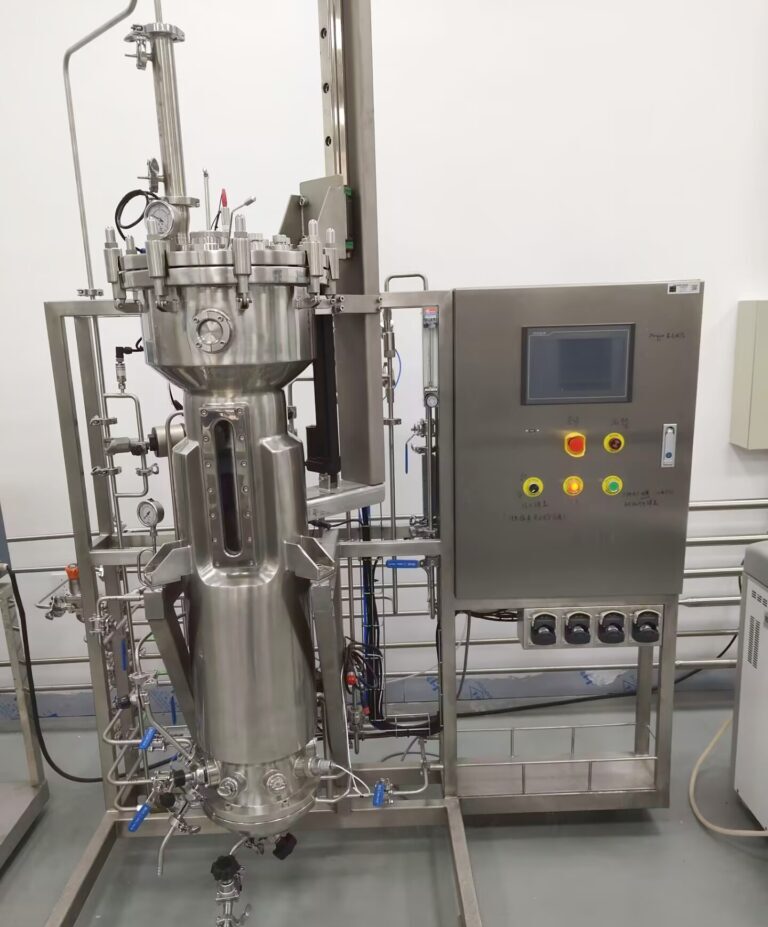
A rising trend in biotechnology is sustainability. How does the airlift bioreactor help?
- Lower Energy Consumption:Air-driven mixing saves electricity.
- Minimal Use of Antifoams:Reduces chemical waste.
- Higher Biomass Yields:More product with less resource use.
- Compact Design:Smaller footprint per unit of production.
In big commercial algae farming of biofuels, the reduction in the costs translates to reduced carbon footprints and improved environmental profiles.
Emerging Innovations in This Bioreactor’s Technology
Biotechnology never goes in stagnation and the airlift bioreactor is not the exception. Latest trends include:
- Single-Use Airlift Systems:Reduce cleaning time and contamination risk.
- AI-Based Process Control:Real-time optimization using machine learning.
- Hybrid Designs:Combining airlift with wave bioreactors.
- Modular systems:It is easy to expand or contract relative to demand.
- New material:Plastics and coating on making surfaces more sterile, stronger.
These advances promise even higher productivity and flexibility.
Real-World Case Studies
This bioreactor isn’t just theory; it’s driving real change. Examples:
- Monoclonal Antibodies:In large-scale external loop airlift bioreactors pharmaceutical companies produce antibodies.
- Astaxanthin using Algae:The firms extract the natural pigment in high cell density airlift reactors.
- Producción de bioetanol:Other plants adopt improved airlift reactors to make a more efficient fermenting of sugar.
The versatility of this bioreactor in the biotechnology can be illustrated on these applications.
Conclusión
This bioreactor becomes a point of intersection of innovativeness and sustainability in respect to biotechnology. Its mild but productive mixing capacity, its energy-efficiency, and its flexibility make it essential to all sorts of products, including pharmaceuticals and biofuels.
Ready to elevate your process? Discover the latest airlift bioreactor solutions at Biografía de BaiLun and turn your ideas into high-yield, sustainable production today!
Preguntas frecuentes
What is an airlift bioreactor used for?
Growing shear-sensitive cells, algae and making recombinant proteins or metabolites.
Why is it called “airlift”?
Since the air is utilized in order to “lift” and move medium around inside.
Does it consume less energy?
Yes, it does not include mechanical stirring, and less energy will be consumed.
What cells can be grown?
Animal cells, plant cells, algae, and even bacteria.
Are these bioreactors scalable?
Yes, external loop designs scale well to industrial volumes.
What are the main challenges?
Bubble size control, contamination risk, and heat management.
Is this kind of bioreactor better for sensitive cells?
Definitely, it has low shear stress compared to stirred tanks.