
The competition to get safer biologics and personalized medicines is never as high as before. Single use bioreactors have found their place as an advanced solution in this race and this is one of the greatest dilemmas faced in the industry i.e. How to make high-quality biologics in less time with greater sterility and minimum downtime. But what makes these bioreactors so revolutionary? This is the reason why pharma companies have been able to shift gears and come up with new vaccines or lifesaving treatments very swiftly.

These bioreactors are a replacement of the traditional stainless-steel tanks with disposable and pre-sterilized polymer bags. The change is time-saving, saves cleaning expenses, and virtually eliminates the chances of cross-batch contamination. Single use bioreactors have become essential in any biotechnology company that strives to have speed and flexibility.
Why Single Use Bioreactors Beat Stainless Steel Systems?
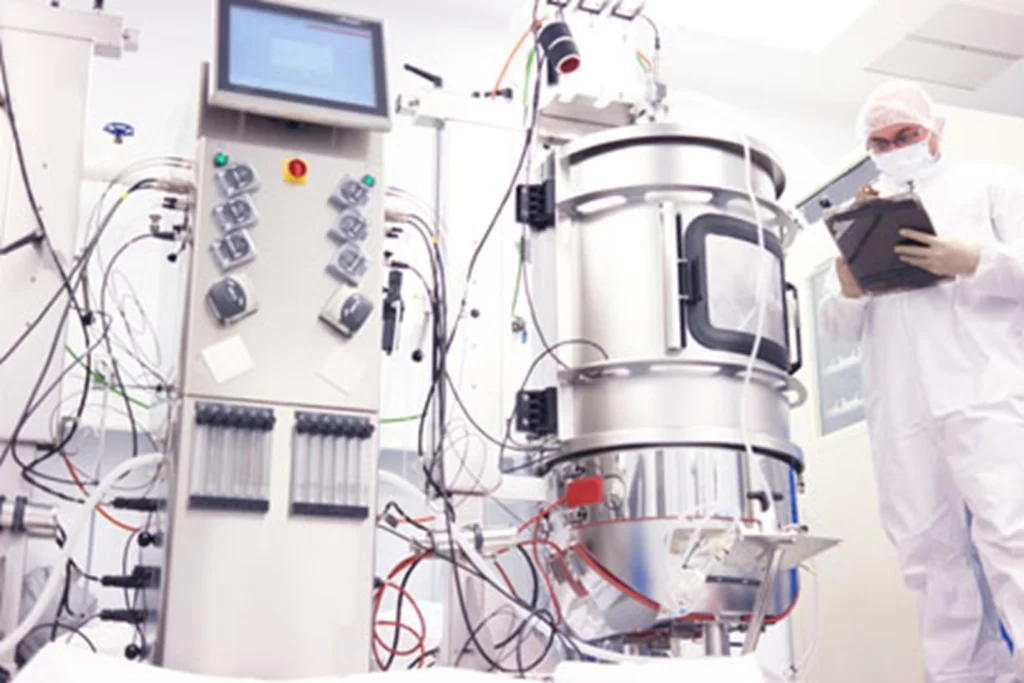
Conventional stainless steel systems are an industrial bioprocessing pillar of tens of decades. However, they require:
- Extensive CIP/SIP (Clean-In-Place/Sterilize-In-Place) cycles.
- Dedicated piping, utilities, and validation.
- Longer turnaround times between batches.
Compared to this, single use bioreactors are ready to use out of the box. You load the sterile bag, carry out your process, harvest your good and dump the bag and continue to a different batch.
Consider the advantage: no time-consuming sterilization, less risk of contamination and minimal chances of carry-over of residues.
So, what does this mean for companies? They are able to operate more than one product in the same plant without having to shut down to a few weeks to clean or retrofit tanks. That’s a competitive edge that can’t be ignored.
Main Designs
Today’s these bioreactors aren’t “one size fits all.” They come in different designs that fit various cell lines, volumes and mixing requirements.
- Stirred Tank Single Use Bioreactors: This imitates conventional stirred tanks, but incorporates a single use bag anchored to a reusable shell. They use an impeller to stir the medium.
- Wave-Mixed Bioreactors: This technology works by rocking a flexible bag back and forth to inertly mix contents in the bag- perfect with shear sensitive cells.
- Vertical-Wheel Bioreactors: These are characterized that have a rotating wheel inside the bag, to provide complete mixing with low levels of shearing.
Each design optimizes growth conditions for specific applications. As an illustration, production of monoclonal antibodies usually occurs in stirred tanks and cell therapies tend to use wave bioreactors because of their non-aggressive mixing.
Key Advantages That Win Over Manufacturers
When you ask yourself, are single use bioreactors worth the shift? then this is what most biotechnology leaders swear at:
- More Batch Turnover: Batches per year are increased with no cleaning to be done.
- Smaller Facility Footprint: No massive CIP/SIP utilities.
- Lower Upfront Cost: Less stainless steel infrastructure.
- Lowered Use of Water and Chemicals: Water and chemicals are saved by millions of liters a year.
- Escalabilidad: It is easy to scale processes in bench to production.
The agility is another favorite of companies: it takes much less time and money to test processes or products in a single use bioreactor than make adjustments to a stainless-steel system.
Aplicaciones

Small to mid-scale production (mainly but not exclusively), Single use bioreactors are used to produce:
- Vaccines and monoclonal antibodies.
- Personalized cell therapies (CAR-T cells).
- Viral vector production for gene therapies.
- Early-stage clinical manufacturing.
Their application in multi-product plants is a massive advantage with the possibility of carrying out alternative biologics in the suite in the same week, resulting in the high-cost risk of cross-contamination.
Are There Drawbacks to Single Use Bioreactors?
Like every innovation, these bioreactors have trade-offs:
- Bag Size Limitations: Most top out around 2000–3000 liters.
- Extractable & Leachable: A chance of a chemical movement in plastics to the product.
- Plastic Waste: Bags can’t always be recycled easily.
- Material Integrity: Rare but possible bag tears.
Bio manufacturers mitigate these risks through:
- Careful vendor selection.
- Strict extractable and leachable testing.
- Recycling programs that convert plastic waste to energy.
How Green Are Single Use Bioreactors?
Another disadvantage of single-use bioreactors is associated with excessive production of plastic waste raising the question of sustainability to the environment. The critics state that the elimination of these plastic parts results in the increase of plastic pollution. Nevertheless, the disadvantage usually gets negated by the positive aspects in terms of the full lifecycle and operational performance of those systems.
One-time use bioreactors also need much less water, steam, and chemicals to clean them up (as is done in the old reusable systems). Using reusable bioreactors may be significantly more energy and resource intensive to sterilize and clean than a disposable option, therefore in a worse overall position. On the contrary, single-use systems do not require excessive cleaning procedures which lowers the volume of water used and the amount of chemicals consumed.
Besides, the production speed and efficiency of single-use bioreactors may result in reduced overall resource utilization and the decrease of turnaround times, both further diminishing the environmental impact by such facilities. The point, though, is that, on balance, single-use bioreactors make sense no matter how big and important the problem of plastic waste.
Others join forces with waste-to-energy companies who burn the bags without risk and retrieve the energy they generate. Others use advanced polymer films designed for recycling. Single use bioreactors are a sustainable option to facilities in water scarce areas or areas where water is expensive.

Future Trends
Where are these bioreactors headed next? Expect more:
- Sensores inteligentes: pH, DO, temperature and metabolite merowning.
- Integrated Control Systems: Real-time process control and automation.
- Digital Twins: Modeling processes in order to calculate dependencies before proper experimentation.
- Improved Bags: Advanced multilayer films with even fewer extractable.
Such tendencies will provide a better control over the processes, increase yields, and assist biotechnology companies in remaining in the pole position among the world demand.
Case Example: Rapid Response in Pandemic Vaccine Production
The COVID-19 pandemic has shown the reliability and flexibility of bioreactors that may be single-use in the science of biopharmaceuticals. Indeed, in an environment where firms needed to manufacture more vaccines than ever before, and very swiftly, manufacturers swiftly chose the option of single-use technology by way of bypassing expenditure and resources in building stainless steel technology. This fast shift has made companies strengthen their production capacities efficiently and made them produce millions of vaccine doses in the shortest time with zero loss of quality or efficiency.
The flexibility of single-use bioreactors allowed addressing the demands of the global health crisis. Their lean functions did away with the time-consuming cleaning and sterilizing procedures of the traditional systems and made it capable of lowering the cycle time and responding faster to the changes in demands. What this agility did not do was only to enable rapid production of vaccines but also to guarantee that production could be scaled to different formulations and size on demand.
The pandemic response with the help of single-use bioreactors provides a new benchmark on how biopharmaceuticals can react during a health emergency in the future. Through this technology, organizations may increase their preparedness and resiliency so that they are better placed to grapple with the emerging demands in the development and production of vaccines.
How to Choose the Right Single Use Bioreactor?
Considering purchasing single use bioreactors to your laboratory or production? Keep these factors in mind:
- Scale: What is your batch size?
- Cell Type: are your cells shear tolerant, or are gentle mixing necessary?
- Budget: Weigh operational savings against consumables cost.
- Vendor Support: Good vendors are able to offer you training, quality assurance and bag traceability.
- Regulatory Requirements: That extractable, leachable and validation are GMP compatible.
This type of pre-validation homework prevents validation pains or scale-up.
Implementing Single Use Bioreactors: Practical Tips
Switching isn’t plug-and-play. Best practices include:
- Training operators on bag installation and handling.
- Setting up robust supply chains for bags and sensors.
- Running side-by-side validation batches.
- Monitoring for potential leaks or integrity breaches.
It is easy to forget but just as much as hardware, the success of single use bioreactor depends on the process design and training.
Conclusión
It cannot be said easily that single use bioreactors have transformed the biotechnology manufacturing world. It is not all about disposable bags it is about enabling companies to be more innovative and move more quickly and introduce therapies to patients more quickly and more safely than ever before.
Want to see how single use bioreactors can change your lab or production site? Go to Biografía de BaiLun now and discuss with our bioprocess professionals the most suitable option that suits your targets. Stay flexible, stay competitive, upgrade to single use today!
Preguntas frecuentes
- Are single use bioreactors suitable for commercial scale?
Up to 20003000 L, or about a massive percentage of the biopharma production, yes.
- Do they increase the risk of contamination?
No, they minimize it by the use of pre-sterilized bags that are single and disposable.
- Are they more expensive than stainless steel?
Bag costs may be more per batch but the cost savings on cleaning, time, and utilities makes them cost efficient overall.
- Can they be used for microbial fermentation?
They are generally applied to mammalian and insect cell cultures; they can be applied in more complex forms to act on microbes, which more readily generate hotter temperatures and pressures.
- How do they help with sustainability goals?
They minimize water and chemical consumption to an extreme level, which compensates the plastic waste once properly disposed.