
Stirred tank bioreactor is considered as the most common system in biotechnology and biochemical engineering. Between pharmaceuticals, fermentation, tissue engineering and synthetic biology, you are likely to find that you have heard of this archetypical bioprocessing workhorse.
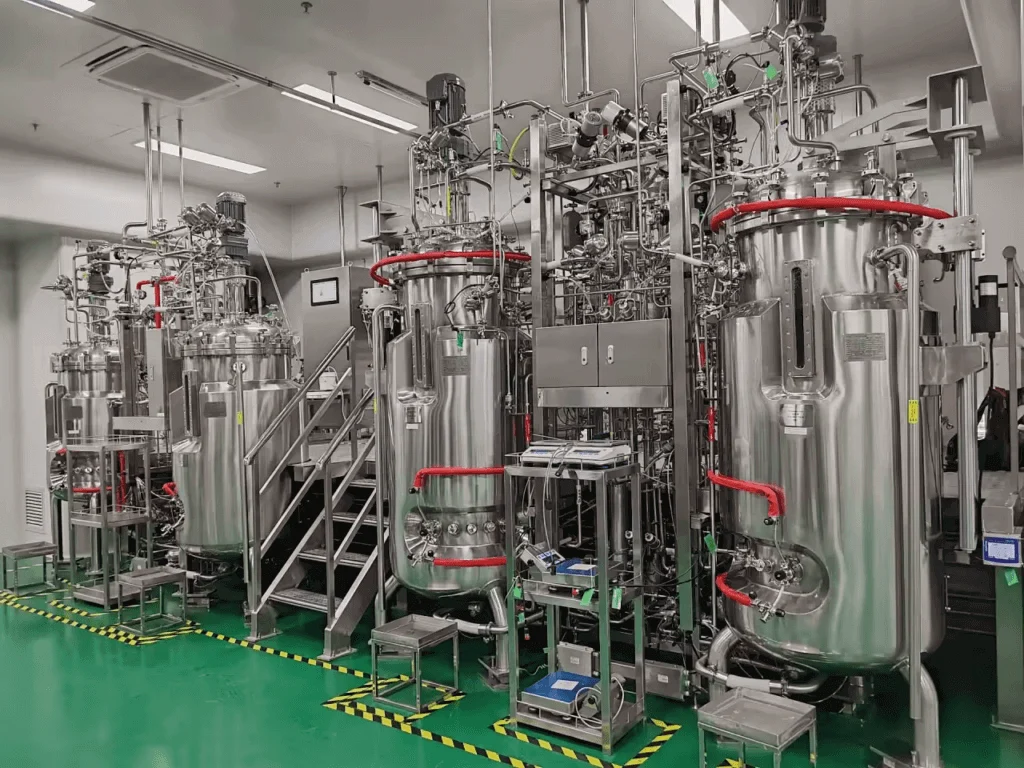
So, what is so essential about the stirred tank concept bioreactor to the biotech operations? How is it designed? What organisms does it support? How can the presence of single-use systems and new reactor technologies forget the old one, which still remains the gold standard?
This detailed article finds answers to some of the following questions and penetrates the depths of the design, operation, advantages, and drawbacks, and practical use of the stirred tank bioreactor. In case you wanted to know how these vessels combine both biology and engineering practices further, then continue reading.
Введение
In biotechnology, particularly in any industry where the need to have controlled and scalable production of biology is ever increasing, the stirred tank bioreactor has continued to be a very important component. Whether you’re producing vaccines, culturing cells, or scaling up enzymes, this bioreactor provides a reliable environment for consistent results.
However, what makes it so resilient in such a fast-paced industry? Let’s start from the basics.
What Is a Stirred Tank Bioreactor?
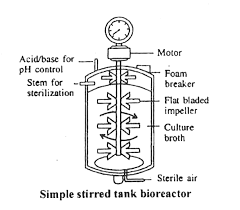
It a closed vessel designed to cultivate organisms such as bacteria, yeast, mammalian cells, or plant cells under controlled environmental conditions. It features a central mechanical agitator (impeller) that stirs the culture, enabling homogeneous mixing of nutrients, gases, and cells.
The primary role of stirred tank bioreactor is to yield:
- Efficient mixing
- Oxygen and nutrient distribution
- Temperature and pH control
- Contamination-free environment
Historical Background
The origin of this bioreactor can be traced back to the second half of the 20th century when the fermentation industries started to automate microbial processes. The need for consistent temperature and oxygen transfer in large-scale antibiotic production (such as penicillin) led to the refinement of STRs.
Throughout the decades, the stricture separated tanks changed to very sophisticated and computer-operated systems that were applied to elite biotech.
Core Components
In order to comprehend the functioning of this kind of bioreactor, we should get acquainted with its main components:
- Vessel:It is filled with stainless steel or glass containing the culture.
- Impeller:Rotating blades for mixing.
- Baffles:Vertical strips to prevent vortex formation.
- Sparger:Introduces air or gas for oxygenation.
- Temperature Jacket or Coil:Maintains optimal temperature.
- Sensors:Monitor pH, dissolved oxygen, temperature, and foam.
- Control System:Automates key parameters.
All the components are important in ensuring there is controlled and productive environment.
Принцип работы

The most important principle of the stirred tank bioreactor is embodied in the idea of the mechanical stirring and aeration.
The medium is stirred by the impeller, it gives an even distribution of nutrients and cells. Meanwhile, the sparger introduces gases (e.g., oxygen) into the liquid phase. Combined, these actions maintain optimal growth conditions by:
- Enhancing mass transfer
- Maintaining suspension of cells
- Reducing concentration gradients
Did you ever watch a cup of tea being sugar stirred? It is that rotating motion that STRs are so faithful at a much higher level of precision.
Типы
There’s no one-size-fits-all model. Stirred tank bioreactor is available in various forms according to the application:
- Batch STR:It has a fixed volume of operation, and it is used most frequently in microbial fermentation.
- Fed-Batch STR:Addition of nutrients in time without culture removal, is handy in case of metabolic pathway control.
- Continuous STR:A constant media replacement is done, and culture discarded continuously, and should be used when a continuous production is desired.
Do you know which type suits your process? Depending on growth kinetics, production goals and scale, you will make your choice.
Key Parameters and Control
In the case of this kind of bioreactor, success will be determined by being able to control closely:
- рН:Affects enzyme activity and cell viability
- Температура:Each organism has its sweet spot
- Dissolved Oxygen (DO):Crucial for aerobic cultures
- Agitation Speed:Impacts shear stress and mixing
- Foam Control:Prevents overflow and contamination
- Стерильность:Prevents foreign microbial intrusion
To maximize the reproducibility of these factors and make them automated modern STRs are installed using SCADA or PLC system.
Microbial vs Mammalian Applications
Primary protein Industries can be versatile, but the arrangement varies with the organism.
- Microbial Cultures (e.g., E. coli, yeast):Higher agitation and aeration, rapid growth, simpler media.
- Mammalian Cells (e.g., CHO cells):Delicate, shear-sensitive, slower growth, require low-speed agitation and specialized impellers.
This is the core knowledge of coming up with an effective bioprocess.
Преимущества
Why is the stirred tank bioreactor still so dominant?
- Excellent mass and heat transfer
- Flexible to batch, fed-batch, and continuous modes
- Compatible with various organisms
- Scalable from lab to industrial levels
- Well-understood and extensively documented
Whether you’re in a university lab or a global biopharma facility, STRs are everywhere.
Limitations
No system is perfect. This bioreactor does come with challenges:
- High energy consumption for agitation
- Risk of shear damage to sensitive cells
- Complex design and maintenance
- Cleaning and sterilization can be time-consuming
However, in lots of apps, the advantages continue to outnumber the disadvantages.
Scale-Up Considerations
Small to large scale transfer of the stirred tank bioreactor is not an easy task.
Factors to consider:
- Geometric similarity (height-to-diameter ratio)
- Impeller tip speed
- Oxygen transfer rate (kLa)
- Power per unit volume (P/V)
Anything that scales well in a 5-liter reactor can fail at a scale of 5,000 liters unless diligently designed.
Cleaning and Sterilization
Clean-in-place (CIP) and steam-in-place (SIP) systems are essential in modern STRs.
- CIP:Cleaning internal surfaces with the help of detergent and water flow
- SIP:Employs pressurized steam to sterilize
This is an experience without which a biotech facility can end up contaminating its surroundings.
Common Issues and Troubleshooting
What if things go wrong?
- Low DO levels? Increase agitation or airflow.
- Foaming issues? Add antifoam or adjust sparger.
- Cell clumping? Reassess mixing or impeller type.
- Inconsistent product yield? Check sensor calibration.
Being proactive can save your batch from disaster.
Применение в биотехнологии
Stirred tank bioreactor is a multipurpose instrument used in many industries, including pharmaceutical, biotechnology, food and beverage, environmental engineering. Processes that are often performed in this bioreactor include fermentation, enzyme preparation, waste treatment and bio fuel production.
It can greatly mix nutrients and oxygen and can control temperature and pH among other major parameters that are significant in growth of microorganisms or cells. It is key to the manufacture of an entire variety of products, including antibiotics and vaccines, bioethanol and bioplastics. Some of its applications are:
- Фармацевтика:Vaccine, insulin, and monoclonal antibody production
- Food & Beverage:Enzyme and amino acid fermentation
- Биотопливо:Ethanol and biodiesel from biomass
- Cosmetics: Natural pigment and aroma production
- Environmental:Wastewater treatment using microbial cultures
Its adaptability is one reason it remains irreplaceable.
Innovations in Stirred Tank Design
Modern STRs are evolving. Innovations include:
- Single-use bioreactors (SUBs) with disposable bags
- Magnetic drive agitators to reduce contamination
- Integrated optical sensors for real-time data
- AI-enhanced process control
Have you adopted any of these new technologies yet?
STR’s Vs Other Bioreactors
How does it compare?
| TYPE | BEST FOR | LIMITATION |
| Stirred Tank | Versatility, scalability | Energy-intensive |
| Airlift Bioreactor | Чувствительные к сдвигу клетки | Lower mixing efficiency |
| Packed Bed | Immobilized enzymes/cells | Difficult to scale |
| Membrane Bioreactor | Wastewater, small molecules | Fouling and maintenance |
Nevertheless, this bioreactor is holding the title of multiple purpose usability.
Real-World Case Studies
Case 1: Pfizer Vaccine Production
Pfizer produced COVID-19 vaccines using lipid nanoparticle, produced in extensive these bioreactors. And critical was the possibility to keep particle size and yield very tightly controlled.
Case 2: Bioethanol in Brazil
In Brazil, the sugarcane fermentation process is based on 24/7 continuous STR capacity that generates millions of liters of bioethanol a day.
How to Select the Right System?
Looking to purchase a stirred tank bioreactor?
Ask yourself:
- What organism will I grow?
- Batch or continuous mode?
- What’s the production volume?
- Will it be used for R&D or production?
To have scalable and customizable solutions, companies, such as БайЛун Био, deal with tailor made bioreactor systems that satisfy your specifications.
Заключение
Stirred tank bioreactor is not only a tank with a stirrer in it. It is an elastic, resilient and very efficient system and it is the backbone of modernized bioprocessing. Generating medicines, to biofuels, STRs enable scientists and engineers to transform biology into the scale-able solutions.
This bioreactor changes with biotech, which is continuously transforming itself, becoming smarter, more high-level material, and increasingly customized.
Часто задаваемые вопросы
Q1. Is an Anaerobic process able to use a Stirred tank bioreactor?
Yes, but it should be closed and prepared in such a way that it does not allow oxygen.
Q2. How often should STRs be cleaned?
Between, before and after batches or campaign, whichever is applicable.
Q3. What is kLa, and why is it important?
kLa Given a situation of the aerobic process, kLa is an important parameter of the oxygen transfer.
Q4. Are single-use stirred tank bioreactors good for commercial production?
Yes, especially for smaller batches and multiproduct facilities.
Q5. Where can I buy a reliable stirred tank bioreactor?
Explore options at БайЛун Био for industrial and lab-scale units.
Should you be interested in our products, please do not hesitate to связаться с нами.
 Русский
  English
  简体中文
简体中文  Español