
Cell and gene therapy represents a revolution in pharmaceuticals and clinical treatment technology, enabling the cure of diseases at the molecular level for humans.

一、Cell and Gene Therapy Technology
Cell and Gene Therapy (CGT) refers to a treatment method that replaces or supplements defective genes in patients with normally functioning ones to cure diseases; alternatively, it transfers certain genetic materials into the patient’s body to allow their expression, ultimately achieving the treatment of specific diseases.
It is a therapeutic approach that uses living cells from patients or donors to replace damaged or diseased cells, or to stimulate the body’s immune response or regeneration. Initially, the concept was proposed for single-gene defect genetic disorders, aiming to replace the defective gene with a normal one or remedy the pathogenic factors caused by the defective gene.
二、Classification of Cell and Gene Therapy Technologies
Cell and Gene Therapy (CGT) technologies can be classified based on DNA – and RNA – based therapeutic directions:
01 DNA – based Therapeutic Directions
It can be divided into ex vivo gene therapy and in vivo gene therapy.
- Ex vivo gene therapy, also known as “in vitro gene therapy”, has CAR – T cell therapy as its most promising therapeutic area. CAR – T products are the most active and mature products among global cell and gene therapy programs, with eight such products having been launched worldwide so far.
- In vivo gene therapy, also referred to as “in – body gene therapy”, mainly uses viral vectors to deliver gene fragments.
02 RNA – based Therapeutic Directions
Currently, nucleic acid drugs are experiencing rapid development. These include antisense oligonucleotides (ASO), RNA interference (siRNA and miRNA), and mRNA vaccines.
三、CAR – T Cell Therapy Technology
CAR – T cell therapy is a type of immune cell therapy. Cellular therapies for cancer typically use stem cells and immune cells, among which immune cell therapy is an immunotherapy that injects immune cells (mainly T cells) into patients to treat cancer. The main types of immune cell therapy include Chimeric Antigen Receptor T – cell Therapy (CAR – T), engineered T – cell receptor therapy (TCR – T), tumor – infiltrating lymphocyte therapy (TIL), and chimeric antigen receptor NK cell therapy (CAR – NK).
Since the FDA approved Novartis’ CAR – T product Kymriah for marketing, immune cell therapy has officially entered a stage of rapid development. Tumor immunotherapy represented by CAR – T was recognized as the top scientific breakthrough by the journal Nature, and CAR – T has also become the most mature technology in immune cell therapy.
CAR – T (Chimeric Antigen Receptor T – cell) refers to T cells modified with chimeric antigen receptors (CARs), which can eliminate target cells in an HLA – independent manner. Through gene modification technology, CAR – T cell therapy transfers genetic materials carrying specific antigen recognition domains and T – cell activation signals into T cells. This enables T cells to directly bind to specific antigens on the surface of tumor cells and become activated.
Activated T cells directly kill tumor cells by releasing perforin, granzyme, etc., and at the same time recruit the body’s endogenous immune cells to kill tumor cells by releasing cytokines, thus achieving the purpose of treating tumors. Moreover, they can form immune memory T cells, thereby obtaining a specific long – term anti – tumor mechanism.

四、Clinical Indications
Due to differences in clinical needs between domestic and overseas markets, the application distribution of cell and gene therapy in clinical indications also varies.
Overseas:
1、Malignant tumor treatment remains the most urgent clinical need, accounting for 41% of all clinical programs. Among these, approximately 74% adopt immune cell therapy, and 22% use oncolytic virus therapy.
2、Nervous system diseases rank second, accounting for about 13%.
3、Ophthalmic genetic diseases come third, accounting for around 9%.
4、Metabolic system diseases take the fourth place, accounting for more than 8%.
5、Hematological system diseases are fifth, accounting for 7%.
6、Musculoskeletal system diseases have the largest potential, with a high probability of developing blockbuster gene drugs, making this field a must – compete area for major overseas pharmaceutical companies.
Domestic:
1、Malignant tumor treatment holds an absolute leading position, with clinical programs accounting for as high as 61%.
2、Hematological system diseases rank second, accounting for nearly 7%.
3、Ophthalmic genetic diseases are third, accounting for about 6%.
4、Respiratory and digestive system diseases take the fourth place, accounting for slightly more than 5%.
Clinical programs related to nervous system diseases and metabolic system diseases, which have a relatively high proportion overseas, account for only 4.8% and 1.6% respectively in China. Both systems are areas with a large number of single – gene defect rare diseases, reflecting that there is still a huge gap in domestic R & D investment in rare disease gene therapy. It is particularly noteworthy that there are no domestic gene therapy clinical programs for musculoskeletal system diseases, indicating a significant gap compared with overseas.
五、Prospects for the Development of China’s Industry
On August 13, 2023, the State Council issued the Opinions on Further Optimizing the Foreign Investment Environment and Increasing Efforts to Attract Foreign Investment. The Opinions support foreign investors in establishing R & D centers in China and increase the introduction of foreign investment in key fields such as cell and gene therapy. It is pointed out that foreign – invested enterprises are encouraged to set up R & D centers in China, carry out joint technological R & D and industrialization applications with domestic enterprises, and foreign – invested enterprises and their established R & D centers are encouraged to undertake major scientific research projects.
On the premise of complying with relevant laws and regulations, the implementation and commissioning of foreign – invested projects in the biopharmaceutical field should be accelerated. Foreign – invested enterprises are encouraged to legally carry out clinical trials of cell and gene therapy drugs that have been marketed overseas in China, and the application procedures for marketing authorization of drugs transferred from overseas production to domestic production should be optimized.
The commercial maturity of cell and gene therapy overseas has reached a relatively high level, with traditional pharmaceutical companies basically completing their layout. The penetration of gene therapy technology is unprecedented, and the industry is in a stage of rapid growth. Its investment, financing, and mergers and acquisitions are mainly driven by advanced innovative gene therapy technologies, and a large number of rare disease gene therapy pipeline R & D constitutes the foundation of the cell and gene therapy industry.
In China, there are currently several factors restricting the development of the domestic cell and gene therapy industry:
- As the terminal products or scenarios involve living cells, the production processes such as plasmid engineering and viral engineering have high production costs and technical barriers. This requires a more refined division of labor in the industrial chain and more specialized construction of supporting platforms. With the rapid growth of domestic cell and gene therapy pipelines, there is an urgent need for an industrial chain that can support industrial development.
- Due to the large R & D investment and high production costs of cell and gene therapy, the treatment costs remain high. The two CAR – T products already launched in China are both priced at over one million yuan. The excessively high price prevents them from being included in medical insurance. At present, the commercial maturity of domestic cell and gene therapy is relatively low, the penetration of gene therapy technology is insufficient, and the layout and involvement of traditional pharmaceutical companies are not high. On the whole, the industry is in the early stage of growth.
Although the overall scale is still small, the development speed is very fast. In clinical programs, the distribution of indications is unreasonable, with ex vivo cell and gene therapy for malignant tumors accounting for an absolute share, and the level of original technology is relatively low. However, in the face of numerous and ever – emerging unmet clinical needs, China’s cell and gene therapy industry will have huge development space, and it is possible for China’s cell and gene therapy industry to drive the rise of China’s manufacturing industry once again.

About Bailun
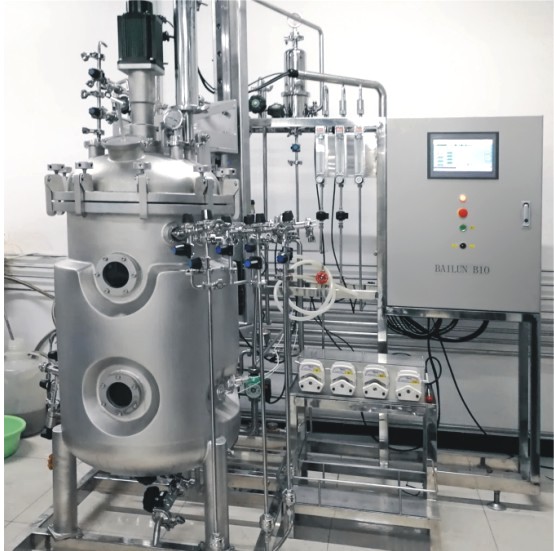
Bailun has extensive experience in the manufacturing of various bioreactors and pressure vessels. We have a team of experts in the fields of bioreaction, fermentation technology, mechanical manufacturing, and automatic control. Our scientific research and technological capabilities are always at the leading domestic and first – class international level, providing you with satisfactory, reliable, and reassuring product experience. Contact us