
The difference in yield between fermentation tanks and shake flasks depends on many factors. The exact difference changes based on the process, the microorganism used, and the type of product being made.
1. Differences in Scale and Environment
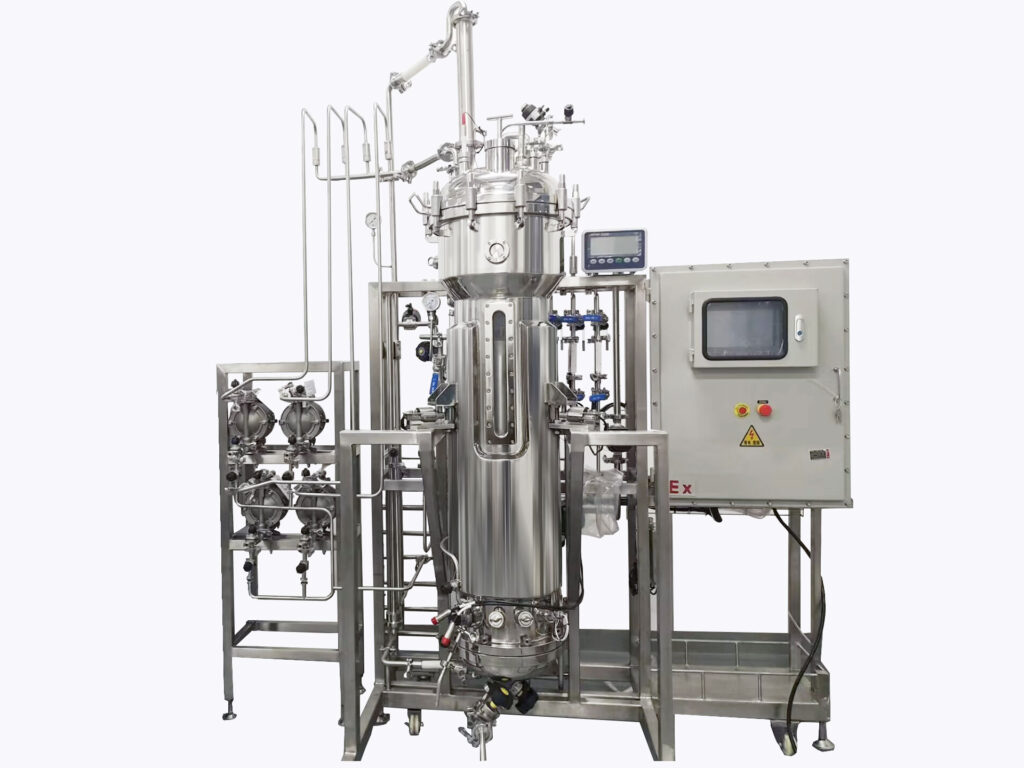
Fermentation tanks are much larger than shake flasks. Their size can range from a few cubic meters to several hundred cubic meters. Large fermentation tanks can process a lot of fermentation broth at once. This ability allows them to produce a much higher total yield compared to small laboratory flasks.
For example, in industrial antibiotic production, large fermentation tanks can hold several tons of culture medium. If the temperature, pH, and aeration are controlled properly, the system can produce large quantities of antibiotics efficiently. These tanks allow continuous monitoring and adjustments, which ensure that the fermentation conditions remain optimal throughout the process.
The environment in a tank is stable. It provides uniform temperature, pH, and oxygen levels for all the microorganisms. The stirrer and aeration system help distribute oxygen and nutrients evenly. This control is very important because uneven conditions can slow microbial growth or reduce product formation.
For instance, adjusting the stir speed and airflow ensures that microorganisms in every part of the tank get enough oxygen. Without this, some cells might grow slower or produce less product, lowering the overall yield.
Shake flasks, in contrast, are small. They typically hold from a few dozen milliliters to a few liters of culture medium. This limits production, so each batch yields a smaller amount of product.
For example, during laboratory research, 250 mL or 500 mL flasks are commonly used for testing. They only produce enough material for small experiments such as composition analysis or preliminary activity testing.
Shake flasks also have less uniform environmental conditions. Shaking helps mix the liquid and cells, but the temperature and oxygen are not evenly distributed. Microorganisms near the wall and in the center may experience different oxygen levels and temperatures, causing uneven growth.

2. Differences in Oxygen Supply
Fermentation tanks are equipped with strong aeration systems. They include air filters, air distributors, and impellers. Air spreads evenly throughout the liquid. Bubbles are broken up by the stirrer, giving microorganisms enough oxygen to grow and produce the target product.
For example, in aerobic fermentation tanks for amino acid production, the tank can control air flow and stir speed precisely. This keeps dissolved oxygen at the level needed for fast microbial growth and efficient product formation.
Some tanks use special oxygen methods. These include pure oxygen aeration or oxygen-enriched air. These techniques increase the oxygen concentration in the liquid. As a result, microbes grow faster and produce more product.
High oxygen supply is particularly important in dense cultures. Microbes in these conditions need a lot of oxygen. Without enough oxygen, their metabolism slows down, reducing the yield.
Shake flasks, on the other hand, rely only on shaking for oxygen supply. As the flask moves, the liquid forms waves that touch the air. This allows some oxygen to dissolve into the medium.
The small opening of the flask limits how much air can enter. As microbial density increases, their oxygen demand rises. Shake flasks often cannot supply enough oxygen, which limits production.
In practice, fermentation tanks usually produce far more product than shake flasks. The difference can be several times, tens of times, or more. The exact difference depends on the type of microorganism, the product, and the fermentation conditions.
3. Application and Process Goals
Shake flasks are mainly used in laboratory research. They are easy to handle and low-cost. They are suitable for tasks like strain screening y preliminary process optimization.
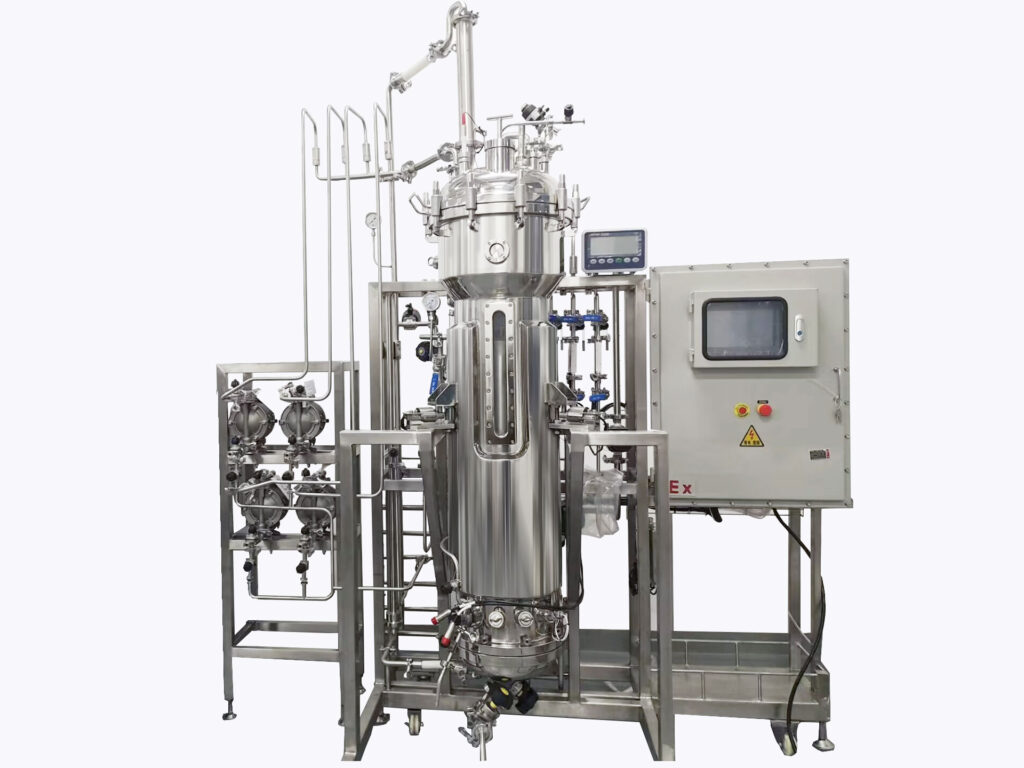
Fermentation tanks are essential in industrial production. They provide precise control of environmental conditions. They also allow a high rate of oxygen supply. These features make large-scale, high-efficiency production possible.

Sobre Bailun
Bailun has extensive experience making reactors and pressure vessels.The team includes experts in bioreaction engineering, fermentation process design, mechanical engineering, and automation control. Bailun’s technology is leading in China and recognized internationally. Contáctenos