
Bioprocessing technology has very wide applications. Many products in our lives depend on it. For example, in biofuel production, yeast or bacteria can ferment carbohydrate-containing biomass into ethanol, biodiesel and other substances. The most remarkable application of bioprocessing is in biopharmaceuticals. For example, diabetic patients need insulin. Now it is produced industrially.
What is bioprocessing?
In the past, insulin was extracted from the pancreas of cattle and pigs. This method had low yields. The purity was poor. There was a high risk of allergies. The effects did not last long. In 1983, people started using bioprocessing technology. They can synthesize human insulin with E. coli. The product quality is high. The yield is large. The treatment effect is significantly improved. It helps patients live longer. Bioprocessing is actually quite simple. It means giving microorganisms “instructions”. They will synthesize target substances according to our needs.
These “instructions” are to introduce DNA fragments into microorganisms. Then people provide suitable nutrients to them. They also provide a suitable growth environment in a bioreactor. The microorganisms will then do their tasks well. Bioprocessing is mainly divided into two stages. They are upstream and downstream. The upstream stage involves culturing cells and producing products. The downstream stage involves separation and purification. Finally, the finished product is produced. Each step needs precise coordination.
Upstream bioprocessing
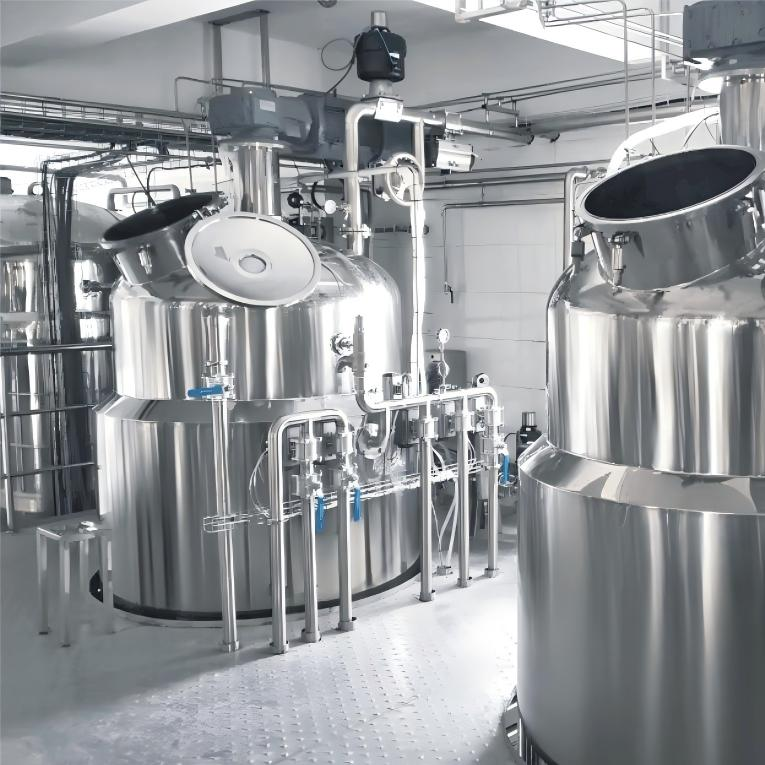
The core equipment in upstream bioprocessing is the bioreactor. Cells proliferate here. They synthesize the desired products here. The first step in bioprocessing is selecting biological materials. Commonly used materials include bacteria, yeast and mammalian cells. Each has its own characteristics. Bacteria grow quickly. They are low-cost. But they are not good at producing certain proteins. Mammalian cells can produce good proteins. But they are expensive. They are prone to contamination. Selecting the right materials is crucial. It helps bioprocessing start smoothly.

After selecting the materials, people need to prepare a culture medium. This is the “food” for microorganisms. It contains nutrients such as amino acids and carbohydrates. People also need to adjust the pH and osmotic pressure. This ensures microorganisms are comfortable. Optimizing the culture medium is critical in bioprocessing. In the past, this was done through trial and error. Now, “experimental design methods” can be used. They can quickly find the optimal formula. They can increase product yield.
Inoculation is the next step in bioprocessing. It involves transferring the bacterial strain to a larger-scale culture medium. The inoculation volume is generally 1/20 to 1/200 of the culture medium volume. A suitable environment is essential. It helps microorganisms proliferate rapidly. It also helps them efficiently synthesize recombinant proteins or metabolites.
Bioreactors in bioprocessing operate in four modes. Each has its own purpose. Batch mode is simple. It is low-cost. It is suitable for research and development. Fed-batch mode provides continuous nutrient supply. It is the mainstream in biopharmaceuticals. Perfusion mode allows for continuous product harvesting. It has high production efficiency. Continuous fermentation mode is suitable for food processing. It provides a stable nutrient supply.

After cultivation, harvesting is crucial. It is a vital upstream step in bioprocessing. People need to remove cells, debris and impurities. They can use methods such as centrifugation and filtration. If not, it will affect subsequent purification steps. It will hinder downstream processing.
Real-time monitoring is also essential during bioprocessing. It follows the principle of “quality by design”. People can use techniques such as Raman spectroscopy and mass spectrometry. They monitor key parameters. These parameters include nutrient concentration and cell density. This can reduce waste. It can increase yield. It can ensure more stable production quality.
After the upstream phase, people move to downstream bioprocessing. The core task here is to thoroughly separate and purify the product. The first step is capture. It separates the target product from the mother liquor. Affinity chromatography is commonly used. It has high selectivity and effectiveness. Next is concentration. It removes salts and small molecule impurities. It concentrates the product. Techniques such as tangential flow filtration are commonly used in bioprocessing. They achieve this goal.

The purification stage involves further purification. People use chromatographic methods. These methods include size exclusion and ion exchange. They ensure the product meets purity standards. Some products also require bioconjugation. For example, labeling proteins. This improves activity or stability. It makes the product more usable. The final step in bioprocessing is formulation. People add excipients. They adjust buffer solutions. Then they use spray-drying or freeze-drying. This creates a solid dosage form. It is easy to store and use.
Bioprocessing transforms the natural capabilities of microorganisms into practical technologies. It goes from laboratory research to mass production. Every step relies on scientific design. Bioprocessing is now not only transforming the pharmaceutical industry. It also plays a role in food, energy and environmental protection. Technology continues to advance. Bioprocessing will become more efficient and economical. It will bring more convenience and surprises to our lives.
Bailun is a company focused on utilizing ensures a dual enhancement of efficiency and product quality. Committed to providing customers with solutions that are efficient, sustainable, and adaptable to changes in industry demands. Contáctenos