
An animal cell bioreactor is a system that copies the living environment of animals for cell culture outside the body. It is a high-tech system that combines mechanics, fluid flow, control engineering, and biotechnology. The main goal is to grow cells at high density and to produce useful medical products, such as enzymes, monoclonal antibodies, and vaccines. Traditional biopharmaceutical processes often have long production times, complex steps, heavy labor needs, and high risk of contamination. So, bioreactor systems provide better stability and safety. They also reduce labor, space use, and energy use, so production costs are lower.

01 Stirred-Tank Bioreactors
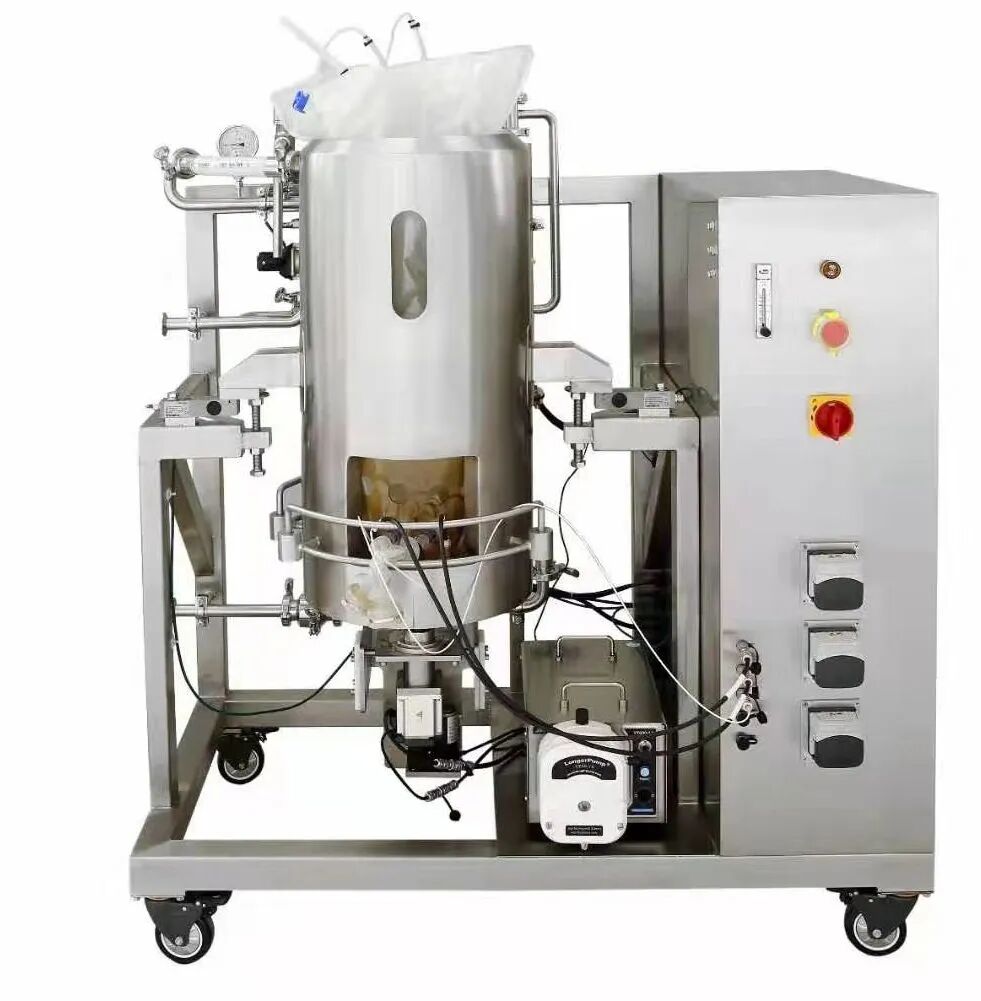
Stirred-tank bioreactors use rotating impellers to drive liquid flow and mix the culture medium. Their structure is similar to microbial fermenters, but the agitator design is different. Animal cells do not have cell walls, so they are very sensitive to shear force. Because of this, stirred-tank bioreactors are improved by changing impeller design, gas supply methods, and added parts to create a better growth environment.
1.1 Agitators
The type of agitator strongly affects cell growth. Impellers must mix well and keep shear force low. The main goal is to let cells grow in a low-shear flow field. Common agitator types include propeller impellers, Rushton impellers, and Elephant Ear impellers.
- Propeller impellers mainly create axial flow.
- Rushton impellers mainly create radial flow, and they have high shear force and weak mixing. So, baffles are often added to create axial flow, or double-layer Rushton impellers are used.
- Elephant Ear impellers create both radial and axial flow. So, they allow good gas-liquid mixing with low shear force.
Based on standard impellers, new designs add extra parts. For example, negative pressure in a hollow shaft pulls medium from the bottom and releases it at the top. Rotating filters can also be added to collect cell-free medium.
1.2 Spargers
The sparger design affects how well oxygen dissolves in the medium. Common spargers include L-type, ring-type, and microporous types.
- L-type spargers are simple and easy to make, so they are used in small reactors. But oxygen spreads unevenly, so they are not good for large reactors.
- Ring-type spargers are widely used. They usually have 5–6 holes with sizes of 0.5–1 mm.
- Microporous spargers are made by pressing and heating metal powders. Gas passing through breaks into very small bubbles.
During mass transfer, the liquid film around bubbles slows oxygen transfer. Cells are slightly hydrophobic, so they gather at the gas-liquid surface and can be damaged when bubbles burst. Stable bubbles can also cause local lack of nutrients.
1.3 Temperature Control Methods
Animal cells are usually cultured at about 37 °C, and the control error should be within ±0.25 °C. Heat comes from cell reactions, mixing, heat loss, and aeration. Temperature can be controlled by wall heating, bottom heating, or side wall heating. Water jackets, electromagnetic heating, or electric blankets are commonly used. Temperature changes must be slow because sudden changes can damage cells and cause cell death.
02 Non-Stirred Bioreactors
Stirred-tank bioreactors can damage cells because of shear force. Non-stirred bioreactors create lower shear stress, so they are better for animal cell culture.
2.1 Airlift Bioreactors
Биореакторы Airlift add a draft tube to a bubble column. They have simple structure and easy operation. Turbulence is low, and shear damage is small, so they support high-density cell culture. But, after scale-up, it is hard to define safe shear limits, so large-scale use is limited.
2.2 Hollow Fiber Bioreactors
Hollow fiber bioreactors use hollow membranes to separate cells from the medium. Cells grow on the inner and outer fiber surfaces. The fibers copy capillary structure. They have an inner diameter of about 200 μm and wall thickness of 50–70 μm. The walls are porous, so small molecules like O₂ and CO₂ can pass through. These reactors reduce shear stress and improve oxygen transfer, so they allow high-density culture. But they have uneven conditions, unstable product quality, and problems with scale-up, cleaning, and reuse.
2.3 Wave Bioreactors
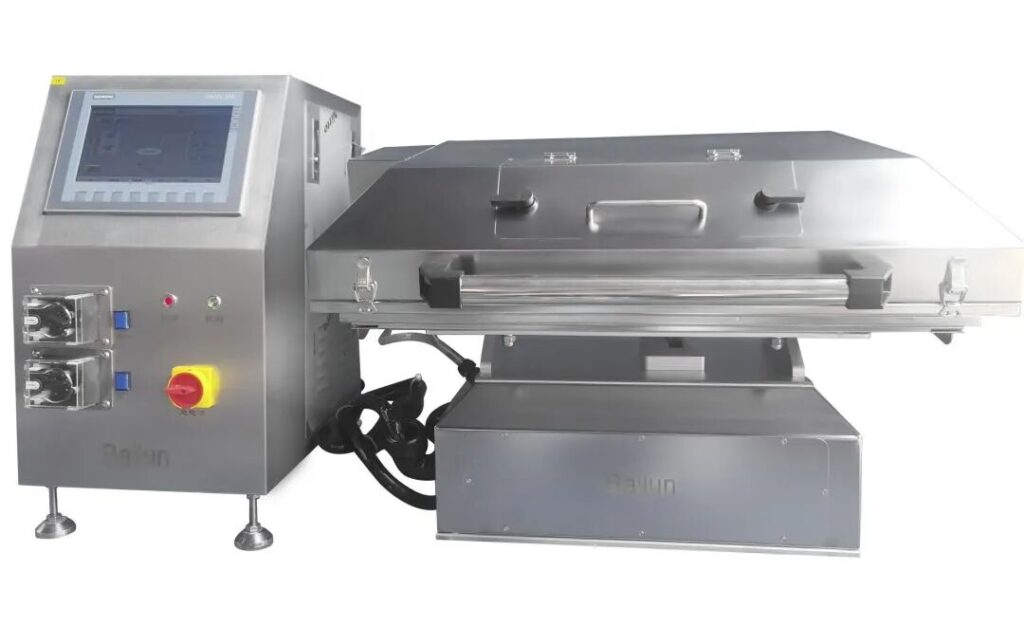
Wave bioreactors use bubble-free oxygen transfer. Mechanical shaking creates waves that wash oxygen across the inner surface of the culture bag. So, oxygen dissolves faster into the medium. These reactors avoid shear from stirring and bubbling, and oxygen transfer is improved. Cell survival is higher, and scale-up is easier. Also, cleaning and sterilization steps are not needed. But the initial cost is high.
03 Novel Bioreactors
Animal cell culture is complex, so different reactors are needed for different cell lines. In recent years, many new bioreactors have been developed to reduce foaming and shear stress.
3.1 Packed-Bed Bioreactors
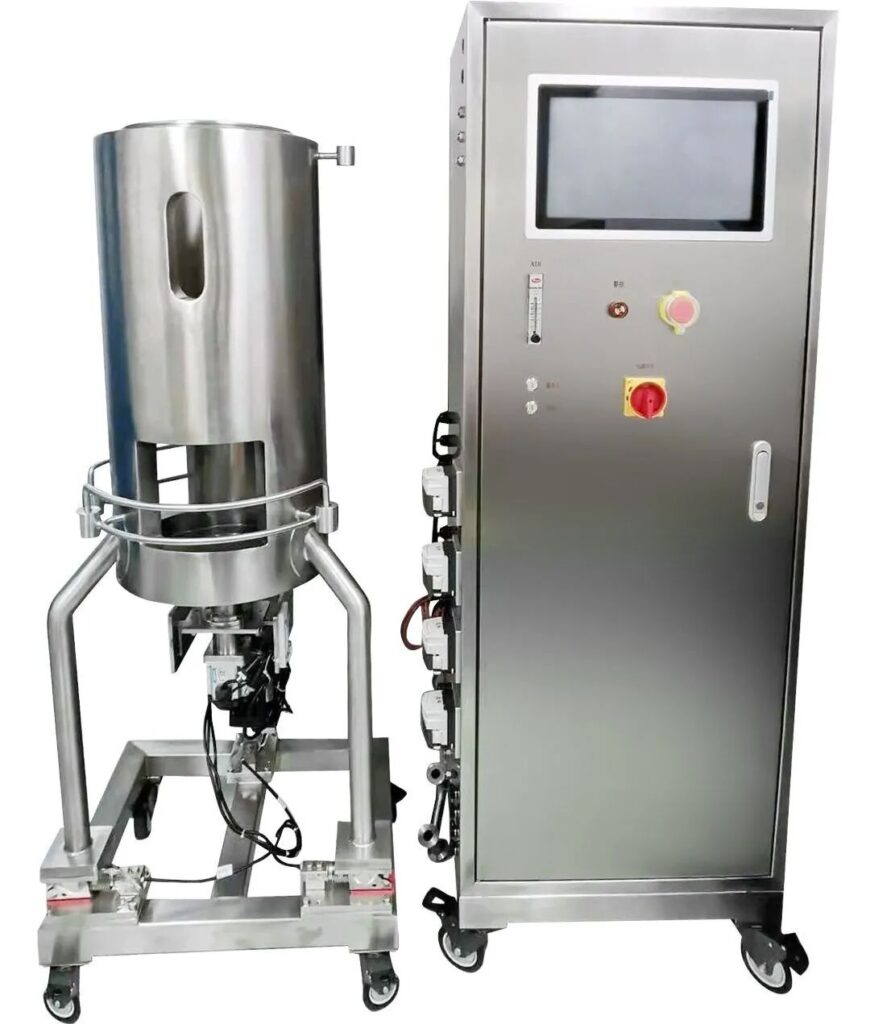
Packed-bed bioreactors contain solid materials that support cell attachment and growth. Cells stay inside the packed bed. Sheet carriers are often used. Fresh medium flows continuously to supply nutrients and remove waste. Cells remain trapped, so very high cell density can be reached. Packing materials include ceramic beads, polyurethane foam, glass fibers, microcarriers, and sheet carriers. Based on flow pattern, packed-bed reactors are divided into fluidized-bed and fixed-bed types.
- Fluidized-bed bioreactors move medium upward by aeration and A membrane system is added to allow perfusion culture. These reactors provide bubble-free aeration, good mass transfer, and low shear stress.
Fixed-bed bioreactors are modified from fluidized-bed bioreactors by adding fixed medium components. Their major limitation is the inability to directly measure cell growth density and viability. Nevertheless, they optimize the culture environment for cell growth and product synthesis, and are currently widely applied in the production of recombinant proteins.
3.2 Pulsatile Laminar Flow Bioreactors
Developed by Thompson et al., pulsatile laminar flow bioreactors generate pressure waveforms similar to physiological conditions. Pulsatile laminar flow is introduced into the fluid column using mechanical ventilators, producing pressure waveforms that mimic mammalian physiology. Vascular structures are placed in semi-compliant tubes to induce additional circumferential stretching as a potential signal transduction mechanism.
3.3 Shaker Bioreactors
Shaker bioreactors use shaking plates instead of impellers; the culture bags generate wave motion to provide power for liquid-phase mixing. Their advantages include suitability for the culture of various cell types, easy linear scale-up, high recombinant protein yield, and savings in space and labor costs.
The Wave bioreactor developed by GE Healthcare is widely used. It replaces the stainless steel (or glass) tank body of traditional fermenters with plastic bags made of multi-layer composite films. These plastic culture bags are fixed on the vibration platform of the main unit and perform a “seesaw”-like reciprocating motion, causing the culture medium inside the bags to generate periodic wave motion for uniform mixing.
3.4 Space Bioreactors
Space bioreactors are so named because they simulate a microgravity environment. Their structure consists of inner and outer cylinders, where the outer cylinder is fixed and the inner cylinder rotates, reducing the effective gravity acting on the culture to a certain extent. Their advantages include elimination of shear stress from agitation, protection of cells from mechanical damage, and provision of a three-dimensional growth environment for cells. Space bioreactors provide a novel approach for the in vitro reconstruction of human tissues.
О Баилуне
Bailun boasts extensive experience in the manufacturing of various bioreactors and pressure vessels. We have assembled a team of experts specializing in biological reaction engineering, fermentation technology, mechanical manufacturing, and automatic control. Our research and technological capabilities maintain a leading position domestically and reach an advanced international level. We are committed to providing customers with reliable, satisfactory, and reassuring product experiences. Связаться с нами