
Currently, the development of efficient green biomanufacturing technologies based on high-performance microbial chassis cells has become a research hotspot in the field of synthetic biology. As a non-conventional yeast, Yarrowia lipolytica is an important oleaginous microorganism. First discovered in 1942, it has attracted extensive attention in academic research and industrial production, and is now one of the most widely studied and applied microbial chassis cells.
Yarrowia lipolytica is generally found in environments rich in lipids and proteins, and has been recognized as a Generally Recognized as Safe (GRAS) microorganism by the U.S. Food and Drug Administration (FDA). This yeast has unique physiological and biochemical features. It has great value for academic research and industrial uses.
It is a typical dimorphic yeast. So, Yarrowia lipolytica is a model organism to study fungal dimorphism.
It is an obligate aerobe. It uses respiration to grow. It is a typical Crabtree-negative yeast. So, it has great potential for many industrial uses.
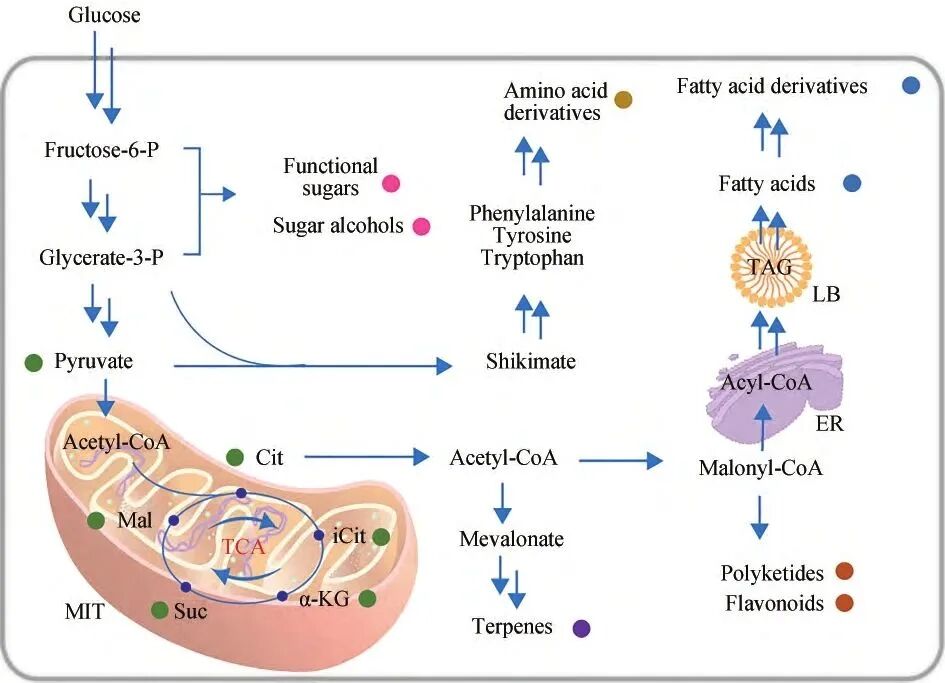
It has a unique intracellular citrate shuttle pathway. It makes acetyl-CoA efficiently. Acetyl-CoA is a key precursor for making many compounds. So, it is very good for producing lipids, terpenoids, and other chemicals.
It has high intracellular tricarboxylic acid (TCA) cycle flux. So, it is ideal for making a series of organic acids.
It can break down lipids and alkanes. So, it plays an important role in cleaning environments contaminated by oil and petroleum.
1. Development of Genetic Modification Technologies and Tools
Efficient genetic modification technologies and mature genetic manipulation tools are needed to help develop cell factories. In recent years, synthetic biology has advanced quickly. Many gene expression control elements have been developed for Yarrowia lipolytica. These elements include promoters, terminators, and selection markers.
Putting various synthetic biology components, target genes, or metabolic pathways into chassis strains is a necessary step for their synthetic biology modification. This step depends on gene expression and integration methods made for the specific chassis. The new CRISPR/Cas-mediated gene editing technology has worked a little in Yarrowia lipolytica. This has speeded up the development and use of its chassis cells a lot.
2. Strategies for Regulating Gene Expression
Strategies to Enhance Gene Expression
Increasing Gene Copy Number
When building metabolic pathways for high-value-added products in Yarrowia lipolytica, people often need to overexpress key enzymes. Increasing the copy number of target genes is a way to raise their transcriptional levels. This way is workable.
Strengthening Promoter Activity
To make promoters stronger and easier to adjust, many promoter engineering strategies have been used to improve endogenous promoters. A commonly used hybrid promoter in Yarrowia lipolytica is php4d. It is made by joining four UAS1B elements from pXPR2 with the core promoter of pLEU2. This promoter has clear advantages for heterologous protein expression. It is not affected by environmental conditions. These conditions include pH or carbon/nitrogen sources. It can drive strong gene expression in any culture medium.
Codon Optimization
People often need to express heterologous genes when modifying Yarrowia lipolytica chassis cells. Each host organism has its own preferred codons. So, codon optimization is needed to make heterologous genes fit the chassis. Optimized codons can improve the translation speed of heterologous proteins. They also help proteins fold correctly. So, codon optimization is a common way to enhance the expression of exogenous genes in Yarrowia lipolytica chassis cells.
Dynamic Regulation Strategies for Gene Expression
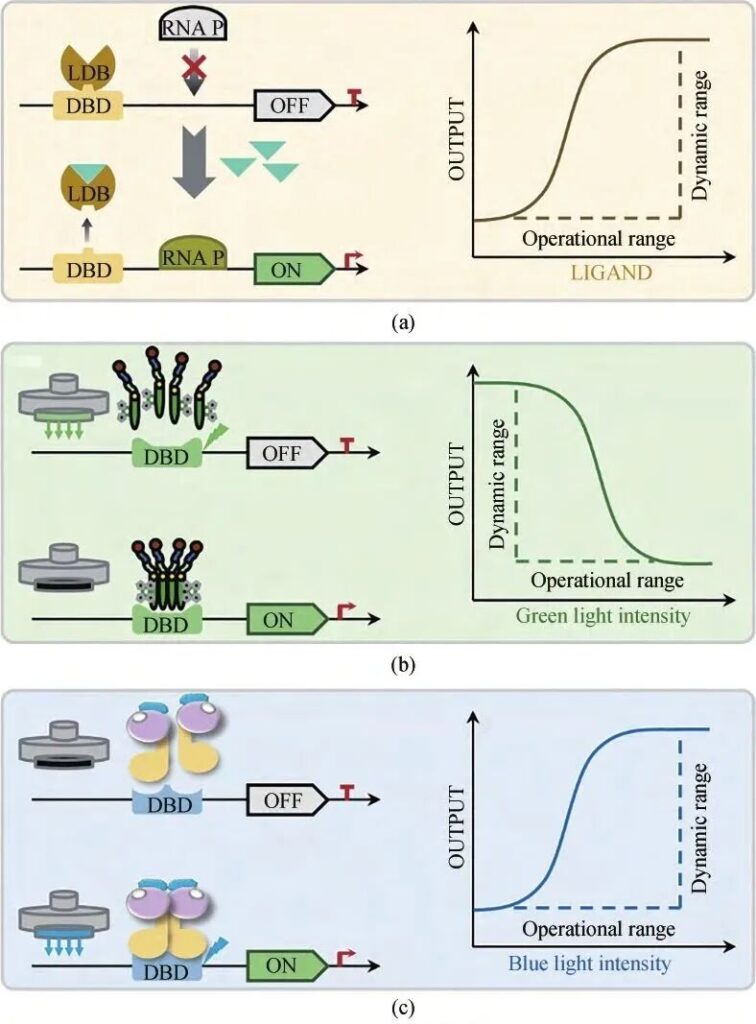
In recent years, in-depth understanding of the metabolism of Yarrowia lipolytica chassis cells and the development of sophisticated synthetic biology tools have enabled intensive engineering modifications, maximizing the yields of target products. However, metabolically imbalanced engineered chassis cells often limit further improvements in target product yields.
Recently, dynamic regulation systems based on transcription factors that respond to specific intracellular metabolites—particularly those leveraging the relatively simple regulatory mechanisms of prokaryotic transcription factors—have been widely used to construct biosensors in eukaryotes, effectively addressing this challenge.
3. Genome-Scale Metabolic Modeling
Genome-scale metabolic modeling (GSMM) is a powerful approach for investigating the metabolic characteristics of microbial chassis cells by constructing genome-scale metabolic models (GEMs). As an effective tool for predicting metabolic flux distributions, GSMM helps to decipher complex cellular physiological metabolism and guides the design of chassis cells and the optimization of production performance.
The construction of GEMs provides essential tools for synthetic biology research, significantly accelerating the Design-Build-Test-Learn (DBTL) iterative cycle in synthetic biology studies. GEMs, combined with various constraint-based modeling methods, have paved the way for in-depth understanding of microbial chassis cell metabolism. Moreover, when integrated with numerous computational strain optimization methods (CSOM), GEMs have been successfully applied to identify novel gene manipulation targets for the synthetic biology engineering of various industrial microbial chassis cells.
4. Future Perspectives
To fully exploit the potential of Yarrowia lipolytica chassis cells, future research should focus on two key aspects:
Further improving the synthetic biology toolbox for this yeast to enhance the efficiency of genetic modification. Specifically, this involves identifying new synthetic biological parts, developing novel methods for fine-tuning gene expression, improving the editing efficiency of CRISPR/Cas systems to enable precise and efficient genome editing, and optimizing DNA assembly techniques to rapidly validate the functionality of heterologous metabolic pathways.
Effectively integrating synthetic biology with systems biology and other disciplines. This includes using top-down (high-throughput omics analysis) and bottom-up (mathematical modeling) systems biology tools to identify potential genetic modification targets for high-yield production of target compounds in Yarrowia lipolytica chassis cells. Building on the improved synthetic biology toolbox, fine-tuning or perturbing these identified genetic targets will ultimately realize the upgrading, modification, and application of Yarrowia lipolytica chassis cells.

О Баилуне
Bailun boasts extensive experience in the manufacturing of various bioreactors and pressure vessels. We have assembled a team of experts specializing in bioreaction, fermentation processes, mechanical manufacturing, and automated control. Our scientific research and technological capabilities are consistently at the domestic leading and international first-class level, dedicated to providing you with reliable, trustworthy, and satisfactory product experiences. Связаться с нами