
The fast-developing field of biotechnology can be deemed a phenomenon. The fluidized bed bioreactor is one such technology and form of engineering breakthrough. But what makes this reactor so different? Consider the possibilities of having microscopic particles which are suspended optimally by an ascending flow of liquid or gas to have a dynamic and highly productive space in which cells and microorganisms can be grown. That is the secret of this bed bioreactor making the old traditional static systems into dynamic moving bed systems.
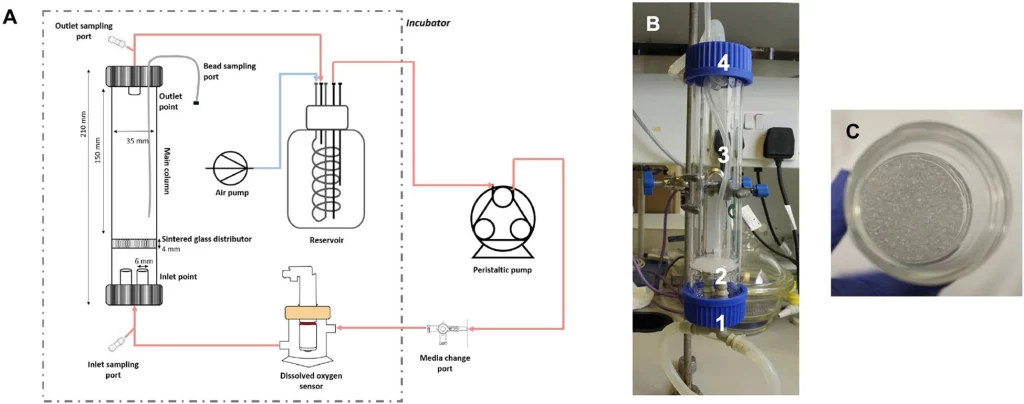
The emergence of this bed bioreactor is as a result of the existence of shortcomings of packed bed bioreactor and stirred tank bioreactor. Such systems tend to have problems with mass transfer, channeling or destructive shear on fragile cells. This bed bioreactor enhances the delivery of oxygen and nutrient by maintaining support particles in motion, eliminates clogging and maintains the cell layers dispersed and uniform. That is why researchers, pharma organizations, and industrial biotechnology companies are giving more consideration to this design.
Have you ever wondered why some bioprocesses work on an industrial scale and others run strain at laboratory scale? In many cases, it is all about effective mass transfer, and the fluidized bed bioreactor shines there. It has the capacity of high cell density with low shear and as such is an essential contributor to creating antibiotics, enzymes and biofuel as well as others. Let’s explore how this system really works.
What Makes This Bed Bioreactor Work?
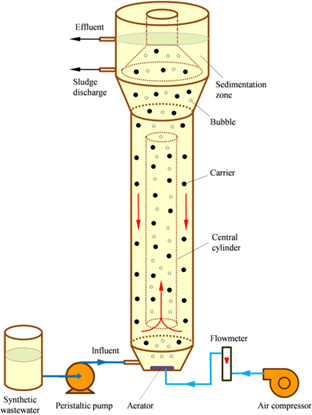
The fluidized bed bioreactor is all about a well-balanced flow path. A liquid (or sometimes gas) moves upward at just the right velocity to lift and suspend solid particles, often coated with immobilized cells or enzymes. The purpose of the design is such that it keeps the particles swirling instead of them resting at the bottom.
Key design features include:
- Distributor plates or spargers: maintain flow of fluid so it is not channeled.
- Support particles: These can be in form of alginate beads, ceramics or other biocompatible materials.
- Expansion zone: In this area the fluid decelerates and particles resettle preventing carryover.
- Sampling ports and sensors: Examine pH, dissolved oxygen and temperature.
- External loops: To boost the ability of heat transfer or recirculation, sometimes extra external loops are added.
A fluidized bed bioreactor does not use a mechanical agitation unlike stirred tank reactors. This milder method of gradual shear-dissolution is ideal to apply on shear-sensitive cell, such as animal or plant. That is why such reactor is utilized in vaccine production, tissue engineering, even in waste water treatment.
The design challenge? Balancing particle size, fluid velocity, and bed height. With a slowly moving flow the particles settle, with a too rapid-moving flow they get washed away. Modern systems use computational fluid dynamics (CFD) to predict and perfect these parameters.
Usage and Benefits
Where does the fluidized bed bioreactor shine? Almost everywhere high productivity and delicate cells intersect.
- Pharmaceutical production: Antibiotics, recombinant proteins, and vaccines.
- Биотопливо: Converting agricultural residues into ethanol and biodiesel.
- Wastewater treatment: Removing organic pollutants and nutrients efficiently.
- Enzyme production: High-density cultures boost yield.
- Tissue engineering: Growing bone and cartilage on scaffolds.
Why choose this reactor? Its advantages include:
- Enhanced mass transfer: Nutrients and oxygen are in circulation by means of fluid flows.
- Low shear stress: Ideal for fragile cells.
- Compact footprint: Higher cell density means smaller tanks.
- Reduced fouling: Constant motion prevents biofilm buildup.
- Imagine: to have the productivity doubled, but not the equipment size! That’s the promise of the fluidized bed bioreactor.
Challenges and Innovations
Even the best technology has hurdles. The velocity of fluid in the fluidized bed bioreactor is very important. Excessive, and the particles are lost, too low and the bed collapses.
Other challenges include:
- Channeling: Uneven flow can create dead zones.
- Particle attrition: Beads may break down over time.
- Foaming: Excessive foam can disrupt fluidization.
- Heat transfer: High-density cultures can create hotspots.
To tackle these, engineers have introduced:
- Smarter distributor plates to ensure even flow.
- Stronger, porous particles to handle repeated cycles.
- Integrated sensors and real-time monitoring.
- Hybrid designs: These are a combination of the fluidized beds together with the external loops or sparged tanks.
Have you ever thought how a reactor can be used around the clock without becoming clogged? Of course, the trick is frequently hidden in the intelligent design in details which engineers apply to improve the performance and reliability.
The main design aspects, i.e., effective flow patterns, correct sizing of outlets and inlets, specialty materials, are significant factors to prevent blockage. As an example, the features such as turbulence promoters could be included to make sure that the flow rates remain even; as a result, chances of the sedimentation and the buildup are minimized. Moreover, the presence of sensors in strategic locations, as well as automated cleaning systems, can check and nip any possible problems before they grow to intolerable proportions, thus preventing breakdowns.
These design innovations do not only enhance the efficiency in the reactor, but are also contributory to the safety and the life cycle of the system itself. Manufacturers are focusing on these critical factors so that their reactors keep operation to the highest level of productivity and the minimal amount of downtime.
Why Industries Are Investing in Fluidized Bed Bioreactors?
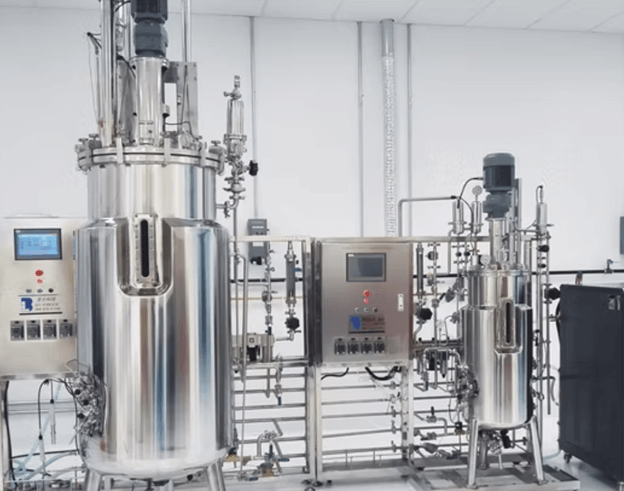
Modern day biotechnology industry is more demanding: increased yields, reduced inputs, reduced foot prints. That’s where these bed bioreactor delivers.
- Continuous production: Ideal for long runs.
- Масштабируемость: Lab models scale up to industrial volumes.
- Flexibility: Handle bacteria, yeast, plant, or animal cells.
- Reduced downtime: Less clogging means fewer shutdowns.
This technology is finding its way into the pharma industry as well as the energy industry as well as the food industry. And it is not only large businesses, smaller laboratories are discovering that they can easily test their ideas using pilot-scale fluidized bed bioreactors within a very highly affordable platform.
A question must be asked, due to the need of sustainability and efficiency: might this bed bioreactor become the new gold standard?
The Future: Smart, Sustainable, and Connected
What’s next? Future fluidized bed bioreactor will not only be a vessel, but a smart bioprocessing unit.
Emerging trends include:
- Real-time analytics: To streamline fluid flows and achieve nutrients.
- Single-use designs: Reduce contamination risk and cleaning costs.
- Eco-friendly materials: Biodegradable or fully recyclable beads.
- Integration with upstream/downstream: Seamless product recovery and purification.
Consider a large network of simultaneously operating fluidized bed bioreactors in which each reactor operates on live data to control its own flow rate and temperature. That’s the next biotechnology frontier.
Заключительные мысли
Fluidized bed bioreactor is not the common reactor, but it is the silent worker transforming the biotechnology. It is highly efficient due to its peculiar design that relies on the suspension of solid particles in a liquid and makes possible an increase in mass and heat transfer.
In pharmaceutical industry, fluidized bed bioreactors assist in the generation of high quality biopharmaceuticals and play a key role providing a more conducive environment in the production of microbial products and biopharmaceuticals development. They are also essential in the utilization of bioenergy wherein bio mass is transformed into energy of a sustainable mode, thus reducing the dependence on fossil fuels and reducing the impact on the environment.
Besides, the novelty and high-energy design of this bed bioreactor helps industries work in a more sustainable way. These bioreactors also allow saving energy and producing zero waste due to the limited use of resources and enhancing reaction efficiency. Their versatility also makes them highly useful through time in the various industries, owing to their capability to accept a vast source of feedstock as well as the ability to accommodate various procedures.
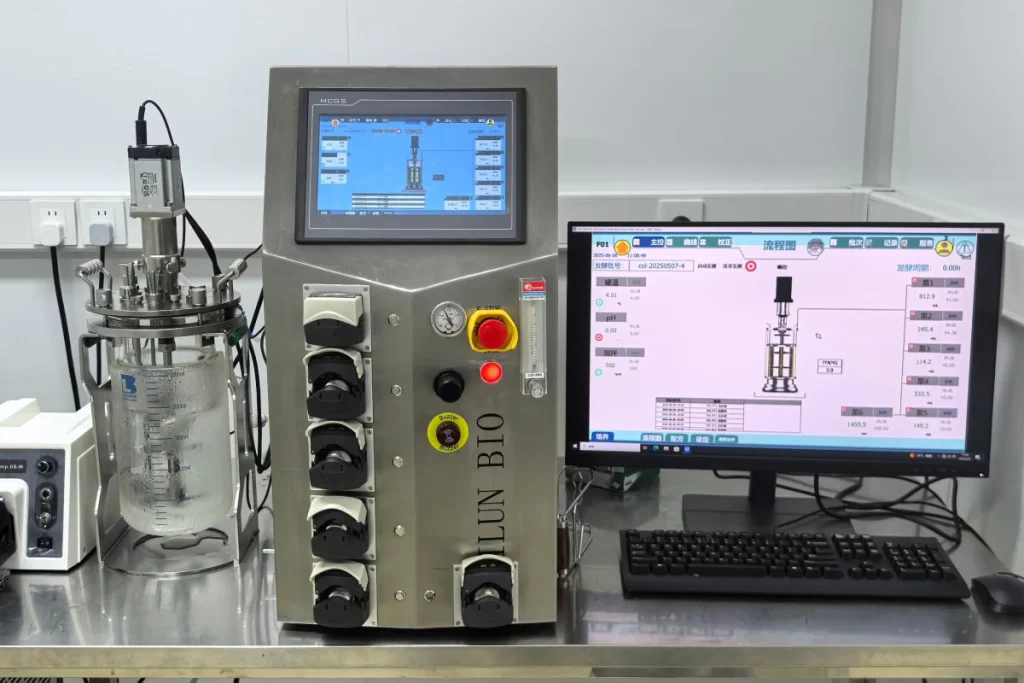
Ready to elevate your bioprocess? Discover custom fluidized bed bioreactor solutions at БайЛун Био and turn innovation into production today!
Frequently Asked Questions (FAQs)
- What is a fluidized bed bioreactor?
It is a reactor in which solid particles are suspended in liquid or gas, a situation that enhances mass transfer and minimizes shear and it is very appropriate to use when delicate cells and immobilized enzyme processes are involved.
- Where is it used?
In medicine, making biofuels, treating sewage, tissues engineering, and manufacturing enzymes to use in the different manufacturing industries.
- Why is it better than a packed bed reactor?
Since the particles remain in motion they do not clog or enhance nutrient distribution and they enable increased productivity.
- Can it be used for mammalian cells?
Yes. Its low shear rate lends itself to work with shear-sensitive cells such as that of animals or plants as opposed to many stirred reactors.
- What are the particles made of?
Suitable biocompatible materials such as alginate beads, ceramics, or synthetic polymers which are able to trap of the cells or enzymes.
- How do you control the process?
As well as using actual-time monitoring of flow, pH, temperature and dissolved oxygen along with altering the velocity of the fluid as possible.
- Is scale-up easy?
Easy to construct in comparison with many reactors, yet must be well designed to ensure the uniform flow and temperature at large volumes.
- Does it reduce contamination risk?
This is so particularly in combination with single-use technology and closed-loop systems, reducing the risk of microbial contamination.
- Is it energy efficient?
Generally, yes. Reduced waste of energy due to efficient transfer of heat and mass leads to low operating cost.
- Can it handle continuous operation?
Absolutely. One of its advantages is that it can be constantly fed and reaped and makes it perfect as a modern biotechnological product.