
Fermentation has a crucial part to play in the creation of medicines, fuels, beverages and even green materials in an evolving arena of biotechnology. Whether you’re a student of biology, a biotech researcher, or a curious reader, you may have asked yourself: what are two types of fermentation?

This question leads to an interesting world in which microbes play the leading role and turn raw products into valuable ones with the help of the biological reactions. In this article, we’ll dive deep into the core two types of fermentation, how they work, where they’re used, and what makes them so vital to science and industry.
Ready to explore the microbial magic behind fermentation? Let’s get started.
Introduction to Fermentation
The process of fermentation is the subject of biochemistry in which substances, typically sugars, are being metabolized into simpler compounds by the use of microorganisms like bacteria, fungi, or yeast. This may either occur without oxygen or in the presence of oxygen providing us the two major types of fermentations.

When we ask, “what are two types of fermentation,” we are essentially inquiring about the two fundamental biological processes that underpin much of modern biotechnology.
Why Ask “What Are Two Types of Fermentation”?
Knowledge on the distinction between the two types of fermentation is crucial in biotechnological studies as well as in manufacturing. How to know what are two types of fermentation? Antibiotics, wine, yogurt, insulin and many more products are the result of fermentation. Knowledge regarding two types of fermentation assists scientists to create an efficient system that will produce goods sustainably.
So, what are these two types? Let’s name them:
- Anaerobic fermentation
- Aerobic fermentation
Let’s break down what they mean.
The Science Behind Fermentation

Fermentation belongs to cellular respiration-one of the processes in which the cells produce the energy. Typically, when oxygen is available, organisms use aerobic respiration. However, in cases where the availability of oxygen is low or non-existent, then fermentation occurs.
Here’s the general formula for fermentation:
C6H12O6 → Energy + Byproducts (e.g., ethanol, lactic acid, CO2)
Fermentation is a catabolic reaction thus deconstructs molecules to give out energy. Fermentation falls under two types depending on whether it is a fermentation with oxygen or not.
Anaerobic Fermentation Explained
Anaerobic fermentation occurs without oxygen. It is also one of the oldest known biological processes, going back billions of years before Oxygen was plentiful on earth.
Key Characteristics:
- No oxygen required
- Occurs in the cytoplasm
- Produces lower energy yield (ATP)
- Produces organic byproducts (ethanol, lactic acid)
Types of Anaerobic Fermentation
Here are few types of anaerobic fermentation:
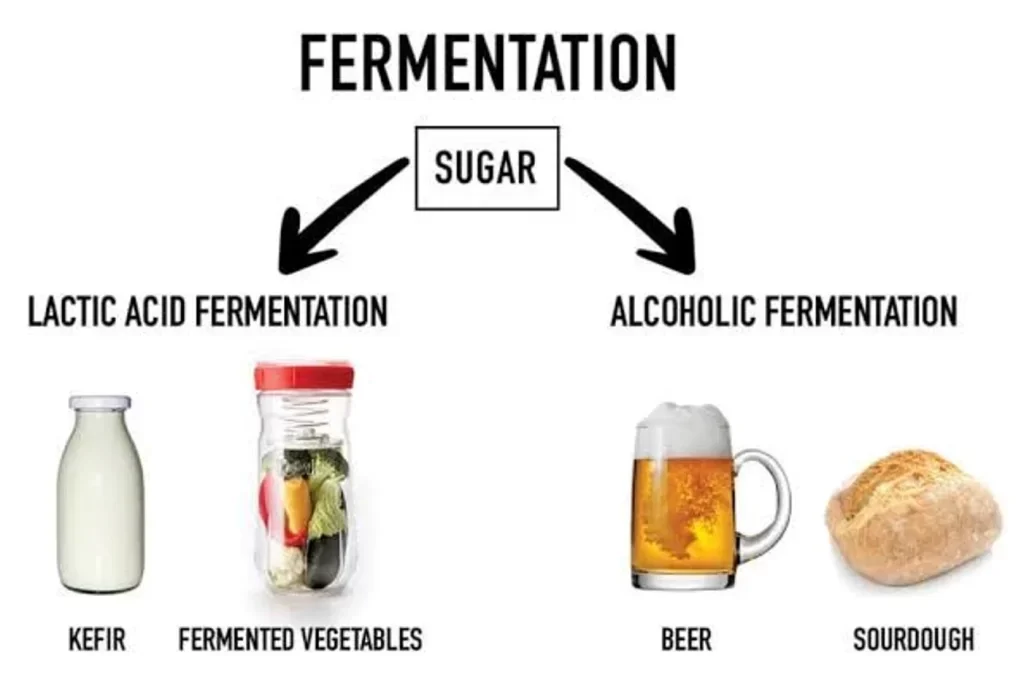
- Lactic Acid Fermentation:Occurs in muscles and yogurt production.
- Alcoholic Fermentation:Alcoholic fermentation is applied when making beer and wine through the use of yeast.
- Butyric Acid Fermentation:Used in solvent and flavor production.
Real-World Example:
In breweries, yeast fermentation of sugar into ethanol and carbon dioxide takes place. This is classic anaerobic fermentation in action.
Aerobic Fermentation Explained
Let us consider the second one as we address the question, what are two types of fermentation-aerobic fermentation.
Though technically the word fermentation has nothing to do with respiration, in biotechnology, aerobic fermentation is used to describe processes done in presence of oxygen, and where aerobic organisms are encouraged to grow optimally under controlled conditions.
Key Characteristics:
- Requires oxygen
- High biomass yield
- Used for complex molecule production
- More energy efficient (higher ATP)
Examples:
- Production of antibiotics (e.g., streptomycin)
- Enzyme production
- Citric acid production using Aspergillus niger
In bioreactors, aerobic systems usually are employed where air is sparged into the liquid medium and is carefully controlled.
Comparative Table: Anaerobic vs Aerobic
| Feature | Anaerobic Fermentation | Aerobic Fermentation |
| Oxygen Requirement | Not required | Required |
| Energy (ATP) Yield | Low | High |
| Byproducts | Ethanol, lactic acid, etc. | Biomass, CO2 |
| Growth Rate | Slower | Faster |
| Applications | Alcohol, yogurt, pickles | Antibiotics, enzymes, organic acids |
This table eases the solution to the question: what are two types of fermentation, and how they differ?
Microorganisms Involved
Various microbes drive the two types of fermentation:
Anaerobic Fermentation:
- Saccharomyces cerevisiae (yeast)
- Lactobacillus (bacteria)
Aerobic Fermentation:
- Penicillium and Aspergillus (fungi)
- Streptomyces (bacteria)
Each is selected based on the product being manufactured.
Industrial Applications
Biotechnology industries rely heavily on fermentation. Among the products manufactured with the anaerobic and aerobic method include:
- Drugs (e.g., antibiotics, insulin)
- Enzymes (e.g., amylase, cellulase)
- Organic acids (e.g., citric, lactic)
- Solvents (e.g., ethanol, acetone)
Factories such as fermentorChina.com offers specialized fermentors according to types of fermentation.
Fermentation in Food Biotechnology
Different food products consumed on a daily basis are important and depend on fermentation. Whether it’s yogurt, cheese, or sauerkraut, these popular items are the result of anaerobic fermentation. These are done by the microorganisms as they break down sugars in the absence of oxygen to the formation of different compounds, which form the taste and texture of these foods.
Conversely, aerobic fermentation is also another process in food industry. This process can be used to generate organic acids which in addition to flavoring can also be used as natural preservatives. These organic acids add strength to the food products hence they last longer and taste better.
The process of fermentation is a versatile and fundamental process involved in food production. Whether it’s anaerobic fermentation for products like yogurt and cheese, or aerobic fermentation for enhancing flavors and preserving foods, this natural process continues to play a si
gnificant role in the food industry.
Pharmaceuticals and Enzymes
Aerobic fermentation also gives higher yield and purity and thus predominant in the manufacture of life saving agents such as penicillin and detergency enzymes. The process uses oxygen to manufacture more high quality material in higher amounts. Nevertheless, the process of anaerobic fermentation (in the absence of oxygen) is also significant in producing such useful compounds as probiotics and some vitamins.
Although the aerobic fermentation may be outstanding in terms of high yield and purity in industrial processes, the anaerobic fermentation shows its significance in the production of lucrative products in health and well-being. Most of the decisions on whether to use aerobic or anaerobic fermentation will be influenced by the end product required and its particular needs.
The two are major contributors in different industries and are necessary in the manufacture of a considerable number of products important to the lives and health of human beings.
Alcohol and Biofuel Production
Have you ever wondered how sugarcane, a seemingly simple plant, can be transformed into ethanol, a valuable biofuel? Or perhaps you’ve been curious about the ancient process of brewing beer, a beverage enjoyed around the world? The key to both of these transformations lies in a fascinating biological process called anaerobic fermentation.
This process allows microorganisms to thrive and convert sugars into desirable end products, like ethanol and alcohol, in the absence of oxygen. On the other hand, optimizing biofuel production doesn’t always rely on the absence of oxygen. Aerobic mechanisms, those that require oxygen, play a crucial role in other biofuel feedstock strategies.
For example, the cultivation of microalgae or fungi, organisms rich in lipids or carbohydrates, is often carried out in oxygen-rich environments. These organisms efficiently convert readily available nutrients into biomass suitable for biofuel production, highlighting the diverse approaches used to harness the power of biology for sustainable energy solutions.
Role of Stirred Tank Bioreactors
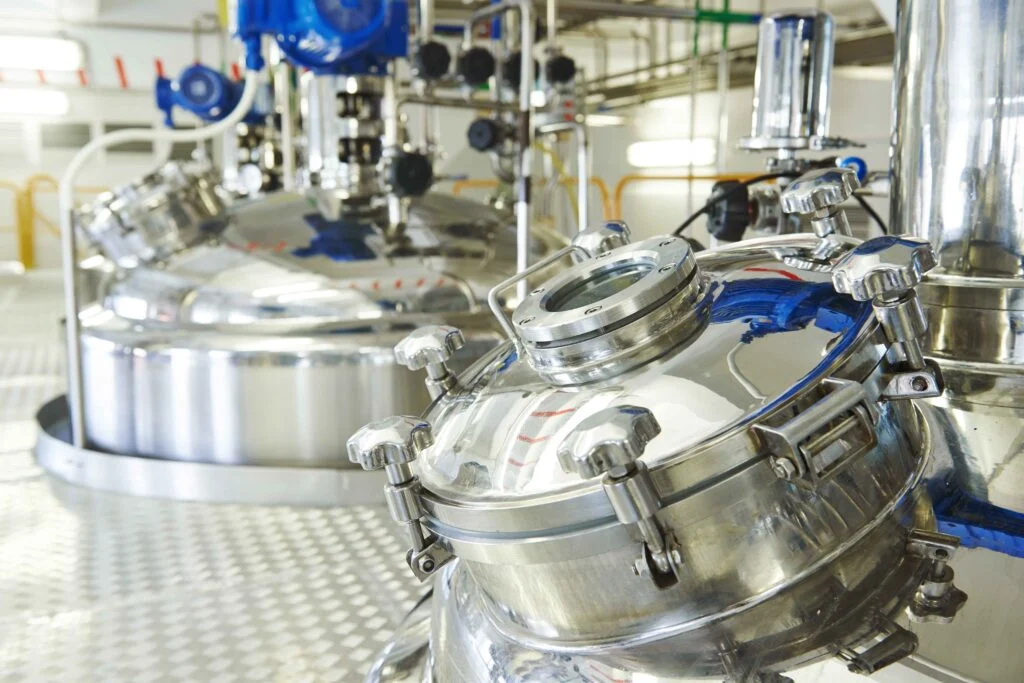
Regardless of what are two types of fermentation, both are carried out in stirred tank bioreactors (STRs).
These tanks:
- Maintain sterile conditions
- Control pH, temperature, oxygen, and foam
- Offer scalability for industrial use
STRs are configured differently for anaerobic vs. aerobic setups. Learn more at BaiLun Bio.
Advantages and Limitations of Both Types
Anaerobic Fermentation
Pros:
- Simpler setup
- Useful in low-oxygen environments
- Ideal for alcohol and acids
Cons:
- Low energy yield
- Limited product range
Aerobic Fermentation
Pros:
- High efficiency
- Greater product diversity
Cons:
- Complex setup
- High oxygen demand
Common Misconceptions
“Fermentation always produces alcohol.”
Not true! Many processes yield lactic acid, gases, or even biomass.
“Only bacteria ferment.”
Fermentation is carried out under favorable conditions where yeasts, fungi and even mammalian cells are involved.
Case Studies and Real-World Examples
Case 1: Penicillin Production
Penicillin is made at an industrial scale by Penicillium chrysogenum through the use of aerobic fermentation in stirred tanks.
Case 2: Yogurt Making
Lactobacillus bacteria turn lactose to lactic acid in the anaerobic tanks to make yogurt taste sour.
Emerging Technologies
With advancements in synthetic biology, fermentation is evolving:
- CRISPR-modified strains for higher yield
- Single-use bioreactors to prevent contamination
- AI monitoring of fermentation kinetics
The two technologies are applicable to both forms of fermentation, and they are reshaping biotech manufacturing.
How to Choose the Right Fermentation Type?
Ask yourself:
- Is oxygen required?
- What product are you making?
- What organisms are involved?
- What’s the scale of production?
The question on what are two types of fermentation assists in the determination of everything including the reactor type and cost of planning.
Final Thoughts
So, what are two types of fermentation? They are anaerobic and aerobic, and both of them occur in the large realm of biotechnology.
They both possess their own benefits, microbial assemblages and vital industrial use. Whether you’re making yogurt or penicillin, understanding both types ensure optimal productivity and innovation.
To find modern, tailor-made fermentors working with both variants of fermentation, visit BaiLun Bio.
FAQs
Q1: Name two fermentation methods in biotech?
Anaerobic and aerobic fermentation.
Q2: Which type is used for alcohol?
Anaerobic fermentation.
Q3: Can one organism do both types?
Some facultative anaerobes like yeast can.
Q4: Which type is more energy-efficient?
Aerobic fermentation yields more ATP.
Q5: Are fermentors different for each type?
Yes. Aerobic fermentors require aeration systems; anaerobic do not.