
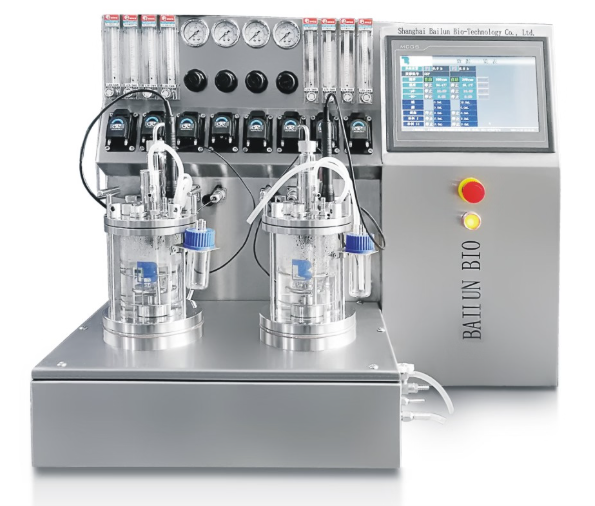
Why, when we are all swimming in the sea of advanced automation and stainless steel powerhouses, do researchers and small-scale producers insist on this jar? Think of a clear as glass vessel with unrivaled chemical inactivity and centuries of confidence. Its nostalgic, no doubt, but it is also the key to innovation, accuracy and small-batch ingenuity. Be it probiotic cultivation, yeast strain studies or the bioactive compound testing, the glass fermentation jar is a silent superstar of the central stage of modern science and craft fermentation.
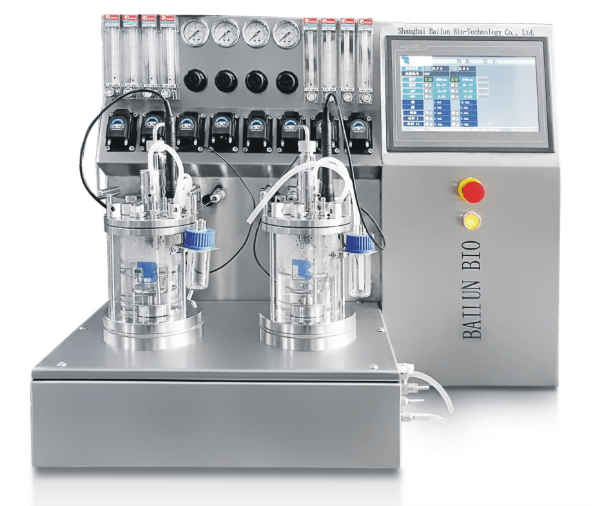
Why is glass still so valued? One, the glass is chemically non-reactive i.e. it does not leach ions or metals and this is an essential requirement of experiments and specialty food fermentations. Second, this jar has clear glass walls, and it allows constant visual record. Microbial health, sedimentation, foam formation and color changes can be observed literally with the naked eye by the researcher, brewer and laboratory technician without interrupting the process.
The tale of this jar started centuries earlier when fermentation was as much of an art as it is science. These jars also changed as the bioengineering developed, where sampling precision holes, sensor and even small automation were added to the jars. Now, they are closing the gap between tradition and modernity by offering the incomparable quality control of labs and small scale production.
And why then are they so much relevant in the era of bioreactors? We should be able to reveal the science, design and magic of glass fermentation jar.
Detailed Design and Components
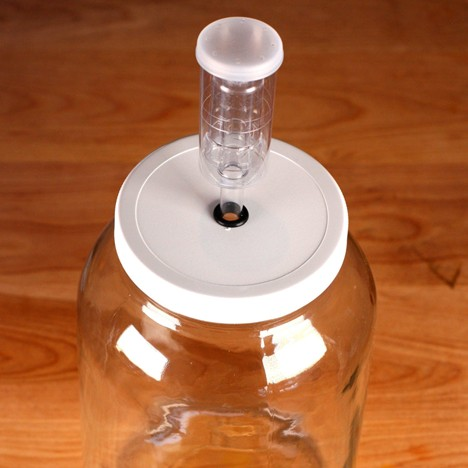
Though purely in appearance the glass fermentation jar seems to be lacking in all elaborate engineering, it contains within its outer shell a treasury of intelligent design. All the curves and the choice of materials are carefully selected to assist major processes in fermentation, so as to achieve efficiency and are of premium quality.
As an example, the design of the jar is such that it enables the mixing and aeration, which is important in the proliferation of microorganisms. Its smoothness on the inside reduces the chances of contamination and the cleaning is made easier, and due to the glass and its clarity it is also possible to keep an eye on the fermentation process in real time.
Moreover, the use of high quality, chemically stable, glass makes sure that sterilization goes quite well without damaging the integrity of the jar. This plays a crucial role in upholding the purity of the culture and authenticity of the results. Design also includes facilities such as safe closures and sampling ports, which makes extraction of samples easy without further disturbing the fermentation atmosphere.
As a matter of fact, this jar is a high-tech device as well as simple one, which is why this instrument is priceless in any research environment, as well as manufacturing purposes.
Typical features of a modern glass fermentation jar include:
- Borosilicate glass body: It does not absorb moisture and so will not experience thermal shock or damage when subjected to a chemical attack.
- Airlock or lid with ports: It allows gas exchange which can be controlled so as to avoid contamination.
- Sampling ports: Permit sterile sampling during fermentation.
- Graduated markings: Ensure precise volume measurements.
- Rubber or silicone gaskets: Maintain airtight seals.
The choice of borosilicate glass isn’t by accident. It withstands repeated autoclaving, acid cleaning, and temperature fluctuations. This qualifies it as ideal especially with fragile microbial sensitive cultures requiring sterility and stability.
Shape also matters. Insertion of the jars can be easily inoculated, mixed and cleaned by the use of wide mouth jars whereas narrow mouth jars minimize the risk of evaporation and contamination. Other models have magnetic stir bars, temperature probe thermowells, or even pH probes – making a simple jar into a miniature bioreactor.
Would you ever think of the necessity to observe your culture in the real-time context? The clear body of this jar is a window on your process, and I like to be able to see my process producing foam, contamination, or a change in color immediately.
Applications in Biotechnology and Beyond
The glass fermentation jar is the stamina of every walk of life- be it a food fermentation to a pharmaceutical research.
- Microbial culture: Microbial culture will be ideal when a small amount of bacteria, yeast, or fungus needs to be tested by placing it under controlled conditions.
- Enzyme production: They are used in pilot processes through which the activity of the enzyme is measured and balanced.
- Probiotics and dairy: fermenting yogurt, kefir or kombucha with all visibility.
- Academic research: The context under which students and researchers could test theories in a controlled situation.
- Brewing and winemaking: Small-batch fermentation trials for new recipes.
What’s common in all these? The need for precision, sterility, and real-time observation. Just put yourself in a situation, where you would want to create a new strain of bacteria used in the production of cheese- it would be so useful to be able to see the levels of turbidity and the layers of sediment in your glass fermentation jar.
In addition to biotechnology, these jars benefit local brewers experimenting with new hops, hand-craft kimochi makers and chefs coming up with house-made kimochi vinaigrettes. They also are used in high-tech labs as well as kitchens on small farms.
Benefits That Make Them Irreplaceable

Why not stainless steel or plastic, you may object. The advantages offered by glass fermentation jar are of a special kind which could not be replaced by other materials:
- Chemical inertness: Will not react to acidic media or salts or alcohol.
- 透明度: Immediate, non-invasive observation of cultures.
- Thermal stability: Withstands autoclaving and hot water cleaning.
- Ease of cleaning: Smooth surfaces prevent biofilm formation.
- 可持续性: Reusable for years, reducing plastic waste.
Have this in mind: A scientist working on probiotics should not be exposed to contamination by the trace metals leaking inside the steel tanks. This jar is completely pure resulting in accurate results.
When we are fermenting food, it is a cost-saving to be able to observe evidence of changes in the color, foam or sediment without having to open the jar, which also prevents contamination. It’s a small detail with huge implications for quality.
And they are pilot run scalable thus you can test a recipe and scale up to industrial sized stainless tanks thus saving cost and time.
Challenges and How Modern Designs Solve Them
Although the glass fermentation jar is adored by its lucidity and simplicity, it has its difficulties:
- Fragility: Risk of breaking if dropped.
- Size limitation: Practical only up to a few liters.
- Weight: Heavier than plastic or stainless alternatives.
Innovations have addressed many of these:
- Protective silicone sleeves: Reduce breakage risk.
- Graduated modular designs: It allows users to couple jars with mini pumps or sensors.
- Improved closures: Airlocks and O-ring lids enhance contamination control.
- Hybrid ones: Glass body stainless caps or bottom valves.
Have you noticed how modern labs adapt? They do not abolish tradition, on the contrary, they turn it into something advanced and safer, providing the glass fermentation jar with more brains and less danger, staying true to the essence of tradition.
Future in Biotechnology
The little glass fermentation jar is changing as well with the rise of biotechnology trends of smaller-batch, high-value production and automated bio labs:
- Sensor integration: Real-time pH, temperature, and CO₂ measurement.
- Automated sampling: Sterile collection without opening lids.
- IoT connectivity: Data logging and remote monitoring.
- Eco-friendly production: Using recycled glass and greener processes.
Think of having dozens of these jars that monitor a live data stream to your phone or computer lab. You could see literally dozens of experiments, in real time, and you would mix the ritual of visible monitoring with accuracy and precision brought by the digital.
Custom probiotics also known as artisanal foods are a reality in the small-scale production of personalized medicine, whereby this jar remains applicable to the production of flexible, clean, and traceable production.
最后的想法
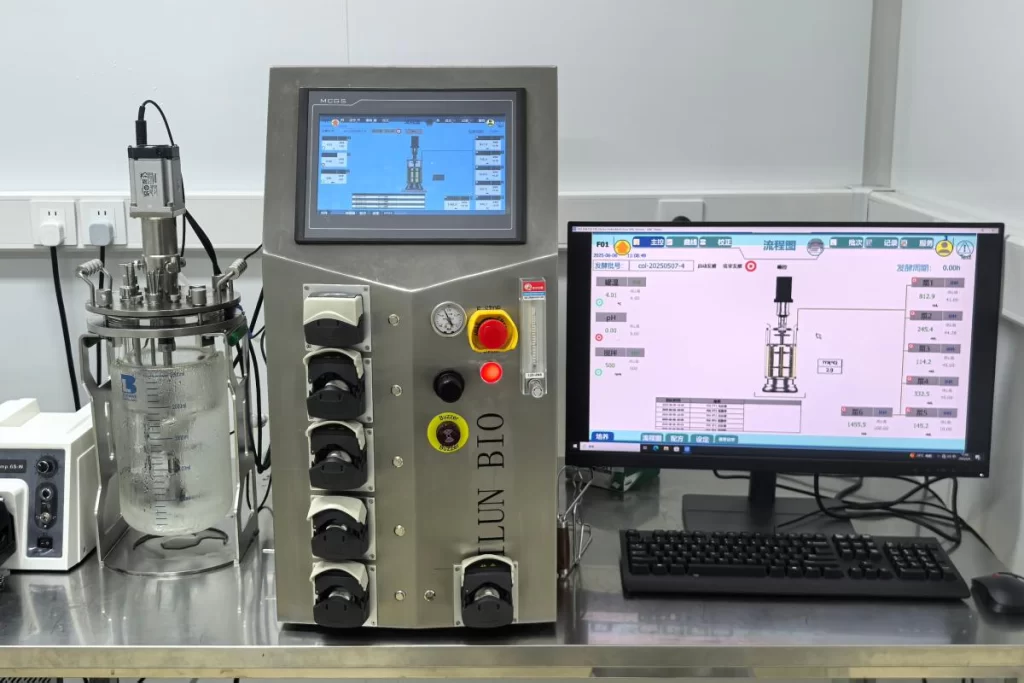
The glass fermentation jar is a timeless tool, found in modern laboratories as well as traditional beverage-making workshops. It stands as a crystal-clear symbol of clarity, purity, and precision in the fermentation process. The transparency of glass allows for easy monitoring of the fermentation activity, providing visibility into the process that is crucial for ensuring optimal conditions.
In addition to its aesthetic appeal, glass offers excellent chemical stability, making it an ideal choice for a wide range of fermentation applications. This stability ensures that the integrity of your ingredients is maintained, allowing for accurate results and reliable outcomes. Users can trust that their processes are free from contamination, as glass is non-reactive and easy to clean.
Are you ready to upgrade your small-scale fermentation? Discover premium, customizable glass fermentation jar solutions at 百伦生物 where tradition meets modern biotechnology. Our expert team is ready to help you find the perfect jar to enhance your fermentation experience and elevate your production capabilities.
Frequently Asked Questions (FAQs)
- Why is glass better than plastic for fermentation?
Glass is stable, non-reactionary, sterilizable as it is less prone to contamination.
- Can I autoclave a glass fermentation jar?
It is true that the majority of them are composed of borosilicate glass that can resist multiple autoclaving.
- What sizes do they come in?
Typically, between 250 ml of lab jars, to several liters for pilot fermentations.
- Do they only work for food fermentation?
No, they are heavily applied in research, pharmaceuticals, enzyme production as well.
- How do I prevent contamination?
Wear clean gaskets, sterilized equipment and airlocks; look at cracks carefully before use.