
Hydrogen production through microbial fermentation in bioreactors is a common industrial method. Now, the anaerobic fluidized bed bioreactor (AFBR) is one of the most effective reactors for biological fermentation-based hydrogen production. The microbial film is formed by the natural adhesion of microorganisms to carrier particles.
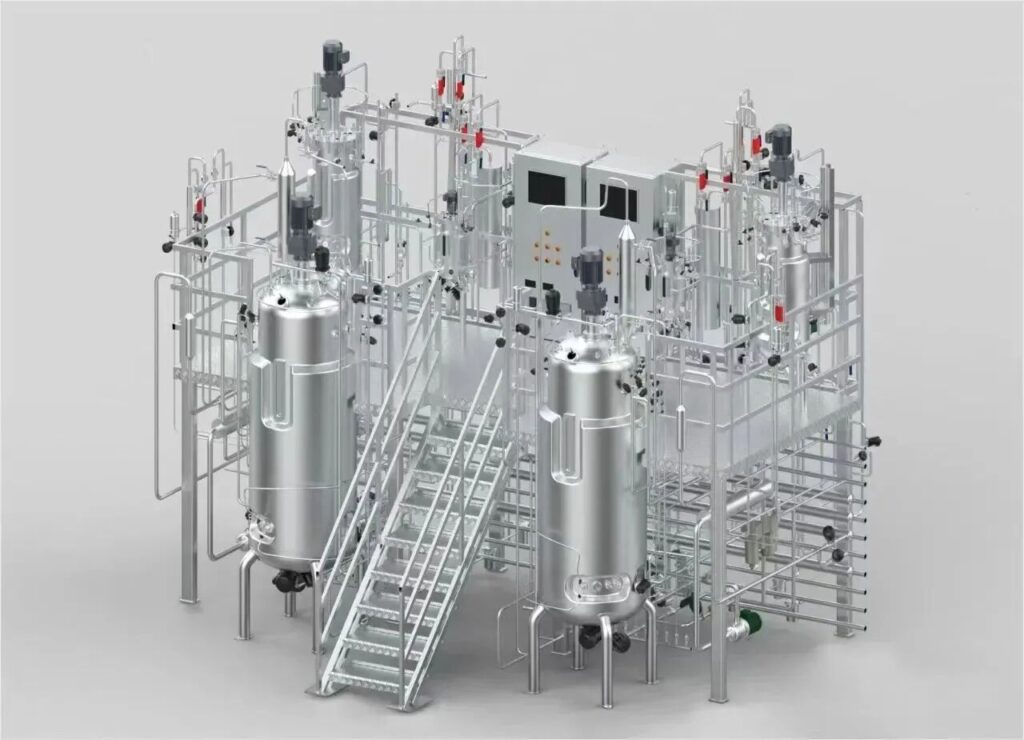
The fluidized bed structure lets the reactor retain a large amount of biomass. This ensures continuous and stable hydrogen production. This technology is suitable for large-scale industrial production. It has extremely broad application prospects.
一、Hydrogen Production via Anaerobic Microbial Fermentation in Fluidized Bed Reactors
Advantages of Anaerobic Fluidized Bed for Hydrogen Production
Common bioreactors are divided into two major categories: suspended and fixed. Suspended bioreactors let microorganisms exist in a free state directly inside the reactor. These free microorganisms cannot be separated from wastewater. This leads to massive biomass loss. It makes continuous wastewater purification and hydrogen production unachievable.
The fixed fluidized bed technology has a higher hydrogen production efficiency than the free microbial state. In the microbial culture stage, biological carriers with a loose and porous internal structure (like activated carbon, expanded clay, polyethylene, ceramic beads, etc.) are selected. Specific immobilization methods are used. Microorganisms attach to the surface of the support materials. They form a microbial film. Hydraulic force or gas drives the support materials with immobilized microorganisms. The materials enter a fluidized state. This allows a more efficient reaction with wastewater.
In this state, microorganisms are less prone to loss. The system has better mass transfer characteristics. This ensures stable and continuous hydrogen production in the fixed fluidized bed reactor.
二、Typical Fluidized Bed Reactors
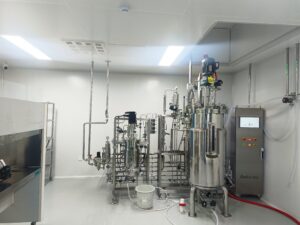
Figure 1 shows a schematic diagram of the structure of a typical anaerobic fluidized bed bioreactor for hydrogen production via microbial fermentation. The system has a fluidized bed main reaction chamber, a three-phase separator, a gas purifier, a flow meter, a gas collection tank, a water bath circulation system, a circulation pump, a nutrient storage tank, a feed pump, a pH and temperature detector, and a pH adjustment system.
The upper part of the main fluidized bed structure is the three-phase separator. It separates gas, liquid and solid phases. The generated gas is processed by the gas purifier. It gets higher purity. Then the flow meter records it. It is stored in the gas collection tank.
The exterior of the fluidized bed uses a nested structure. There is a constant temperature water bath system in the interlayer. It maintains the reaction temperature within the range suitable for microbial survival. It preserves good microbial activity. To ensure a complete reaction, the circulation pump lets wastewater circulate continuously inside the fluidized bed reactor.
The nutrient storage tank continuously supplies nutrients for the reaction. The feed pump delivers the nutrients into the circulation loop. To keep microorganisms in an optimal hydrogen-producing environment, a pH and temperature detector is installed at the top. There is also a gas outlet.
When the pH value changes, the pH adjustment system injects an appropriate solution into the circulation loop quickly. It maintains a stable pH of the solution in the fluidized bed. The temperature detector monitors the reaction temperature. The water bath circulation system keeps the fluidized bed at the optimal reaction temperature all the time.
三、Different Types of Fluidized Bed Reactors
Direct Anaerobic Fluidized Bed Reactors
1. Mesophilic Fluidized Bed Reactors
Existing research shows fluidized bed reactors generally operate under two temperature conditions for anaerobic fermentation hydrogen production. The conditions are mesophilic and thermophilic. The operating temperature range of the mesophilic system is 25~45℃. The operating temperature range of the thermophilic system is 45~65℃.
The optimal reaction temperature depends on the microbial strain and the type of carbon substrate. Most hydrogen-producing strains for fermentation are more suitable for an environment at around 35℃. The mesophilic system has higher reaction enzyme activity. It has a higher microbial growth rate. It also has a higher substrate metabolism rate.
- Thermophilic Fluidized Bed Reactors
Thermophilic fermentation for hydrogen production has the following characteristics: high temperature restricts the growth of hydrogen-consuming substances such as methanogens and high-acetyl compounds that inhibit hydrogen-producing bacteria; the thermodynamical advantage of thermophilic fluidized beds under thermophilic conditions is more conducive to fermentation hydrogen production, and the hydrolysis rate of complex materials is accelerated simultaneously; higher temperature reduces the solubility of hydrogen.
In view of the above advantages, numerous studies have focused on the combination of thermophilic fermentation hydrogen production and fluidized bed structure to improve hydrogen production efficiency.
四、Two-stage Anaerobic Fermentation Reactors for Hydrogen Production
- Hydrogen-Methane Integration Technology
During single-stage biological fermentation for hydrogen production, the nutrients contained in the substrate cannot be completely converted into hydrogen. Because in the microbial fermentation process, the reaction between microorganisms and the substrate produces volatile fatty acids (VFA) or alcohols, which cannot be degraded, leading to low energy utilization efficiency and thus greatly limiting the biological hydrogen production capacity.
As shown in Figure 2(a), this system adopts hydrogen-methane integration technology, which uses the remaining acidic organic matter to produce methane after hydrogen production. It has the advantages of improving energy utilization efficiency, reducing reactor size, optimizing process conditions and increasing buffer capacity. Ramos et al. conducted two-stage anaerobic digestion in a fluidized bed reactor for simultaneous wastewater treatment and energy integration, and concluded that the chemical oxygen demand (COD) treatment capacity of the two-stage system was 41% higher than that of the single-stage system, with higher stability.
Subsequently, they conducted energy estimation for single-stage and two-stage anaerobic digestion systems, proving the feasibility of methane and hydrogen production in the two-stage system.
The energy recovery rate of the two-stage system was 34% higher than that of the single-stage system. It is evident that hydrogen-methane integration technology can more effectively improve the comprehensive resource and economic efficiency.
Continuous Light-Dark Two-Step Fermentation Method The continuous light-dark two-step fermentation method is recognized as one of the most promising biological hydrogen production methods. Figure 2(b) shows the process flow of the two-step fermentation method. It can be seen from the figure that 1 mol of hexose can produce 4 mol of hydrogen in the theoretical dark fermentation stage and 8 mol of hydrogen in the photofermentation stage.
Overall, the light-dark two-step fermentation method can achieve a hydrogen production yield of 12 mol per mol of hexose, which is a remarkable output. Microorganisms in the dark fermentation stage have the characteristics of abundant strain sources, strong adaptability and fast growth rate, but the theoretical hydrogen production is relatively limited;
Photofermentation microorganisms have restrictive application conditions but high hydrogen production capacity, and can decompose small molecular organic substances such as volatile fatty acids and alcohols that cannot be degraded by dark fermentation. The combination of the two methods has broad application prospects.
五、Prospects and Outlook of Hydrogen Production in Fluidized Bed Reactors
This paper mainly introduces the basic process flow and hydrogen production effect of anaerobic microbial fermentation hydrogen production in fluidized bed reactors, and compares the characteristics of hydrogen production in different types of fluidized bed reactors combined with other processes.
Under the background of “carbon peaking and carbon neutrality”, the concept of environmental protection is deeply rooted in people’s minds, making the development and promotion of anaerobic fluidized bed fermentation hydrogen production technology of significant value with favorable social, environmental, energy and economic benefits.
The following prospects for anaerobic microbial fermentation hydrogen production in fluidized bed reactors are proposed:
(1) Microbial strains remain the most important influencing factor for fermentation hydrogen production. The hydrogen production efficiency can be significantly improved by discovering more superior strains, modifying the production capacity of strains through bioengineering, and exploring the synergistic effects of co-cultured strains.
(2) By gradually optimizing the fluidized bed structure and operating conditions to enhance the mass transfer effect between strains and substrates, a higher hydrogen production efficiency can be achieved.
(3) Due to the inherent limitations of single fermentation for hydrogen production such as low substrate energy utilization efficiency, it is necessary to develop more reliable combined processes to make up for the defects of single fermentation. The design of combined processes based on fluidized bed reactors has great potential.
关于 Bailun
Bailun has rich experience in the manufacturing of various reactors and pressure vessels. We have a professional expert team covering the fields of biological reaction, fermentation process, mechanical manufacturing and automatic control, with scientific research and process levels always leading domestically and reaching international first-class standards. We are committed to providing you with a comfortable, reliable and reassuring product experience. 联系我们