
Problems can arise in any part of the fermentation tank and its auxiliary equipment. These equipment include air purification systems, control systems for temperature, pressure, flow rate, and corresponding pipelines and valves. Such problems may lead to fermentation failure. Enterprises should first establish a prevention-oriented concept. They should eliminate all potential hidden dangers of fermentation contamination. They start with equipment optimization of the fermentation tank and supporting systems.
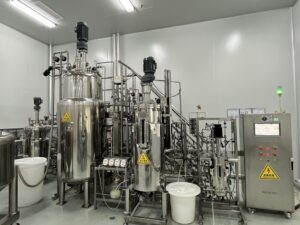
1. Ensure Air-tightness of Fermentation Tanks
Fermentation tanks are the core equipment for fermentation production. Every fermentation tank must undergo a thorough inspection must be done before use. The inspection includes checking for abnormal rotation of the stirring system, tightness of mechanical seals, loose screws inside the tank, clogged internal pipelines, leaks in the jacket or internal coils, and air-tightness of valves connected to the tank body. Mechanical seals are now widely used in fermentation tanks. They replace the traditional packing seals for stirring shafts. Shaft seal leakage and subsequent contamination may still happen. This is because of poor installation accuracy or inappropriate selection of mechanical seal systems. Precise alignment is essential during the installation of stirring shafts on the fermentation tank.
2. Remove Sight Glass Flushing Pipelines
Large-scale fermentation tanks are usually equipped with steam pipelines for sight glass flushing. This is to facilitate observation of the internal fermentation process inside the fermentation tank. Condensed water in these pipelines cannot be guaranteed to be sterile. This happens once steam condenses inside. It is recommended to remove such steam pipelines from the fermentation tank. This is to reduce contamination risks. Poor visibility may occur due to heavy fog inside the tank. High-brightness sight glass lamps can be used as an alternative.
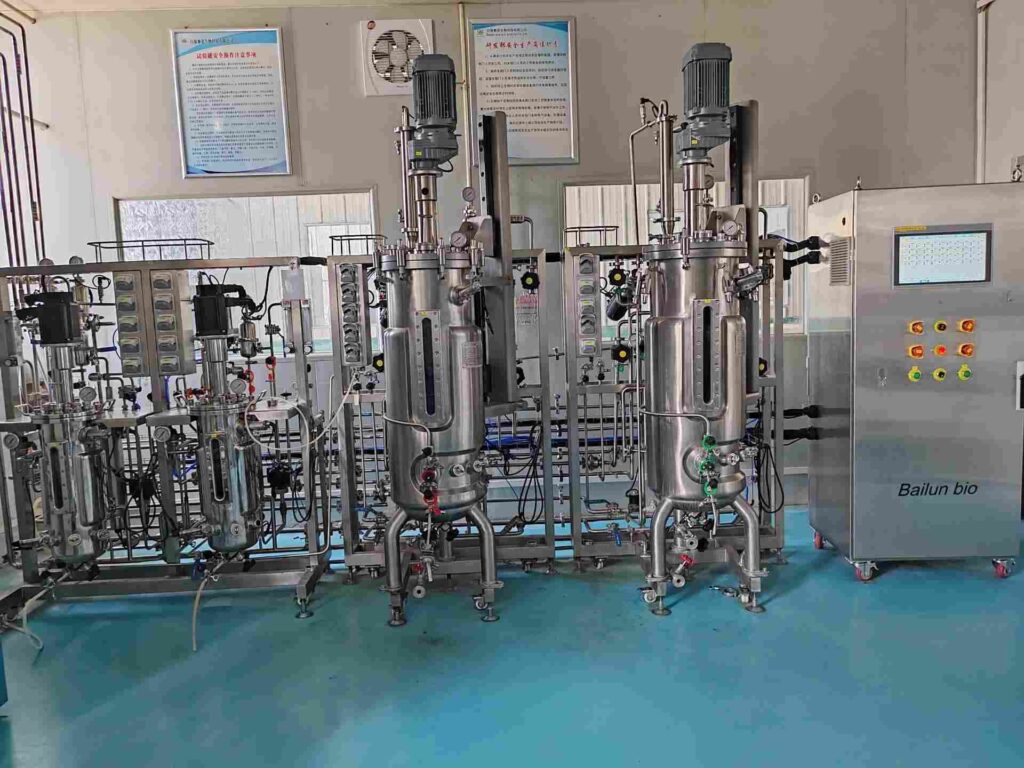
3. Reliable Purification Performance of PVDF Membranes
Traditional air purification systems use activated carbon, cotton, and ultra-fine glass fiber paper as filter elements. These filter elements have poor filtration efficiency. They also require complex operation. At present, membrane filtration technology has become well-established in China. Pleated microporous membrane filter elements made of polyvinylidene fluoride (PVDF) have high filtration precision.
They also have large flow rate. Technicians only need to ensure dehumidification and deoiling of compressed air before filtration. They also need to sterilize the filters in accordance with specifications. This is to maintain sterile air supply for the fermentation tank. PVDF membranes are insensitive to moisture in compressed air. They also have strong hydrophobicity. This solves the problem. The problem is that cotton filters and other traditional filters become inoperable when air humidity is excessively high,which often threatens the safe operation of the fermentation tank.
4. Regular Inspection of Monitoring Systems
Sterilization of fermentation medium relies on high-temperature supersaturated steam. This steam coagulates and inactivates proteins in various bacteria and fungi. In the pharmaceutical industry, strict requirements are imposed on sterilization processes. These requirements include preheating time, steam valve opening, sterilization temperature, sterilization pressure, and foam control. Any deviation in these links may easily lead to contamination.
In general industrial production, the sterilization temperature is set at 110°C. The pressure is over 0.5 MPa. The accuracy of sterilization temperature and pressure depends on various monitoring devices. These devices include temperature probes and pressure sensors.
Regular inspection of these probes and sensors is of great importance. The volume of fermentation tanks may increase. The tank temperature corresponding to the same tank pressure will decrease slightly. A discrepancy may be found between temperature and pressure correlations. Temperature shall be taken as the primary reference when monitoring the fermentation tank in this case.
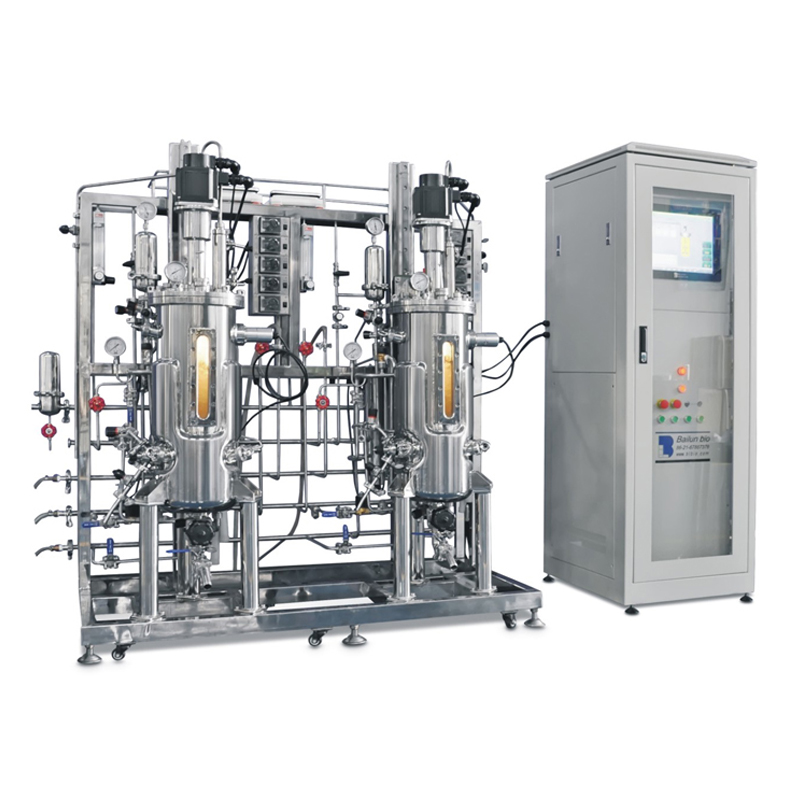
5. Adopt Soft Seals for Valves
Valves are the most widely used auxiliary equipment in fermentation facilities. Globe valves are the primary type. Valve tightness to media is classified into four grades. The grades are nominal grade, low leakage grade, steam grade, and atomic grade. Nominal and low leakage grades are suitable for valves with low shut-off tightness requirements. An example is flow control valves.
Steam grade sealing is applicable to the sealing of valve seats, valve stems, and valve body joints for steam valves and most other industrial valves. Atomic grade sealing is used in scenarios with the strictest media tightness requirements, such as spacecraft and nuclear power equipment.
Since high-temperature steam is used for sterilization of fermentation equipment in the fermentation industry, steam grade sealing is the minimum requirement for all valves. Fermentation valves are frequently opened and closed during production, and are prone to damage from media corrosion, scouring, and cavitation. Thus, the selection of valve trim—the contact part between the valve seat and the closure member for shut-off—is critical.
Valve trim sealing is divided into soft sealing and hard sealing. Hard sealing trim forms a closed circular sealing contact line through slight elastoplastic deformation caused by mutual extrusion of the valve seat and closure member. Although such valves exhibit good sealing performance at the initial stage of use, frequent opening and closing of fermentation valves may wear the pre-formed contact line, or cause indentations and damage to the sealing surface due to unclean pipelines.
Hard sealing trim has minimal elastoplastic deformation, making it difficult to form a new sealing contact line, which may lead to valve leakage and fermentation failure after long-term use. In contrast, soft sealing valves use flexible gaskets as closure members, which form a wide annular sealing contact band through significant elastoplastic deformation of the gaskets. This design fills the unevenness of the sealing surface and eliminates gaps to achieve reliable sealing.
Soft sealing valves have relatively low machining precision requirements. For special requirements, the valve body can be made of stainless steel, and the soft sealing closure member can use replaceable polytetrafluoroethylene (PTFE) gaskets. Regular replacement of PTFE gaskets can effectively maintain the air-tightness of valves.
6. Prioritize Inspection of Valve Upper Seals
Poor machining quality of the valve stem and the inner bore of globe valves, or increased fit clearance between the packing and the valve stem due to wear from long-term use, may cause media leakage from the valve stem—a phenomenon known as valve upper seal leakage.
However, the inspection of valve upper seals is often overlooked in fermentation production. In 2003, an upper seal leakage accident of valves caused continuous contamination and tank dumping for one month in a cordyceps fermentation workshop in Xinjiang, resulting in huge economic losses for the enterprise.
Therefore, for fermentation valves, attention should be paid not only to the leakage of the valve trim but also, more importantly, to upper seal leakage. In fermentation production, some valves are not installed in accordance with the fluid flow direction due to process requirements. For example, sampling valves in some fermentation tanks are installed close to the tank body.
To sterilize the sampling valve before sampling, the valve is installed in the opposite direction of the fermentation broth flow, allowing a small additional valve to be installed at the bottom of the sampling valve for steam circulation. The upper seal structure of such sampling valves requires extremely high tightness; otherwise, fermentation broth may seep into or even leak from the upper seal structure, leading to fermentation contamination.
Currently, most domestically produced globe valves adopt a multi-layer packing structure, with additional hard spacer rings in the packing structure or disc springs on the upper part of the sealing ring. This design improves the self-adjustment capacity of sealing force and enhances sealing performance. If upper seal leakage occurs and modifying the upper seal structure of domestic valves is difficult, the problem can be solved by replacing the packing material.
For instance, replacing conventional asbestos and expanded graphite packing with new expanded PTFE sealing packing offers excellent wear resistance, corrosion resistance, and sealing performance.
Key Supplementary Notes The main sources of contamination are dead corners in the air system and tank body, followed by seed culture, operational errors, and equipment system faults. Spore contamination is most likely caused by dead corners, while large-scale contamination is usually attributed to air system failures. It is recommended to conduct real-time sterile testing, track the time of contamination and the type of contaminating microorganisms, and implement full-process sterile monitoring from seed preparation to fermentation tank operation.
Other Critical Precautions
- Maintain aseptic operation throughout the entire fermentation process;
- Ensure the quality of seed culture (no contamination, no mixed bacteria, no mutation); Guarantee the performance and integrity of air filters;
- Control foam generation to avoid excessive foaming;
- Maintain sterility of the entire air supply system;
- Ensure tank air-tightness, with special attention to all potential dead corners;
- Ensure sterility of pipelines and dead corners during inoculation;
- Strictly maintain sterility of the feeding system for medium supplementation in the middle and late fermentation stages.
О Баилуне
Bailun boasts extensive experience in the manufacturing of various reactors and pressure vessels. We have a professional expert team covering the fields of bioreaction, fermentation technology, mechanical manufacturing, and automatic control. Our scientific research and technological capabilities have always been at the domestic leading and international first-class level, committed to providing customers with a reassuring, reliable, and satisfactory product experience. Связаться с нами