
As the most potent antioxidant in nature, astaxanthin exhibits antioxidant, anti-inflammatory, and anti-photoaging properties. It plays a crucial role in delaying human aging, preventing and alleviating inflammation, and improving skin photoaging. However, free astaxanthin suffers from poor stability, low water solubility, and low bioavailability. Developing astaxanthin carriers with high stability, good water solubility, and non-toxicity is of great significance for functional cosmetics and human anti-aging, and it also represents one of the important future development directions for astaxanthin delivery systems.
Astaxanthin
As a natural and eco-friendly cosmetic ingredient for skin aging delay, astaxanthin has become a research hotspot in the international daily chemical industry.
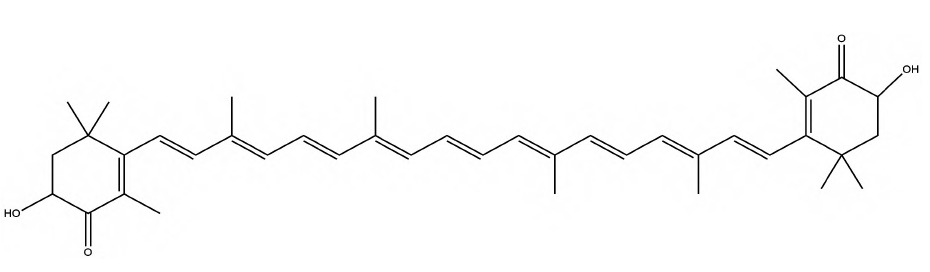
Astaxanthin is a carotenoid found in various aquatic organisms such as shrimp, crabs, and algae. Commonly existing as deep pink crystals, it is highly lipophilic, insoluble in water, but readily soluble in organic solvents. Its long-chain conjugated olefin structure enables efficient quenching of reactive oxygen species (ROS), making it the most powerful natural antioxidant discovered to date. With an antioxidant capacity approximately 500 times that of vitamin E, it is hailed as the “super vitamin E”.
As illustrated above, when the human body is exposed to stimuli such as sunlight, radiation, cosmetics, cooking fumes, and polluted air, a large number of free radicals are easily generated in the body. Excessive free radicals on the skin surface can cause problems like skin sagging, dullness and roughness, and wrinkles, triggering lipid peroxidation, which in turn leads to skin and even systemic aging, and in severe cases, may induce pathological changes.
Although the human body has its own antioxidant system to scavenge free radicals, unhealthy lifestyle habits, environmental pollution, ultraviolet radiation, high work and life pressure, and electronic product radiation can all accelerate free radical production, thereby oxidizing and damaging skin and bodily functions, and accelerating the aging process.
Unlike other carotenoids, astaxanthin possesses a long conjugated double bond system and α-hydroxy ketone groups, which confer active electronic effects and allow it to donate electrons to free radicals. The hydroxyl groups at both ends of the astaxanthin molecule are hydrophilic, capable of donating electrons, crossing the blood-brain barrier, and inserting into the phospholipid bilayer of cell membranes. By reacting with free radicals in the body, it prevents further radical reactions, thereby scavenging free radicals, effectively reducing lipid peroxidation, delaying aging, and even helping to prevent cancer occurrence.
Nevertheless, due to the presence of numerous carbon-carbon double bonds in its molecular structure, astaxanthin is highly sensitive to light, oxygen, and temperature, exhibiting poor stability such as easy oxidation and photodegradation. These physicochemical properties significantly reduce its bioavailability, leading to various challenges in the direct application of free astaxanthin in cosmetics and limiting its widespread use in the cosmetic industry. Therefore, to achieve the stable application of astaxanthin in cosmetics, researchers must employ an efficient carrier system for encapsulation.
Liposome Carrier Technology
- Introduction to Liposomes
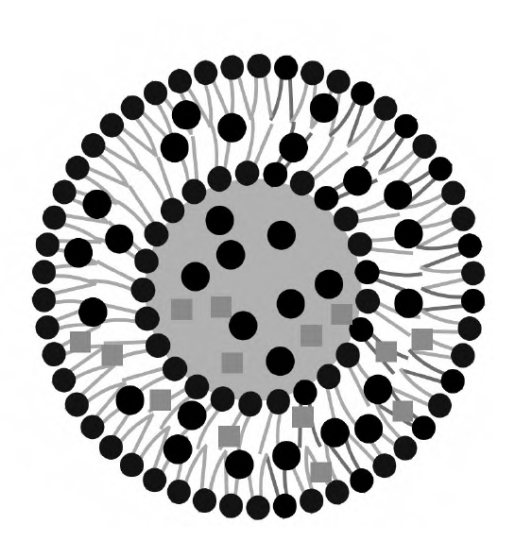
In 1965, researchers Bangham and Standish dispersed phospholipids in water and observed nanoscale spherical vesicles under an electron microscope. These vesicles were named liposomes, derived from the combination of the Greek words “lipo” (fat) and “soma” (body). Liposomes are ultrafine spherical porous particles composed of a hydrophilic core enclosed by one or more concentric phospholipid bilayers, which are dispersed in an aqueous phase and aggregate to form the vesicle structure.
Liposomes have many advantages. They have high bioavailability, targeting ability, sustained-release effect, good biocompatibility, and are non-toxic. Their phospholipid bilayer structure is like that of human skin cells. Their diameters are from tens of nanometers to hundreds of micrometers.
Liposomes can hold many different substances. These substances are inside their aqueous core and phospholipid bilayers. Usually, lipophilic components are held between the phospholipid bilayers. Water-soluble components are held in the innermost aqueous core. Amphiphilic compounds can be added at the interface between the aqueous phase and the lipid membrane.
The membrane materials of liposomes are often natural substances. Examples are lecithin and cholesterol. These substances have high biocompatibility and safety. They also have high bioavailability and good absorbability. They can make skin cells regenerate better. They help maintain normal skin functions. They improve skin luster and elasticity.
- Liposome Carrier Technology
This technology was first made as a new targeted drug delivery system. It was for the pharmaceutical industry. Now, many liposome-encapsulated drugs have been launched. People like these drugs because they target precisely, work for a long time, and are highly stable. Research on this technology has continued to go deeper. It is no longer only used in the pharmaceutical field. It has crossed over. It has become a cutting-edge technology in the cosmetic industry.
Liposome encapsulation can make astaxanthin more soluble in water. Astaxanthin can pass through the liposome membrane. It can interact with the polar groups of the membrane through hydrogen bonds. So, using liposome carrier technology to make astaxanthin liposomes can greatly improve the stability of astaxanthin. It also increases the transdermal absorption rate of astaxanthin. It solves the problem of astaxanthin’s poor water solubility. It improves its bioavailability.
Preparation Methods of Astaxanthin Liposomes
- Thin-Film Hydration Method
The thin-film hydration method works like this. First, dissolve membrane materials (such as lecithin and cholesterol) in organic solvents. Then stir thoroughly. Next, use a rotary evaporator to remove the organic solvents through reduced-pressure rotary evaporation. A uniform lipid film forms on the container wall. After that, add an aqueous phase to hydrate and wash the film. A liposome suspension is produced. Then, subject the suspension to ultrasonication, shaking, or homogenization. More uniform liposomes are obtained.
During the rotary evaporation and hydration process, the temperature should not be too high. Too high a temperature can cause denaturation of the unsaturated bonds in lecithin. This leads to hydrolysis and oxidation. It results in the leakage of encapsulated substances. It also causes a decrease in encapsulation efficiency.
- Ethanol Injection Method
Ethanol is a skin penetration enhancer. It can lower the melting point of lipid molecules in the stratum corneum. It effectively promotes the fluidity and permeability of cell membrane lipids. This increases the transdermal absorption rate. It improves skin penetration effects. Ethanol can also effectively reduce the particle size of astaxanthin. It changes the zeta potential of liposomes. This greatly enhances the stability of astaxanthin.
This method works as follows. First, completely dissolve phospholipids and cholesterol in ethanol. Then inject the resulting solution into an aqueous phase. Next, hydrate under stirring. Then remove the organic solvent by rotary evaporation. Nanoliposomes are obtained.
- Reverse-Phase Evaporation Method
The reverse-phase evaporation method for making liposomes is fast. It has high encapsulation efficiency. But it is only suitable for holding water-soluble compounds. It is similar to the thin-film hydration method. First, dissolve membrane materials (such as lecithin and cholesterol) in organic solvents. Then add an aqueous phase solution. Next, sonicate the mixture. A uniform emulsion is formed. This emulsion is stable. It does not separate into layers when left standing. Finally, remove the organic solvent by reduced-pressure rotary evaporation. Liposomes are produced.
О Баилуне
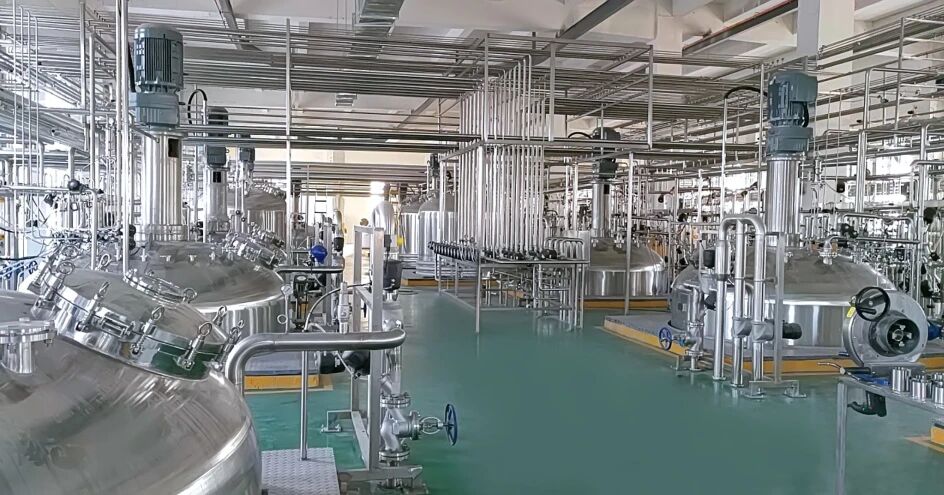
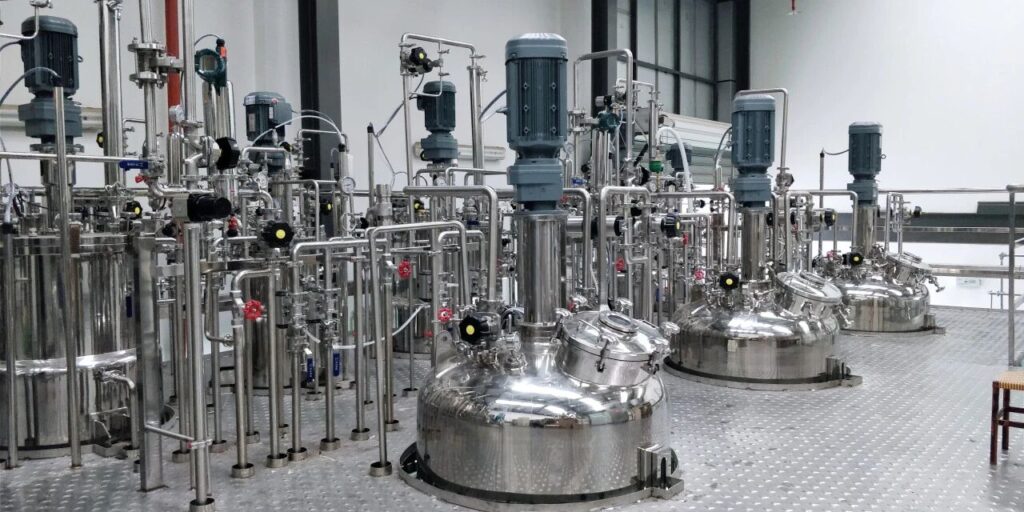
Bailun has a lot of experience in making various reactors and pressure vessels. We have a team of experts. These experts specialize in bioreaction, fermentation processes, mechanical manufacturing, and automatic control. Our scientific research and technological capabilities are always at the leading domestic level. They are also world-class. We provide customers with reliable, reassuring, and satisfactory product experiences. Связаться с нами