

Bioreactor and fermentor are two terminologies that are usually interchangeably used in the new emerging world of biotechnology. These systems are similar, but they also differ when it comes to design, use, and application in one way or another. Knowing how to distinguish the difference between bioreactor and fermentor is important not only among the scientists and researchers, but also among students, industry players, and equipment manufacturers.
This paper will be the ultimate resource that you need to read about everything relating to the difference between bioreactor and fermentor, including their simple definition, as well as to practical examples of their use in biotechnology and industry.
What Is a Bioreactor?
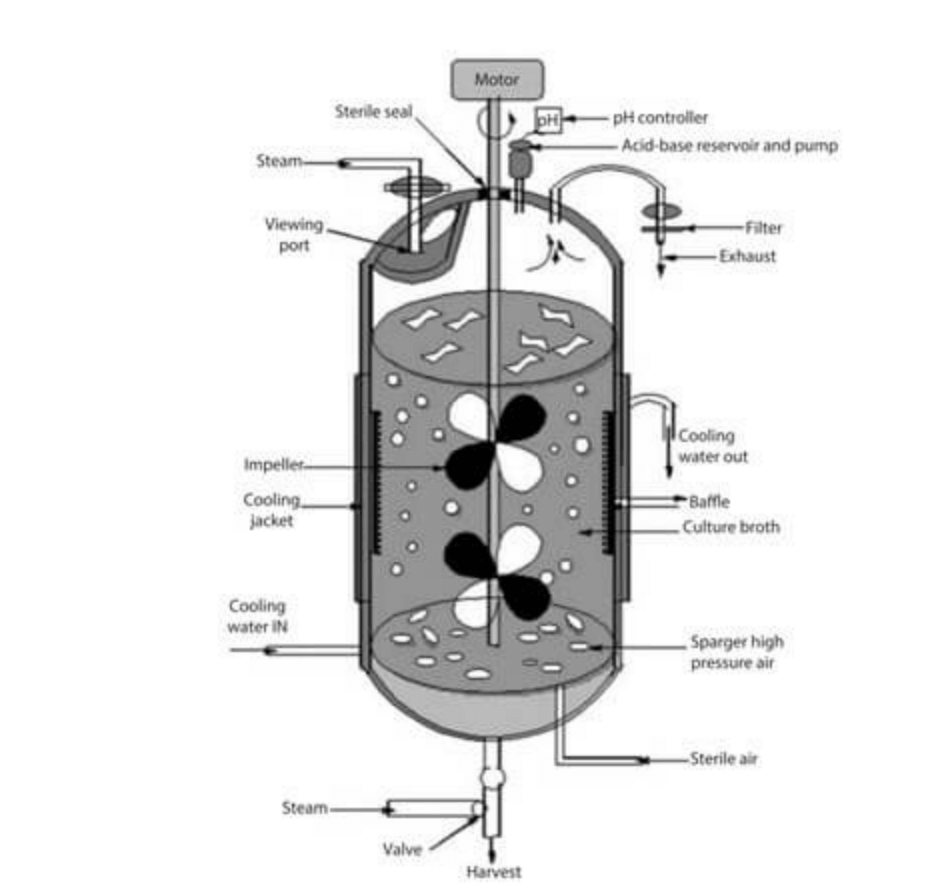
Let’s start with the basics. A bioreactor is an elaborate container that strives to provide an assortment controlled environment to the growth of the microorganism or cell. It allows the performance of controlled temperature, pH, oxygen, and agitation conditions and carried out aerobic or anaerobic biological reactions.
Common Uses:
- Cultivation of mammalian, insect, and plant cells
- Vaccine production
- Monoclonal antibody synthesis
- Stem cell culture
Bioreactors can be used to process larger volumes on a more reproducible and highly automated scale compared to conventional lab flasks and as such are central to bioprocessing today.
What Is a Fermentor?
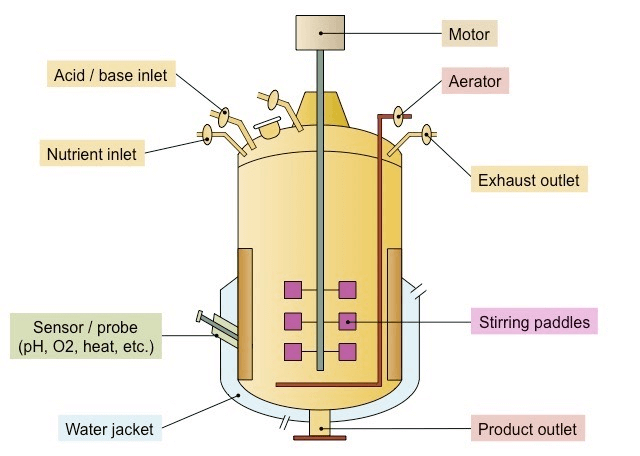
Fermentor is a particular type of a bioreactor that is directly employed to perform the process of fermentation, in which the microorganism, in the form of bacteria or yeast, transforms the input substrates into desirable output under anaerobic or micro-aerophilic conditions.
Typical Products from Fermentation:
- Alcohol
- Organic acids (like citric acid)
- 抗生素
- 酶
- Amino acids
Simply stated, not every bioreactor is a fermentor and all fermentors are bioreactors. This proves to be the main question: after all what is the actual difference between bioreactor and fermentor?
Why Does the Distinction Matter?
You might wonder: “If they do similar things, why do we need two terms?”
Good question!
The knowledge of the difference between bioreactor and fermentor will ensure that biotechnology firms obtain relevant equipment to suit certain processes. For example:
- Want to produce insulin using genetically modified E. coli? You’ll likely use a fermentor.
- Working on growing mammalian cells for cancer research? You’ll need a bioreactor.
Different systems take various operational environments, and this affects cost, scale and efficiency.
Key Technical Difference Between Bioreactor and Fermentor
Let’s break it down scientifically.
| 特征 | BIOREACTOR | FERMENTOR |
| 应用 | General cell culture & biochemical reactions | Specific to microbial fermentation |
| Organism Type | Animal, plant, insect, bacterial, fungal | Mostly bacterial and fungal |
| Aeration Type | Aerobic or anaerobic | Predominantly anaerobic |
| Control Systems | Highly automated with sensors | May be semi-automated |
| Sterility Requirements | Extremely high (for animal/plant cells) | Moderate to high |
| Product Examples | Monoclonal antibodies, vaccines | Alcohol, antibiotics, enzymes |
| Design Complexity | 更复杂 | Simpler design |
Such differences influence the construction, sterilization, maintenance, and operation of individual devices in real life conditions.
生物反应器的类型
Various designs of bioreactors were made depending on the purpose of the reactor.
- Stirred-Tank Bioreactor (STR)
- Airlift Bioreactor
- Packed Bed Bioreactor
- Membrane Bioreactor
- Photo-bioreactor (for algae and photosynthetic organisms)
Each type addresses specific needs. To take an example, photo-bioreactors are also suitable to make a biofuel out of algae, whilst STRs are the beast of mammalian cell culture.
Types of Fermentors
Just like bioreactors, fermentors have variations as well:
- Batch Fermentor
- Fed-batch Fermentor
- Continuous Fermentor
- Submerged Fermentor
- Solid-State Fermentor
Different fermentation processes demand different fermentor types. To give an example, alcohol can be readily produced, in a continuous fermentor, whereas penicillin is normally synthesized in fed-batch systems.
Industrial-Scale Usage
Did you know that difference between bioreactor and fermentor is yet more pronounced at the industrial level?
- The maximum size of bioreactors in pharmaceutical production are 50 liters to 20,000 liters.
- Fermentors used in beer or ethanol production can be as large as 500,000 liters!
The scales necessitate a much difference monitoring, mixing as well as sterilization systems thereby further cementing the difference.
Automation and Monitoring Systems
The second remarkable difference between bioreactor and fermentor is the extent of automation.
Bioreactors often use sophisticated control systems, including SCADA (Supervisory Control and Data Acquisition) for:
- 酸碱度
- DO (Dissolved Oxygen)
- 温度
- 搅动
- Gas flow rates
Fermentors may rely more on manual or semi-automated systems depending on the industry (e.g., traditional brewing vs. pharmaceutical fermentation).
Bioreactor and Fermentor in Biotechnology Research
Academic and corporate laboratories apply bioreactor in preference to fermentor based on a research objective.
Bioreactors are often seen in:
- Stem cell research
- Regenerative medicine
- Tissue engineering
- Fermentors dominate in:
- Microbial pathway engineering
- Antibiotic discovery
- Biocatalysis
So, next time you visit a lab, see if you can spot the difference between bioreactor and fermentor based on the experiment’s objective!
Advantages of Bioreactors
- Highly controlled environment
- Suitable for delicate cells (mammalian, plant)
- Real-time monitoring
- 可扩展性
- Supports continuous processing
Advantages of Fermentors
- Cost-effective setup
- Suited for mass microbial culture
- Simple design & maintenance
- Ideal for batch or fed-batch processing
- Easier scalability for specific microbial products
What Are the Limitations?
Speaking about the difference between bioreactor and fermentor, one should not forget about the disadvantages of these devices as well as about the advantages. Biotechnology & bioengineering need both bioreactor and fermentor to multiply microorganisms or cells to produce various products. Bioreactors are often of a bigger scale and are intended to result in the best suitable state of cell propagation as well as production. Fermentors on the other hand are smaller vessels which are used in the process of fermentation of materials (such as sugars or organic compounds) in the production of alcohol, acids or gases.
The distinction between a bioreactor and fermentor is important when comprehending how to use either of the machines in the different applications. Bioreactors provide a greater level of control over the environmental factors like temperature, pH, and nutrients however are more finicky and costly to utilize. Fermentors on the contrary are easier to build and cheaper though their functions could be limited as far as control and scalability are concerned.
Consequently, the presence of other variants of bioreactors and fermentors does not diminish the usefulness of bioreactors and fermentors; we should just be conscious of the disadvantages of the use of bioreactors and fermentors to enable us to make the right choices when it comes to selecting the right system of bioreactors and fermentors on a particular bioprocess.
Bioreactor Limitations:
- Expensive to build and maintain
- High sterility requirements
- Sensitive to contamination
Fermentor Limitations:
- Limited to certain organisms
- Less flexibility in reaction control
- Lower resolution of automation (in simpler setups)
Real-World Examples: When to Use What?
Let’s take a practical look.
- Insulin Production (via Recombinant E. coli) → Fermentor
- COVID-19 mRNA Vaccine (mammalian cell line) → Bioreactor
- Bioethanol from Corn Starch → Fermentor
- Stem Cell Cultivation for Cartilage Repair → Bioreactor
These illustrations demonstrate that selection of an appropriate system is not a matter of choice it is a ticket to success.
The Role of Equipment Manufacturers
Companies such as 百伦生物 offer state of the art fermentors and bioreactors to suit your application. Whether you’re in pharmaceuticals, food production, or academic research, selecting the right equipment based on the difference between bioreactor and fermentor ensures productivity, cost-efficiency, and compliance with industry standards.
Questions You Might Have
Q: Can a bioreactor perform fermentation?
Yes! If configured correctly, bioreactors can perform fermentation. However, fermentors are optimized specifically for it.
Q: Is the term “bioreactor” more modern?
This vendor in fact, often refers to bioreactor over fermentor in more highly developed applications of bioprocessing and cell culture, and fermentor in the more conventional applications such as brewing and enzyme manufacture.
Q: Do both require sterilization?
Absolutely. Both systems depend on sterility but since the organisms may be sensitive, rules may be more stringent in the case of bioreactors.
Final Thoughts: Which One Do You Need?
In the last, knowledge of difference between bioreactor and fermentor can assist you:
- Design better experiments
- Choose the right vendor or manufacturer
- Optimize production workflows
- Minimize contamination and equipment failure
These are key instruments of biotechnology, and it is the correct one that may either turn your project into success or a failure.
结论
Difference between bioreactor and fermentor are not only in the apparatus but in its aim, their complexity and even in their organism compatibility. Although they have the same purpose of being a vessel in which to grow life, there is a huge difference in their application. Bioreactors occupy the top performance and the best cell cultures in the production of a pharmaceutical, but the fermentors are concentrated in microbial and biochemical productions.
So next time you’re selecting equipment, ask yourself: “Am I running a fermentation process or cultivating sensitive cells?” The answer will guide you to the right choice.
访问 百伦生物 for a massive range of fermentors and bioreactors.
Frequently Asked Questions (FAQ’s)
- Can bioreactors and fermentors be used interchangeably?
The short answer is yes but this will largely be determined by your biological system and product objectives.
- Which is more expensive?
Bioreactors are complex and are most often more expensive considering sterility standards.
- What materials are used in construction?
They can both be produced out of non stainless steel, glass or even plastic based on scale and use.
- Is fermentation always anaerobic?
Mostly although some processes may be microaerophilic and even aerobic.
- Where can I buy reliable fermentors and bioreactors?
At BaiLun Bio, you can check a variety of industrial-scale solutions.