
Biotechnology is transforming our lives in every way such as through life trying medication, environmental friendly manufacturing activities and processes. The use of fermenter is a powerful tool in the heart of many of these breakthroughs. But what actually is a fermenter and why has it become one of the most central equipment’s in the current biotech labs and production facilities?
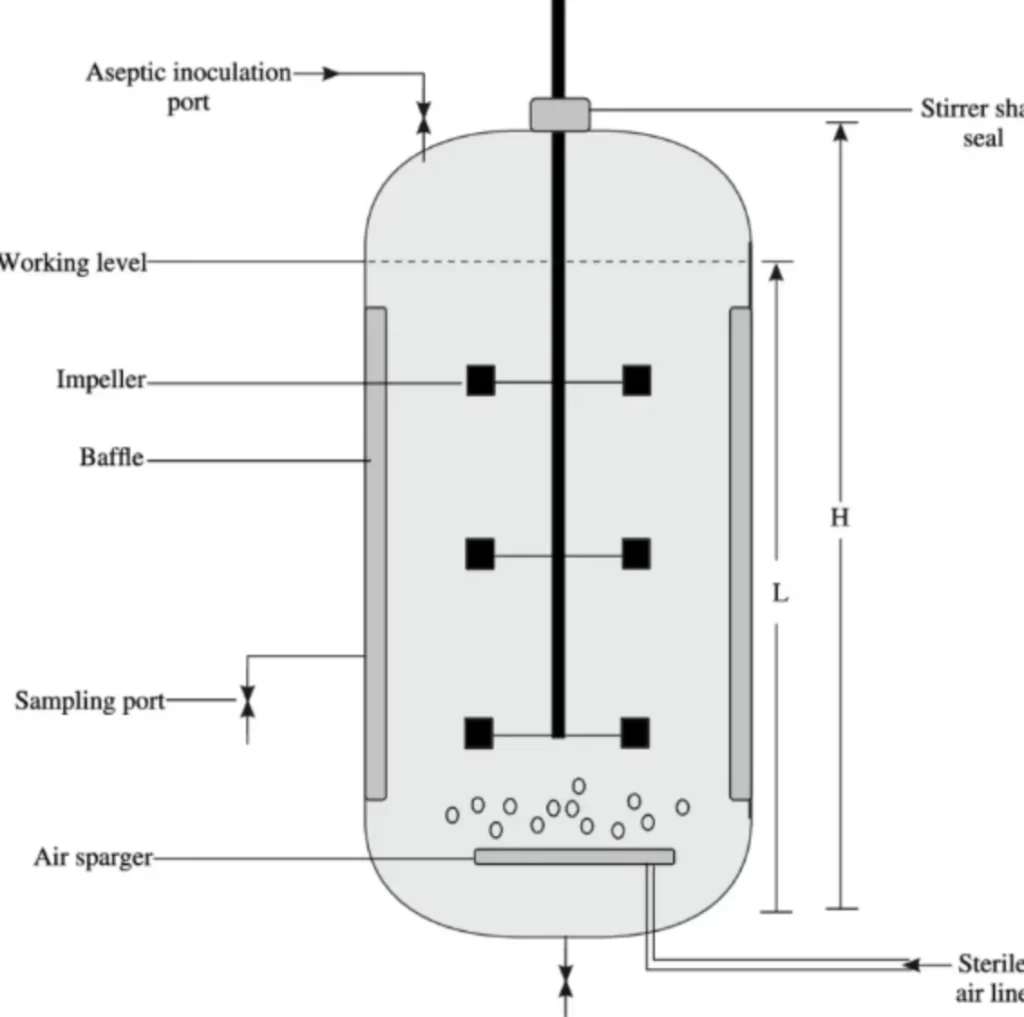
Through this comprehensive guide, we shall reveal the utility of it in the field of 生物技术, its mode of operation, types of it available, the its use in an industrial set up, and the future of the that technology.
What is a Fermenter?
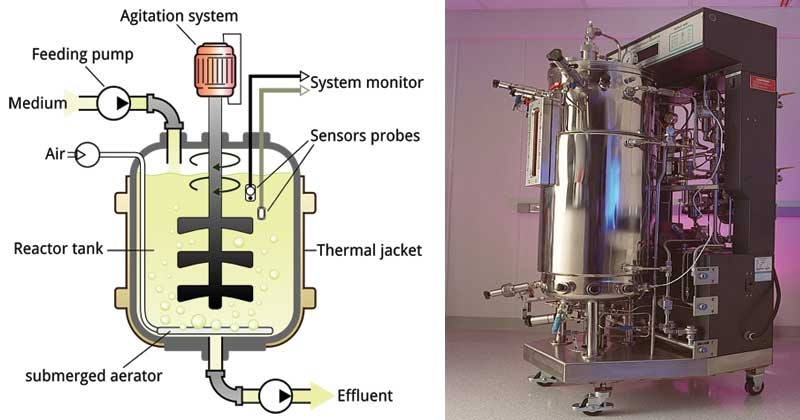
It is a bioreactor or vessel in which microorganisms are cultured in controlled condition. It’s where raw ingredients like sugars and nutrients are converted by bacteria, yeast, or fungi into valuable products such as antibiotics, enzymes, biofuels, and more.
Key Components:
- 搅拌器:Ensures uniform mixing
- Aeration System:Supplies oxygen when required
- 温度控制:Maintains ideal conditions for microbial growth
- pH 控制:Stabilizes acidity levels
- 无菌端口:Enable sample extraction and ingredient addition
Ever wonder how such components go together to create biotech magic? Let’s break it down.
它是如何工作的?
The fermenter provides an ideal condition for the growth of the microorganisms that will then do what they are best at which is the conversion of the substrates to products of passions. This is started with sterilization which is followed by inoculation with the microbe of choice. Next, it is kept in the optimal conditions hours, or even days as the fermentation takes place.
The Stages of Fermentation
- Preparation –Cleaning and sterilization
- 接种 –Introducing the microorganism
- 发酵 –Monitoring and maintaining growth
- 收获 –Extracting the product
- 下游加工 –Purifying the final product
No wonder how cool it is that one machine can be used to run the entire biotech affair.
生物技术中使用的类型
Many types of fermenters are needed which depend on the different applications and the selection of a suitable fermenter can be the difference between success or failure of a biotechnological process.
1. Batch Fermenter
- One-time use per cycle
- Ideal for small-scale production
2. Fed-Batch Fermenter
- Substrate is added during the process
- Enhances yield and efficiency
3. Continuous Fermenter
- Constant input and output
- Perfect for large-scale industrial applications
4. Airlift Fermenter
- No mechanical agitators
- Uses air bubbles for circulation
5. Submerged vs. Solid-State Fermenters in Biotechnology
- 湮:Liquid medium
- Solid-state:Moist solid medium
Which of these fermenters suits your biotech project? It depends on what product you want to target, how long the process will take and how scalable you need it.
生物技术中的应用

The fermenter is not merely the equipment it is the entrance towards a better innovational process. Whether it is the pharmaceutical industry or the food production industry, let us understand the utilization of fermenters across the industries.
药品
- Antibiotics (e.g., Penicillin)
- Vaccines (e.g., Hepatitis B)
- Insulin (for diabetes management)
Food & Beverages
- Yogurt and cheese
- Alcoholic beverage
- Vinegar and soy sauce
- 农业
- Bio fertilizers
- Bio pesticides
- 活力
- Bioethanol and biogas production
Did you ever consider that your yogurt and/or insulin shot may start its life at a fermenter?
Advantages of Using Bioreactor in Biotechnology
Why are fermenters so widely used in 生物技术? Their benefits speak for themselves.
- 精确:Controlled conditions ensure consistent output
- 可扩展性:Easily upgraded from lab to industrial scale
- 效率:Maximizes yield with minimal waste
- 自动化:Reduces human error and labor
- 无菌性:Prevents contamination
The issue is not to use or not use a fermenter but how to make best use of it.
Challenges in Operation
Fermenters are potent, but they also bring their problems:
- Contamination Risks:Requires rigorous sterilization
- Cost of Maintenance:High-tech systems need regular upkeep
- Complex Monitoring:Demands skilled operators
- Foaming Issues:Can disrupt airflow and mixing
Can these challenges be mitigated? Yes, where good training is provided, where intelligent design has been done, and there are real time tools of monitoring.
Innovations in Design
The new 生物技术 companies are continuously making fermenter systems more souped-up, smart, and efficient. Some notable innovations include:
- Single-use Bioreactors: Reduces cleaning time and contamination risk
- Digital Twins: Real-time digital simulations of fermentations
- AI Integration: Predicts and adjusts conditions dynamically
- Microbial Sensors: Tracks real-time metabolic activity
What will the fermenter of the future look like? Probably more like a smart lab assistant than a steel tank!
The Role of it in Sustainable Biotechnology
Being a hero in the commercial world is not a rare surprise anymore, but in the global battle against a planet in great need, fermenters are making a surprising difference. They allow for:
- Waste-to-Energy conversion
- Biodegradable Plastic production
- Low-carbon manufacturing of chemicals
The lowly fermenter is assisting 生物技术 companies to achieve greener steps and compliance with regulatory authorities.
Choosing the Right One for Your Needs
If you’re in the biotech industry, how do you choose the ideal fermenter for your operation?
Consider the Following:
- Product type (enzyme, biofuel, etc.)
- Microorganism used
- Required volume and batch size
- Budget and space
- Regulatory requirements
Still unsure? Such companies as 百伦生物 are providing you with individually tailored solutions to your objectives in biotechnology.
Maintenance and Cleaning
To keep your fermenter running like a well-oiled machine:
- Regular Sterilization:Autoclaving or chemical cleaning
- Inspection:Check for wear in impellers and seals
- Sensor Calibration:Ensures accurate readings
- Software Updates:Keeps automation current
Poor maintenance can jeopardize the entire process, so don’t skip it!
Training for Operation
Human skill matters just as much as technology. Operators must be trained in:
- Microbiology and biochemical engineering
- Equipment calibration
- Data logging and interpretation
- Emergency handling and SOPs
Can one person manage a full-scale fermentation process? With training and automation—yes!
Future Trends in its Technology
The future is brimming with possibilities. Expect to see:
- 3D-printed Fermenters for rapid prototyping
- Cloud-integrated Systems for remote control
- CRISPR-enhanced Microbes for faster yield
- Real-time Analytics to cut cycle times in half
The next evolution of the fermenter is already underway. Are you ready to ride the wave?
最后的想法
The fermenter has its hand in everything; antibiotics, biodegradable plastics, you name it. It has earned a right to be present in both the laboratories and the industries because of its capacity to cultivate the microorganisms, converting the substrates into life-saving and sustainable products.
The fermenter will also evolve as the 生物技术 does, and it will be more intelligent, effective, and environmental-friendly. Whether you’re a student, researcher, or industrial stakeholder, understanding the power of the fermenter is your first step toward making a real impact.
Got a biotech project in mind? Start with the right fermenter, and you’re halfway there.
Want to learn more about premium biotech-grade fermenters? Check out BaiLun Bio fermenters and find the best solutions, which correspond to your needs in terms of innovation.
Frequently Asked Questions (FAQ’s)
- Why is a fermenter used in biotechnology?
A fermenter forms a well-controlled environment in which microorganisms are allowed to multiply to make useful products such as antibiotics, enzymes, and biofuels among others.
- How is a fermenter different from a regular bioreactor?
Not all bioreactors are fermenters although all fermenters are bioreactors. Fermenter is a well-designed device that involves the fermentation process with the use of microorganisms either in anaerobic or aerobic environments.
- Can fermenters be used for both bacteria and fungi?
Yes, bacteria, yeast and fungi, and even some mammal cells can be grown in fermenters based on their design and operation parameters.
- Which materials are normally used as fermenters?
Stainless steel is typically used to make industrial fermenters, although lab scale varieties can consist of glass or plastic.
- What are my options in selecting a fermenter in my lab or facility?
Think of your product type, microorganism, scale, budget and regulatory requirements. Using consultancy services of providers such as BaiLun Bio, you may be able to make a better decision.
- What safety measures are to be observed in running a fermenter?
Sterilization procedures should be adhered to by the operator, protective items worn by the operator, and monitoring of the equipment performed to prevent contamination and accidents.
- Are there environmentally friendly fermenters?
Well, sustainability in planning the modern fermenter is being considered and that is including waste to energy concept and single-use fermenters.
- How often should fermenters be cleaned and sterilized?
May be before and after a batch processing, or as specified in SOPs. Regular maintenance is key to ensuring efficiency and sterility.
- Is automation necessary in fermenter operations?
Although not compulsory, automation enhances efficiency, system uniformity and decreases human errors particularly in massive operations.
- Where do I find custom fermenters to my biotechnology application?
You have the opportunity to look other alternatives of special manufacturers such as BaiLun Bio which is one of the Fermentor manufacturing firms that specializes in producing Fermentor according to your specific requirements.