
The field of biotechnology is quickly changing and adoption of bioreactor technology is critical to upscale manufacturing, marker sterility and optimal production. A good example of the innovative technology characterized by a redefinition of the field is the Wave bioreactor. The type of bioreactor was not only designed to simplify and improve cell cultivation (in particular mammalian and insect cells), but the rocking process creates mixing and oxygen transfer without the use of conventional impellers or even spargers.

This article will take you into the depth of the workings, principle, operation, advantages, applications, and limitations of these bioreactors so that you get a total view of the use of these instruments in modern biotechnology.
介绍
The wave bioreactor is such a disposable system, a bioprocessing platform built on rocking, generating the waves in a bag of dispensable culture media and cells. The system works on simple yet effective principles of fluid dynamics, unlike the traditional bioreactors whereby complicated mechanisms of piping and mechanical stirring of the fluid are used.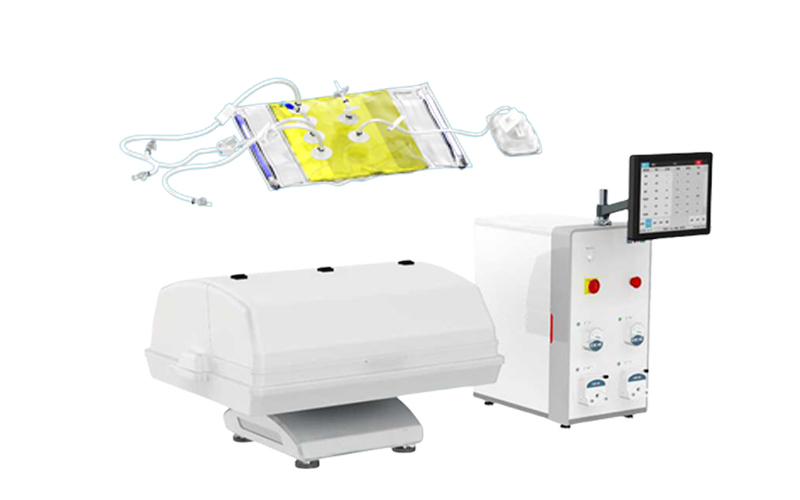
Here’s how it works:
- The culture media is added and partly filled in a flexible plastic cell bag together with the cells.
- This bag is placed on a heated rocking platform.
- The platform vibrates forward and backward imparting a wave motion on the fluid.
- This wave facilitates gas exchange (O₂ and CO₂), gentle mixing, and nutrient distribution.
By means of this simple mechanism this kind of bioreactor can offer a controlled environment, including the following:
- Reduced shear stress
- High gas transfer efficiency
- Lower contamination risk
- Easy scale-up
It was initially optimized for cell cultures of mammalian cells, but is now found to be widely adopted to stem cells, production of viral vectors, production of vaccines, and production of recombinant proteins. The technology is synonymous with companies like GE (now Cytiva), Sartorius, and Thermo Fisher Scientific, but its principle remains universal.
Key Design Features
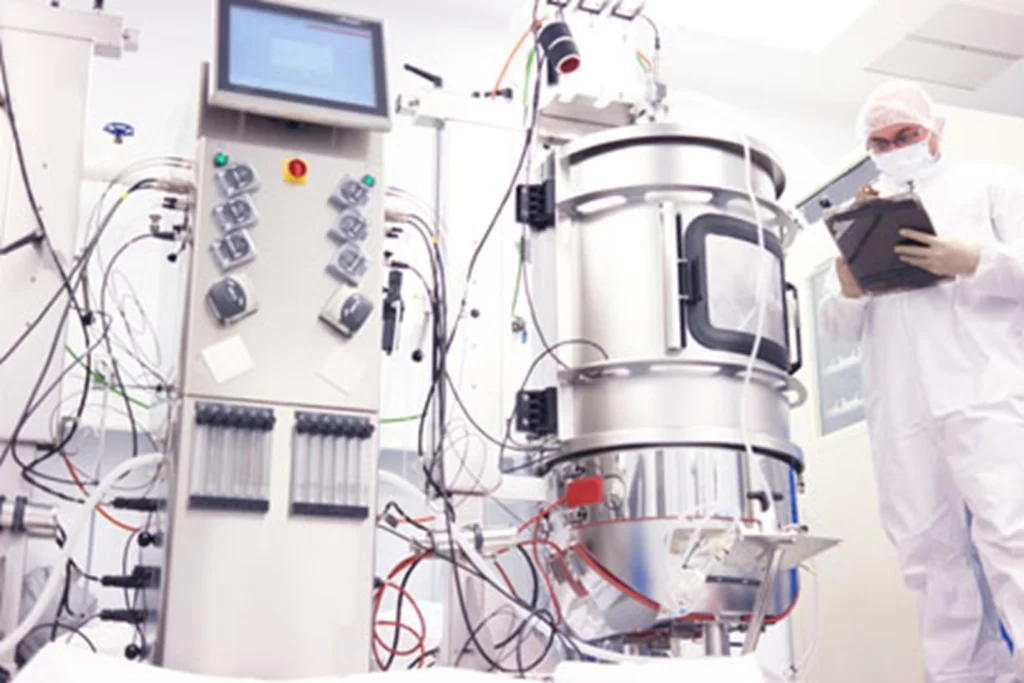
The difference between the Wave bioreactor and stainless-steel stirred-tank reactors opens the possibility of unique structure that is very dissimilar. Flexibility, sterility, and ease of use are the main elements within it.
Main design elements include:
- Disposable Cell bag:A single-use bag that is usually made of multi-layer plastic and which is sterile. Volumes range from 100 mL to over 1,000 L.
- Rocking Base Unit:Plank that swings the bag creating an effect that waves.
- Integrated Control System:Software that controls parameters like temperature, pH, dissolved oxygen (DO), rocking angle, and rocking speed.
- Gas Manifold and Filters:Enables delivery of gas in sterile form, air, oxygen, nitrogen or CO 2.
- Optical or Inline Probes:These are used in the measurement of pH, DO and temperature.
优点
What is making wave systems such an increasingly popular bioreactor of choice in today labs? This is not merely convenient, but there is a plethora of factors concerning science and operation in which using this bioreactor provides benefit.
Major advantages include:
- Single-Use simplicity:There are no SIP/CIP systems since there are pre-sterilized bags.
- 可扩展性:a few hundred milliliters to more than 500 liters.
- 低剪切应力:Suitable with shear-sensitive cells, such as CHO, HEK293 and stem cells.
- Reduced Contamination Risk:No reusable parts, fewer contamination points.
- Cost-Effective:Lower capital investment and reduced maintenance costs.
- Rapid Turnaround:Minimal setup and cleanup time.
- Good Oxygen Transfer:Surface aeration and gas overlying allow good gas Exchange.
- The Integrated Control:Although no written parameters are used, automation and data logging makes it easier to have consistency and GMP compliance.
Operational Parameters and Optimization
When working with wave bioreactor, a variety of major parameters needs to be adjusted toward the best cell growth and productivity. Because of the bag-based design, traditional impeller RPM or sparging rates don’t apply.
Key operational parameters:
- Rocking Rate:Measured in rocks per minute (RPM). Typical range: 10–40 RPM.
- Rocking Angle:Adjusts the slope of the wave. Affects mixing intensity.
- 温度:Maintained via heated platform (e.g., 37°C for mammalian cells).
- pH值:Overlay of CO 2 gas or addition of base /acid via sterile connectors.
- Dissolved Oxygen (DO):Controlled via oxygen overlay or gas mixing.
- Working Volume:Usually 20%–80% of bag capacity.
How to optimize:
- Rocking rate and angle should be adjusted in order to maximize mixing and not to damage cells.
- Monitor and provide real time feedback using DO and pH sensors.
- Make sure there is even distribution of the gas in big systems by use of diffuser alternatives.
- Choose to work in batch, fed-batch or in perfusion mode, in accordance with what you want to achieve in your process.
- Optimization tends to be experiment specific, however, the Wave bioreactor is flexible enough to fine tune almost any application.
应用
Wave bioreactor has been used in almost every quarter of the biotech scenery. It is the preferred reactor because of its easy operation, low shear conditions and sterility when used on sensitive and high-valued cell culture processes.
Core application areas:
Mammalian Cell Culture
Works well with CHO, HEK293 and hybridoma cells that are used in the production of antibodies and vaccines.
Stem Cell Expansion
Supports growth of mesenchymal stem cells and induced pluripotent stem cells (iPSCs) in clinical and research settings.
疫苗生产
Much used in the production of viral particles or recombinant proteins by propagating cells.
Gene Therapy & Viral Vectors
Efficiently supports processes like lentivirus or adeno-associated virus (AAV) production for gene delivery systems.
Perfusion Culture
Provides high density long-term perfusion using cell retention filters that are imperative in intensive production.
Process Development
Small-scale models would be the best to conduct rapid prototyping and scale-up studies owing to the ease of control of the parameters.
Comparison
How does this bioreactor hold up when compared to the gold standard in bioprocessing, the stirred tank bioreactor (STR)? Let’s break it down.
| 特征 | Wave bioreactor | Stirred Tank Bioreactor |
| Mixing Mechanism | Rocking motion | Impeller-based |
| 剪应力 | Very low | Moderate to high |
| 消毒 | Pre-sterilized bags | Requires SIP/CIP |
| Setup Time | < 1 hour | 6–12 hours |
| 打扫 | Not needed | Manual or automated CIP |
| 可扩展性 | Easy (modular systems) | Good, but more complex |
| Gas Exchange | Surface aeration, gas overlay | Spargers and overlay |
| Cost (Initial Investment) | Low to moderate | 高的 |
| Process Control | Advanced (with automation) | Very precise (advanced models) |
挑战与限制
Wave bioreactors have a lot of advantages, nevertheless, there are also a number of limitations. They have their shining points and their dark points just like any other technology.
Known challenges:
- Small Capacities:Most systems are limited to 500 1000 L. Bigger-scale production also relies on stirred tanks.
- Surface Aeration Limitations:While effective, it’s sometimes insufficient for extremely high oxygen demand cultures.
- Bag expenses:single use bags are very costly, particularly in terms of a long-term or perfusion culture.
- Fixed geometry:Mixing optimization is constrained by the shape of the bag of fixed geometry in comparison with personalized STRs.
- Sensor Limitations:Ports are limited and number of inline sensors is limited as well when compared with stainless systems.
Despite these challenges, the trade-off is often worth it. The technical limitations are overcome by the reduced risk of contamination, the speed of the turnaround, and the relative ease of regulation by using many biologics and cell therapies.
Future of Wave Bioreactor Technology
What does the future hold for this bioreactors? The industry is trending towards a more personalized medicine, more valuable biologics, and more modular production systems and wave platforms are adjusting to the demands.
Innovations on the horizon:
- 基于人工智能的过程控制:Intelligent surveillance, early warning, and dynamic control loops.
- Connected Bioreactor Farms:Beachfront production wave systems in which many therapies can be produced simultaneously with waves wired together.
- Advanced Materials:Bags made with new materials to allow lengthier perfusion runs and fewer extractable/leachable.
- Hybrid Systems:It is a conjunction of wave technology and internal perfusion filters, or external cell retention.
- Closed-loop automation:Compatibility with auto media prep, auto sampling and auto down-stream. With biopharma adopting smaller, decentralized production sites and establishing a quicker time-to-market approach, the Wave bioreactor is going to be central to agile, cost-efficient and secure production of biologics.
结论
The wave bioreactor has transformed the bio industry by providing flexibility, scalability and low-shear-rate solution to the contemporary cell culture requirements. Whether in gene therapy, producing vaccines or other forms of bioprocessing, it enables cleaning and efficient bioprocessing to be done much quicker and cleaner. It is simple and flexible thus used in every R&D laboratory as well as the GMP manufacturing plant.
Ready to upgrade your bioprocessing with cutting-edge technology?
Explore premium Wave bioreactor solutions at 百伦生物 and transform your production efficiency today!
常见问题解答
What is this bioreactor used for?
It is run to grow animal, stem or microbial cells in a scalable, sterile environment in a gentle manner. It’s ideal for vaccine production, gene therapy, and research.
How does this bioreactor work?
It vibrates a disposable bag in a hot surface. The rocking motion creates wave-induced mixing and surface aeration.
What cell types can grow in this kind of bioreactors?
Widely applied on CHO, HEK293, NS0 and stem cells, insect, etc.
What are the main benefits of Wave bioreactors?
Quick setup, low shear, high sterility, and scalability. Also, no cleaning or sterilization is required.
What is the maximum volume for Wave bioreactors?
Typically, up to 500–1,000 liters depending on the system. Some manufacturers offer linked systems for higher volume processing.