


On September 4, Huang He, Member of the Chinese Academy of Engineering, shared key industry opinions at the 17th China Bioindustry Conference. He pointed out one obvious problem in China’s synthetic biology industry. The industry has large production scale and fast export growth. But it has low profit and weak global influence. Chinese bio-manufacturing companies want to achieve better development and catch up with global competitors. They need to develop independent core microbial strains. They also need to break foreign patent limits. Academician Huang He has studied fermentation engineering and light industrial biotechnology for decades. He has made great progress in domestic strain research and development. His team broke the foreign technical blockade of DHA production strains. This change made China no longer a DHA importer. China has become one of the main DHA exporting countries in the world.
Academician Huang He said clearly that China’s bio-manufacturing industry is “large but not strong”. Official data shows China’s bio-industry market size reached 775.6 billion yuan in 2024. China exported 7.5 million tons of bio-fermentation products in 2023. The export volume grew 12.7% compared with 2022. The market and export scale keep growing. But the overall industry profit is 30% lower than the level before the pandemic. Chinese companies face clear profit disadvantages in global competition. Lysine salt is a typical example. Chinese factories spend more money on corn raw materials, glucose powder and electricity than American factories. They also need to pay an extra 3.7% tariff. Their overall production costs are higher. But their product selling price is still 800 yuan lower per ton than foreign products. European and American countries keep setting trade barriers. Carbon tariffs are one of the main barriers. These barriers reduce the profit space and global market share of Chinese biological products. Synthetic biology develops fast in recent years. It brings new chances for China’s bio-manufacturing industry to get out of the tough situation.

Academician Huang He listed five typical industry cases. These cases show that synthetic biology can greatly cut production costs and raise product value. First, technicians modify and optimize Bacillus subtilis. The production cost of sialic acid drops from 1 million yuan per kilogram to only 3,000 yuan. Second, waste cooking oil can turn into aviation fuel through biological fermentation. This technology makes industry profit three times higher. Third, new erythritol fermentation technology cuts production cost from 70,000 yuan per ton to 20,000 yuan per ton. It strongly supports the fast growth of the global sugar-free beverage market. Fourth, the upgraded fermentation process makes malic acid fermentation concentration reach nearly 200g/L. The production cost keeps going down. Malic acid is expected to form a ten-billion-yuan market in the future. Fifth, independent research on DHA strains and production technology cuts the product price from 1.2 million yuan per ton to 200,000 yuan per ton. It supports mass production and large-scale export of DHA products.
In his speech, Academician Huang He emphasized that core microbial strains are the fundamental key to breaking industry barriers. At present, 90% of global synthetic biology research focuses on only 10 kinds of model microorganisms, and these mature strains are covered by a large number of foreign patents, which easily cause patent disputes and technical restrictions for domestic enterprises. In contrast, there are more than one million non-model microorganisms in nature. These microbial resources can support the innovative development of “one strain for one product”, effectively avoiding foreign patent barriers and building independent technical advantages.
CRISPR gene editing technology is the core tool for modern microbial strain modification and innovation, but the core technical patents and high-precision supporting equipment are still dominated by foreign institutions. Domestic research teams need to independently develop new proteases and editing tools to improve the stability, accuracy and targeting of strain modification. At the same time, artificial intelligence has become an important auxiliary force for synthetic biology upgrading. AI technology can shorten the development cycle of microbial cell factories from several years to several months. The deep integration of AI and synthetic biology will greatly accelerate domestic technological breakthroughs.
Academician Huang He concluded that China’s bio-manufacturing industry must get rid of simple scale expansion. Only by adhering to original innovation, mastering independent intellectual property rights of core strains and key technologies, can the industry complete the transformation from “scale leadership” to “technology leadership” in the global competition.

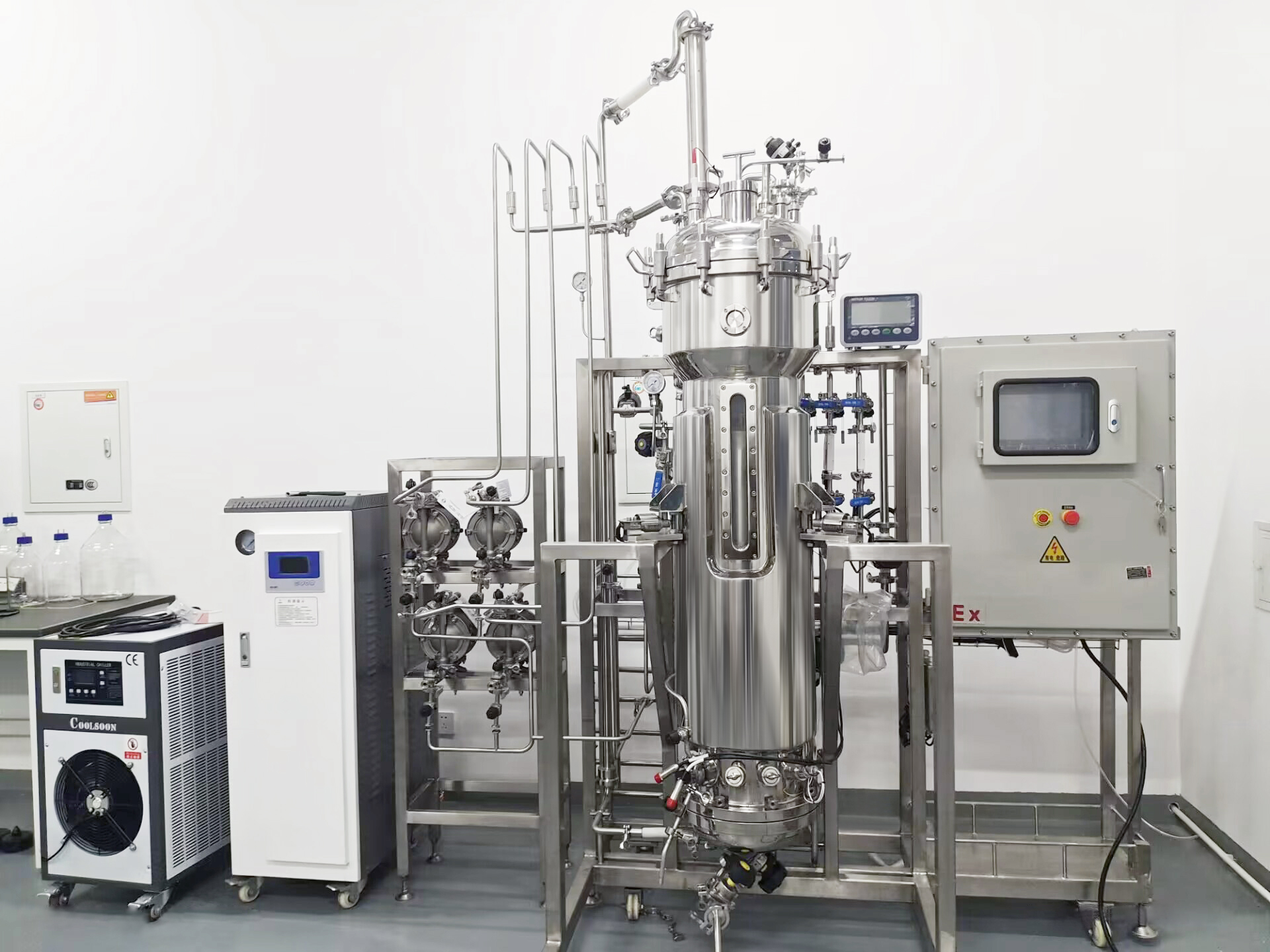
As a professional Manufacturer / Factory focusing on bioreactors and pressure vessel production, Bailun owns rich industrial manufacturing experience and a professional expert team covering biological reaction research, fermentation technology, mechanical manufacturing and automatic control. We always maintain domestic leading and international first-class R&D and process capabilities. We provide flexible Customization services, full-set Turnkey solution and products that fully meet GMP / CE standards. Relying on mature production systems and optimized cost control, we deliver prominent Price advantage for global customers, bringing stable, reliable and high-quality supporting solutions for synthetic biology and bio-fermentation industrial production.
Related News
-
 The Significance of FermentationFermentation, the pillar of metabolic processes that has been a part of human civilization for centuries, has had a profound impact on the formation of cultural practices and technology innovation. Its practices span centuries-old artisan methods, like production of l
 -
 Executive SummarySingapore is one of Asia’s most advanced biotechnology, biopharmaceutical manufacturing, food-technology, and synthetic-biology hubs. Its concentration of pharmaceutical manufacturers, public research institutes, biotechnology startups, alternative-protein developers, and regional e
 -
 Executive SummarySpain has become one of Southern Europe's fastest-growing biotechnology and biopharmaceutical markets. Supported by strong pharmaceutical manufacturing, expanding CDMO capabilities, vaccine research, and industrial biotechnology, demand for stainless steel bioreactors continues to i
